All materials · bee
Search the dictionaries, texts, images and API records available for this entry. Source matches are not curated endorsements.
Return to the curated articleSource / API coverage for this entry
Counts above cover loaded, permitted materials. Unavailable or not-yet-loaded sources are not evidence of an empty catalogue. Browser-only results remain on your device.
- Bing News · not loaded for this entry
- CineGraph · not loaded for this entry
- Wikimedia Commons · not loaded for this entry
- GIPHY · browser results · inspect complete records for status
- The Guardian · not loaded for this entry
- The Met · not loaded for this entry
- Open Library · not loaded for this entry
- Openverse · not loaded for this entry
- Pexels · not loaded for this entry
- PoetryDB · not loaded for this entry
- Spotify · not loaded for this entry
- Unsplash · not loaded for this entry
- Wikiquote · not loaded for this entry
Inspect complete source records and provider status
Definitions
3 dictionaries
 Samuel Johnson
18th century ·
1755 ·
noun ·
554 characters
1. The animal that makes honey, remarkable for its industry and art. So work the honey bees, Creatures that, by a ruling nature, teach The art of order to a peopled kingdom. Shakesp. Hen. V. From the Moorish camp, There
Samuel Johnson
18th century · 1755 · noun · 554 characters
1. The animal that makes honey, remarkable for its industry and art. So work the honey bees, Creatures that, by a ruling nature, teach The art of order to a peopled kingdom. Shakesp. Hen. V. From the Moorish camp, There
1. The animal that makes honey, remarkable for its industry and art.
So work the honey bees,
Creatures that, by a ruling nature, teach
The art of order to a peopled kingdom. Shakesp. Hen. V.
From the Moorish camp,
There has been heard a distant humming noise,
Like bees disturb'd, and arming in their hives. Dryden.
A company of poor insects, whereof some are bees, delighted with flowers, and their sweetness; others beetles, delighted
with other viands. Locke.
2. An industrious and careful person. This signification is only used in familiar language.
Read this at Samuel Johnson where this came from — Samuel Johnson, A Dictionary of the English Language
 Open English WordNet 2025
2025 ·
noun ·
2 senses
any of numerous hairy-bodied insects including social and solitary species
Open English WordNet 2025
2025 · noun · 2 senses
any of numerous hairy-bodied insects including social and solitary species
-
●
any of numerous hairy-bodied insects including social and solitary speciesnarrower Apis mellifera Nomia melanderi andrena bumblebee carpenter bee cuckoo-bumblebee drone leaf-cutter mason bee potter beepart of Apoidea
broader hymenopterous insect insect arthropod invertebrate animal organism living thing whole
-
●
a social gathering to carry out some communal task or to hold competitions
broader affair social event event abstraction entity
Read this at Open English WordNet 2025 where this came from — Open English WordNet 2025
 Wiktionary (English) via Kaikki
2026 ·
noun ·
7 senses
A ring or torque; a bracelet.
Wiktionary (English) via Kaikki
2026 · noun · 7 senses
A ring or torque; a bracelet.
-
1
A ring or torque; a bracelet. (obsolete)
-
“And kyng Arthur gaf her a ryche bee of gold and soo she departed”
1485, Sir Thomas Malory, Le Morte Darthur, Caxton, Book 7, Chapter xxxv
Wiktionary (English) via Kaikki
Plausible
-
“...restoring unto the world much gold richly adorning his Sword, two hundred Rubies, many hundred Imperial Coynes, three hundred golden Bees, the bones and horseshoe of his horse enterred with him...”
1658, Sir Thomas Browne, Urne-Burial, Penguin, published 2005, page 16
Wiktionary (English) via Kaikki
Plausible
-
-
2
A flying insect, of the clade Anthophila within the hymenopteran superfamily Apoidea, known for its organised societies (though only a minority have them), for collecting pollen and (in some species) producing wax and honey.
-
“His face was belymmed as byes had him stounge[…].”
1499, John Skelton, The Bowge of Courte
Wiktionary (English) via Kaikki
Plausible
-
“An angry Wasp th'one in a viall had, / Th'other in hers an hony-laden Bee.”
1590, Edmund Spenser, “Book III, Canto XII”, in The Faerie Queene. […], London: […] [John Wolfe] for William Ponsonbie, →OCLC
Wiktionary (English) via Kaikki
Plausible
6 more quotations for this sense
-
“Can there be a more formall, and better ordered policie, divided into so severall charges and offices, more constantly entertained, and better maintained, than that of Bees?”
1603, Michel de Montaigne, chapter 12, in John Florio, transl., The Essayes […], book II, London: […] Val[entine] Simmes for Edward Blount […], →OCLC
Wiktionary (English) via Kaikki
Plausible
-
“Ariell: / Where the Bee ſucks, there ſuck I, / In a Cowslips bell, I lie, / There I cowch when Owles doe crie, / On the Batts backe I doe flie / after Sommer merrily. / Merrily, merrily, ſhall I liue now / Vnder the bloſſom that hangs on the Bow.”
1610–1611 (date written), William Shakespeare, “The Tempest”, in Mr. William Shakespeares Comedies, Histories, & Tragedies […] (First Folio), London: […] Isaac Iaggard, and Ed[ward] Blount, published 1623, →OCLC, [Act V, scene i], page 17
Wiktionary (English) via Kaikki
Plausible
-
“Bees are the moſt excellent of all Inſects vvhatſoever, and expreſſe both vvorth and vvonder in all their vvaies: […]”
1657, Samuel Purchas, “The Excellency of Bees”, in A Theatre of Politicall Flying-Insects. […], London: […] R. I. for Thomas Parkhurst, […], →OCLC, page 1
Wiktionary (English) via Kaikki
Plausible
-
“He stood across in the other garden, beside a bush of pale Michaelmas daisies, watching the last bees crawl into the hive.”
1913, D[avid] H[erbert] Lawrence, “chapter 12”, in Sons and Lovers, London: Duckworth & Co. […], →OCLC
Wiktionary (English) via Kaikki
Plausible
-
“Bees pollinate many of the world’s crops—a service estimated to be worth $15 billion a year in America alone.”
2012 March 31, “Subtle poison”, in The Economist
Wiktionary (English) via Kaikki
Plausible
-
“New insights into bee movements and life cycles have been uncovered after researchers tracked the insects using tiny QR codes glued onto their backs. […] “This suggests that most of the foraging that the bees do occurs very close to the hive,” study co-author Margarita López-Uribe, an associate professor of entomology at PSU, told CNN on Monday.”
2025 January 28, Jack Guy, “Tiny QR codes help scientists track bee movements”, in CNN, archived from the original on 08 Mar 2025
Wiktionary (English) via Kaikki
Plausible
-
-
3
The name of the Latin script letter B/b.
-
“"The ee-vee-ee-ar-en-oh-ee-ell-blank-bee-ell-oh-ess-ess-oh-em-blank-en-ee-cee-tee-ay-ar is especially dee-ee-ell-eye-cee-eye-oh-you-ess." Our friends thanked the spelling bee for his help and then he buzzed off.”
2004, Will Rogers, The Stonking Steps, page 170
Wiktionary (English) via Kaikki
Plausible
-
show 4 more
-
4
Any of the pieces of hard wood bolted to the sides of the bowsprit, to reeve the fore-topmast stays through. (plural-normally)
-
5
A contest, especially for spelling; see spelling bee.
-
6
A community gathering to share labour, e.g. a sewing bee or a quilting bee.
-
“The cellar […] was dug by a bee in a single day.”
1856, Samuel Griswold Goodrich, Recollections of a Lifetime
Wiktionary (English) via Kaikki
Plausible
-
“There was but little variation in types of buildings in the pioneer period: house, church, store, barn and mill were usually much alike except in size, and a raising bee was the ordinary means of their erection.”
1973, Alan Skeoch, Tony H. Smith, Canadians and their society, page 139
Wiktionary (English) via Kaikki
Plausible
1 more quotation for this sense
-
“Particularly resistant, for example, in many parts of northern Europe was the “spinning bee”, a nocturnal gathering of women to exchange gossip, stories, refreshment and – crucially – light and heat, as they spun wool or flax, knitted or sewed.”
2011 September 21, Tim Blanning, “The reinvention of the night”, in Times Literary Supplement
Wiktionary (English) via Kaikki
Plausible
-
-
7
Any stinging flying insect, especially a wasp. (informal, proscribed)
Read this at Wiktionary (English) via Kaikki where this came from — Wiktionary (English) via Kaikki
 Urban Dictionary
read this at Urban Dictionary
Asking Urban Dictionary…
Crowd-sourced and unreviewed. Fetched by your browser; nothing is stored here.
Out in the world
1 things · every match says why it is here
Artworks
1
Saved catalog
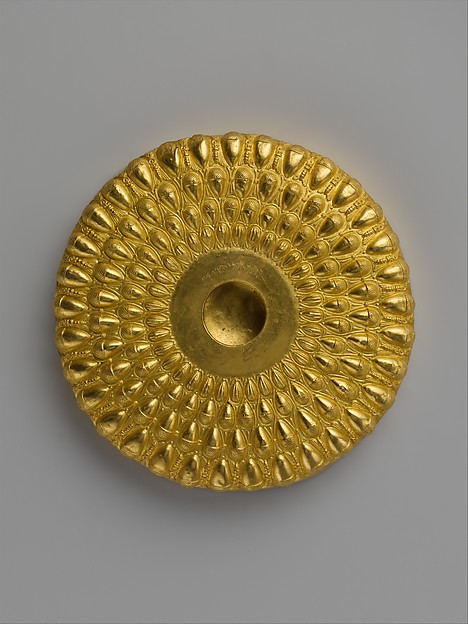
Held since 17 Sep 2026.
GIFs
 GIPHY

Looking for GIFs…
Fetched by your browser on this visit; nothing is stored here.
Search matches, not reviewed interpretations. Hover, focus or press Play to animate.
Matches for “bee” · About these results
Artworks
Saved catalog · The Met
Catalog matches from The Met, held locally rather than searched for on this visit. None is an accepted interpretation: a contributor connects an exact meaning and reviewers decide the claim. Browse saved artworks
- Gold phiale (libation bowl): Direct depiction of “bee” (Q7391) tagged “Bees”. · not yet reviewed
Subjects
12 subjects · 0 addressed
Found by name and by the sources. Not reviewed: a shared name is not a shared identity.
Subject
bee
clade of hymenopteran insects
Unclassified
Subject
Bee
Name list
Unclassified
Subject
Bee
family name
Unclassified
Subject
Bee
Italian comune
Unclassified
Subject
Bee
Wikimedia disambiguation page
Unclassified
Subject
Bee
unincorporated community in Virginia
Unclassified
Subject
Bee
village in Seward County, Nebraska, United States
Unclassified
Subject
Bee
unincorporated community in Hart County, Kentucky
Unclassified
Subject
Bee
Australian ship
Unclassified
Subject
Bee
extended play
Unclassified
Subject
Bee
unincorporated community in Houston County, Minnesota, United States
Unclassified
Subject
Bee
Lena Meyer-Landrut single
Unclassified

bee
clade of hymenopteran insects
Anthophila
Wikipedia Q7391 where this came from — the thing this word names — bee
Bees are winged insects that form a monophyletic clade Anthophila within the superfamily Apoidea of the order Hymenoptera, with over 20,000 known species in seven recognized families. Some species – including honey bees, bumblebees, and stingless bees – are social insects living in colonies, whereas over 90% of bee species – including mason bees, carpenter bees, leafcutter bees, and sweat bees – are solitary.
… 1,983 more Fold this article
Unlike the closely related wasps and ants, who are carnivorous/omnivorous, bees are herbivores that specifically feed on nectar (nectarivory) and pollen (palynivory), the former primarily as a carbohydrate source for metabolic energy, and the latter primarily for protein and other nutrients for their larvae. They are found on every continent except Antarctica, and in every habitat on the planet that contains insect-pollinated flowering plants. The most common bees in the Northern Hemisphere are the Halictidae, or sweat bees, but they are small and often mistaken for wasps or flies. Bees range in size from tiny stingless bee species, whose workers are less than 2 millimeters (0.08 in) long, to the leafcutter bee Megachile pluto, the largest species of bee, whose females can attain a length of 39 millimeters (1.54 in). Vertebrate predators of bees include primates and birds such as bee-eaters; insect predators include beewolves and dragonflies.
Bees are best known for their ecological roles as pollinators and, in the case of the best-known species, the western honey bee, for producing honey, a regurgitated and dehydrated viscous mixture of partially digested monosaccharides kept as food storage of the bee colony. Pollination management via bees is important both ecologically and agriculturally, and the decline in wild bee populations has increased the demand and value of domesticated pollination by commercially managed hives of honey bees. Human beekeeping or apiculture (meliponiculture for stingless bees) has been practiced as a discipline of animal husbandry for millennia, since at least the times of Ancient Egypt and Ancient Greece. Bees have appeared in mythology and folklore, through all phases of art and literature from ancient times to the present day, although primarily focused in the Northern Hemisphere where beekeeping is far more common. In Mesoamerica, the Maya have practiced large-scale intensive meliponiculture since pre-Columbian times.
 Wikipedia (English)
read this at Wikipedia (English)
where this came from — Wikipedia (English)
a kind of Apoidea Aculeata apocritan order Hymenoptera Endopterygota Eumetabola Neoptera Metapterygota
may also refer to
- bee — clade of hymenopteran insects
Public linked claims
What the existing sources assert about these meanings. These are source claims, not curated endorsements.
-
A flying insect, of the clade Anthophila within the hymenopteran superfamily Apoidea, known for its organised societies (though only a minority have them), for collecting pollen and (in some species) producing wax and honey. refers to bee
Wiktionary (English) via Kaikki · assertion revision 3860597
Source, evidence and revision history -
bee lexeme entity candidate bee
Wikipedia (English) · assertion revision 1440473
Source, evidence and revision history
Sources
-
Samuel Johnson, A Dictionary of the English Language
Samuel Johnson
-
 The Met
-
 Wikidata
-
Wikipedia (English)
Wikipedia (English)
-
Wiktionary (English) via Kaikki
Wiktionary (English) via Kaikki
-
Open English WordNet 2025
Open English WordNet 2025
-
GIPHY
GIPHY
-
Urban Dictionary
Urban Dictionary
8 sources on this page