All materials · seed
Search the dictionaries, texts, images and API records available for this entry. Source matches are not curated endorsements.
Return to the curated articleSource / API coverage for this entry
Counts above cover loaded, permitted materials. Unavailable or not-yet-loaded sources are not evidence of an empty catalogue. Browser-only results remain on your device.
- Bing News · not loaded for this entry
- CineGraph · not loaded for this entry
- Wikimedia Commons · not loaded for this entry
- GIPHY · browser results · inspect complete records for status
- The Guardian · not loaded for this entry
- The Met · not loaded for this entry
- Open Library · not loaded for this entry
- Openverse · not loaded for this entry
- Pexels · not loaded for this entry
- PoetryDB · not loaded for this entry
- Spotify · not loaded for this entry
- Unsplash · not loaded for this entry
- Wikiquote · not loaded for this entry
Inspect complete source records and provider status
seed
noun
embryonic plant enclosed in a protective outer covering (seed coat) Wikidata where this came from — Wikidata
Definitions
3 dictionaries
 Samuel Johnson
18th century ·
1755 ·
noun ·
1,767 characters
1. The organised particle produced by plants and animals, from which new plants and animals are generated. If you can look into the seeds of time, And say which grain will grow and which will not, Speak then to me. Shake
Samuel Johnson
18th century · 1755 · noun · 1,767 characters
1. The organised particle produced by plants and animals, from which new plants and animals are generated. If you can look into the seeds of time, And say which grain will grow and which will not, Speak then to me. Shake
1. The organised particle produced by plants and animals, from which new plants and animals are generated.
If you can look into the seeds of time,
And say which grain will grow and which will not,
Speak then to me. Shakespeare's Macbeth.
Seed of a year old is the best, though some seed and grains
last better than others. Bacon's Nat. History.
That every plant has its seed is an evident sign of divine
providence. More.
Read the rest of this entry · 1,333 characters Fold this entry
Did they ever see any herbs, except those of the grassleaved tribe, come up without two seed leaves; which to me
is an argument that they came all of seed, there being no reason else why they should produce two seed leaves different from
the subsequent. Ray.
Just gods! all other things their like produce;
The vine arises from her mother's juice:
When feeble plants or tender flow'rs decay,
They to their seed their images convey. Prior.
In the south part of Staffordshire they go to the north for
seed corn. Mortimer.
2. First principle; original.
The seed of whatsoever perfect virtue groweth from us, is
a right opinion touching things divine. Hooker.
3. Principle of production.
Praise of great acts he scatters as a seed,
Which may the like in coming ages breed. Waller.
4. Progeny; offspring; descendants.
Next him king Lear in happy peace long reign'd;
But had no issue male him to succeed,
But three fair daughters, which were well uptrain'd
In all that seemed fit for kingly seed. Fairy Queen.
The thing doth touch
The main of all your states, your blood, your seed. Daniel.
When God gave Canaan to Abraham, he thought fit to put
his seed into the grant too. Locke.
5. Race; generation; birth.
Of mortal seed they were not held,
Which other mortals so excel'd;
And beauty too in such excess,
As your's, Zelinda! claims no less. Waller.
Read this at Samuel Johnson where this came from — Samuel Johnson, A Dictionary of the English Language
 Open English WordNet 2025
2025 ·
noun ·
5 senses
a mature fertilized plant ovule consisting of an embryo and its food source and having a protective coat or testa
Open English WordNet 2025
2025 · noun · 5 senses
a mature fertilized plant ovule consisting of an embryo and its food source and having a protective coat or testa
- ●
broader ovule reproductive structure plant organ plant part natural object whole object physical entity
-
●
a small hard fruitnarrower Job's tears Mexican jumping bean apple nut ash-key babassu nut bean bonduc nut buckeye caryopsis coffee cohune nut coquilla nutparts kernel
broader fruit reproductive structure plant organ plant part natural object whole object physical entity
2 more from this source · 2 senses
-
●
one of the outstanding players in a tournament
broader player contestant actor causal agent physical entity entity
Read this at Open English WordNet 2025 where this came from — Open English WordNet 2025
 Wiktionary (English) via Kaikki
2026 ·
noun ·
17 senses
Any propagative portion of a plant which may be sown, such as true seeds, seed-like fruits, tubers, or bulbs.
Wiktionary (English) via Kaikki
2026 · noun · 17 senses
Any propagative portion of a plant which may be sown, such as true seeds, seed-like fruits, tubers, or bulbs.
-
1
Any propagative portion of a plant which may be sown, such as true seeds, seed-like fruits, tubers, or bulbs. (countable)
-
“[…] for hungry birds have devoured ſeeds, and having moiſtened and warmed them in their bellies, a little after have dunged in the forky twiſtes of Trees, and together with their dung excluded the ſeed whole which erſt they had ſwallowed: and ſometimes it brings forth there where they dung it, […]”
1669, John Baptiſta Porta, chapter V, in Natural Magick, The Third Book Of Natural Magick: […] , page 68
Wiktionary (English) via Kaikki
Plausible
similar spawn -
-
2
A fertilized and ripened ovule, containing an embryonic plant. (countable)similar spawn
-
3
Any small seed-like fruit. (countable)
-
“The exiguity and ſmallneſſe of ſome ſeeds extending to large productions is one of the magnalities of nature, ſomewhat illuſtrating the work of the Creation, and vaſt production from nothing.”
1658, Thomas Browne, “The Garden of Cyrus. […]. Chapter III.”, in Hydriotaphia, Urne-buriall, […] Together with The Garden of Cyrus, […], London: […] Hen[ry] Brome […], →OCLC, page 136
Wiktionary (English) via Kaikki
Plausible
-
“Plant breeding is always a numbers game.[…]The wild species we use are rich in genetic variation, […]. In addition, we are looking for rare alleles, so the more plants we try, the better. These rarities may be new mutations, or they can be existing ones that are neutral—or are even selected against—in a wild population. A good example is mutations that disrupt seed dispersal, leaving the seeds on the heads long after they are ripe.”
2013 May-June, David Van Tassel, Lee DeHaan, “Wild Plants to the Rescue”, in American Scientist, volume 101, number 3
Wiktionary (English) via Kaikki
Plausible
similar spawn -
show 14 more
-
4
An amount of seeds that cannot be readily counted. (collective, uncountable)
-
5
A fragment of coral. (countable)
-
6
Semen. (uncountable)
-
“And if any mans seede of copulation goe out from him, then hee shall wash all his flesh in water, and bee vncleane vntill the Euen.”
1611, The Holy Bible, […] (King James Version), London: […] Robert Barker, […], →OCLC, Leviticus 15:16
Wiktionary (English) via Kaikki
Plausible
-
-
7
A precursor. (countable, figuratively)
-
“Sometimes it takes more than you have / To benefit from what you know / Sometimes you keep pouring water / But the seeds don't grow, woah”
1977, Ashford & Simpson, “Too Bad”, in Send It
Wiktionary (English) via Kaikki
Plausible
similar germ -
-
8
The initial position of a competitor or team in a tournament. (seed position) (countable, uncountable)
-
9
The competitor or team occupying a given seed (position). (countable, uncountable)
-
“Serving at deuce and trailing to Germany’s Tamara Korpatsch 5-2 in the first set of their second-round match at the French Open, the Chinese No. 32 seed saw a forehand called out by a line judge.”
2026 May 28, Charlotte Harpur, “Tamara Korpatsch, Wang Xinyu and the story of the strangest French Open match so far”, in The New York Times, →ISSN
Wiktionary (English) via Kaikki
Plausible
-
-
10
The initialization state of a pseudorandom number generator or similar system. (countable, uncountable)
-
“As suggested in [3], space can be saved by using a deterministic pseudo random number generator (PRNG) and storing only the seed of that PRNG.”
2009, Daniel J. Bernstein, Johannes Buchmann, Erik Dahmen, editors, Post-Quantum Cryptography, Springer, →ISBN, page 44
Wiktionary (English) via Kaikki
Plausible
similar seed number -
-
11
(by extension) A unique code that acts as a blueprint for generating a specific game world, determining terrain, structures, and resource placement. (countable, uncountable)
-
“Seeds are Minecraft's way of generating terrain. Each biome you spawn in is determined by the seed. With a custom seed, you can have a desert biome right next to a mesa biome.”
2015, Jesse Stay, Thomas Stay, Jacob Cordeiro, Minecraft For Dummies, John Wiley & Sons, →ISBN, page 242
Wiktionary (English) via Kaikki
Plausible
similar seed number -
-
12
A commercial message in a creative format placed on relevant sites on the Internet. (seed idea or seed message) (Internet, countable, uncountable)
-
13
Offspring, descendants, progeny. (archaic, countable, uncountable)
-
“Next him king Leyr in happie peace long raind, / But had no issue male him to succeed, / But three faire daughters, which were well vptraind, / In all that seemed fit for kingly seed […]”
1590, Edmund Spenser, “Book II, Canto X”, in The Faerie Queene. […], London: […] [John Wolfe] for William Ponsonbie, →OCLC
Wiktionary (English) via Kaikki
Plausible
-
-
14
Race; generation; birth. (countable, uncountable)
-
“Of mortal seed they were not held.”
a. 1687, Edmund Waller, To Zelinda
Wiktionary (English) via Kaikki
Plausible
-
-
15
A small particle, bubble, or imperfection that serves as a nucleation point for some process. (countable, uncountable)
-
16
A small bubble formed in imperfectly fused glass. (countable, uncountable)
-
17
A child. (US, countable, slang, uncountable)
-
“Seeds know what time it is, like it's time for Teletubbies”
2004, MF DOOM, “One Beer”, in MM..FOOD
Wiktionary (English) via Kaikki
Plausible
-
Read this at Wiktionary (English) via Kaikki where this came from — Wiktionary (English) via Kaikki
 Urban Dictionary
read this at Urban Dictionary
Asking Urban Dictionary…
Crowd-sourced and unreviewed. Fetched by your browser; nothing is stored here.
Out in the world
1 things · every match says why it is here
Quotes
1
 Wikiquote, public domain
👑 Public domain
-
“In this broad earth of ours, Amid the measureless grossness and the slag, Enclosed and safe within its central heart, Nestles the seed perfection.”
Walt WhitmanLeaves of Grass, 1855
Wikiquote, public domain
Verified
Wikiquote, CC BY-SA 4.0 held locally Evidence
Held since 24 Sep 2026.
GIFs
 GIPHY

Looking for GIFs…
Fetched by your browser on this visit; nothing is stored here.
Search matches, not reviewed interpretations. Hover, focus or press Play to animate.
Matches for “seed” · About these results
Quotes
Wikiquote, public domain · a verified public-domain selection
Public-domain lines from Wikiquote, public domain, held locally rather than searched for on this visit. Each was found in a Project Gutenberg text its credited author wrote before 1931, so the line and the credit agree with a primary source.
- In this broad earth of ours, Amid the measureless grossness and the slag, Enclosed and safe within its central heart, Nestles the seed perfection.: From Wikiquote's page “Seed”, the page of the concept this meaning refers to (Q40763).
Subjects
1 subject · 0 addressed
Found by name and by the sources. Not reviewed: a shared name is not a shared identity.
Subject
seed
embryonic plant enclosed in a protective outer covering (seed coat)
Unclassified
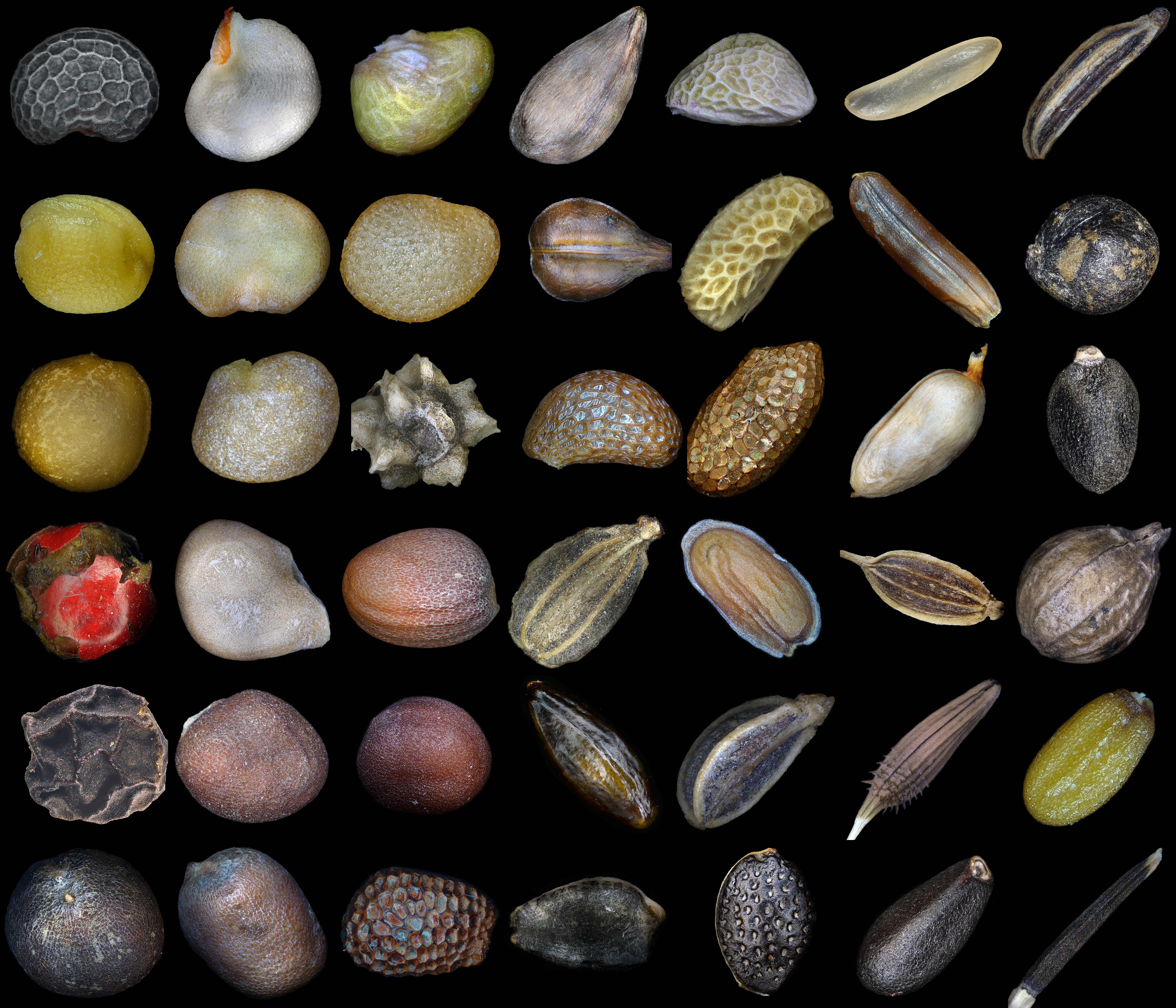
seed
embryonic plant enclosed in a protective outer covering (seed coat)
Wikipedia Q40763 where this came from — the thing this word names — seed
In botany, a seed is a plant structure containing an embryo and stored nutrients in a protective coat called a testa. More generally, the term seed means anything that can be sown, which may include seed and husk or tuber. Seeds are the product of the ripened ovule, after the embryo sac is fertilized by sperm from pollen, forming a zygote. The embryo within a seed develops from the zygote and grows within the mother plant to a certain size before growth is halted.
… 974 more Fold this article
The formation of the seed is the defining part of the process of reproduction in seed plants (spermatophytes). Other plants such as ferns, mosses and liverworts, do not have seeds and use water-dependent means to propagate themselves. Seed plants now dominate biological niches on land, from forests to grasslands both in hot and cold climates.
In the flowering plants, the ovary ripens into a fruit which contains the seed and serves to disseminate it. Many structures commonly referred to as "seeds" are actually dry fruits. Sunflower seeds are sometimes sold commercially while still enclosed within the hard wall of the fruit, which must be split open to reach the seed. Different groups of plants have other modifications, the so-called stone fruits (such as the peach) have a hardened fruit layer (the endocarp) fused to and surrounding the actual seed. Nuts are the one-seeded, hard-shelled fruit of some plants with an indehiscent seed, such as an acorn or hazelnut.
 Wikipedia (English)
read this at Wikipedia (English)
where this came from — Wikipedia (English)
a kind of food
Public linked claims
What the existing sources assert about these meanings. These are source claims, not curated endorsements.
-
A fertilized and ripened ovule, containing an embryonic plant. refers to seed
Wiktionary (English) via Kaikki · assertion revision 3914827
Source, evidence and revision history
Sources
-
Samuel Johnson, A Dictionary of the English Language
Samuel Johnson
-
Wikiquote, public domain
Wikiquote
-
 Wikidata
-
Wikipedia (English)
Wikipedia (English)
-
Wiktionary (English) via Kaikki
Wiktionary (English) via Kaikki
-
Open English WordNet 2025
Open English WordNet 2025
-
GIPHY
GIPHY
-
Urban Dictionary
Urban Dictionary
8 sources on this page