All materials · Fabaceae
Search the dictionaries, texts, images and API records available for this entry. Source matches are not curated endorsements.
Return to the curated articleSource / API coverage for this entry
Counts above cover loaded, permitted materials. Unavailable or not-yet-loaded sources are not evidence of an empty catalogue. Browser-only results remain on your device.
- Bing News · not loaded for this entry
- CineGraph · not loaded for this entry
- Wikimedia Commons · not loaded for this entry
- GIPHY · browser results · inspect complete records for status
- The Guardian · not loaded for this entry
- The Met · not loaded for this entry
- Open Library · not loaded for this entry
- Openverse · not loaded for this entry
- Pexels · not loaded for this entry
- PoetryDB · not loaded for this entry
- Spotify · not loaded for this entry
- Unsplash · not loaded for this entry
- Wikiquote · not loaded for this entry
Inspect complete source records and provider status
Definitions
1 dictionary
 Open English WordNet 2025
2025 ·
noun ·
1 sense
a large family of trees, shrubs, vines, and herbs bearing bean pods; divided for convenience into the subfamilies Caesalpiniaceae, Mimosaceae, Papilionaceae
Open English WordNet 2025
2025 · noun · 1 sense
a large family of trees, shrubs, vines, and herbs bearing bean pods; divided for convenience into the subfamilies Caesalpiniaceae, Mimosaceae, Papilionaceae
-
●
a large family of trees, shrubs, vines, and herbs bearing bean pods; divided for convenience into the subfamilies Caesalpiniaceae, Mimosaceae, Papilionaceaeparts Arachis Brya Caesalpiniaceae Caesalpinioideae Centrolobium Coumarouna Hymenaea Mimosaceae Mimosoideae Papilionaceae Papilionoideae Physostigmapart of Rosales
broader rosid dicot family dicot family family taxonomic group biological group group abstraction entity
Read this at Open English WordNet 2025 where this came from — Open English WordNet 2025
 Urban Dictionary
read this at Urban Dictionary
Asking Urban Dictionary…
Crowd-sourced and unreviewed. Fetched by your browser; nothing is stored here.
Out in the world
every match says why it is here
GIFs
 GIPHY

Looking for GIFs…
Fetched by your browser on this visit; nothing is stored here.
Search matches, not reviewed interpretations. Hover, focus or press Play to animate.
Subjects
1 subject · 0 addressed
Found by name and by the sources. Not reviewed: a shared name is not a shared identity.
Subject
Fabaceae
family of plants
Unclassified
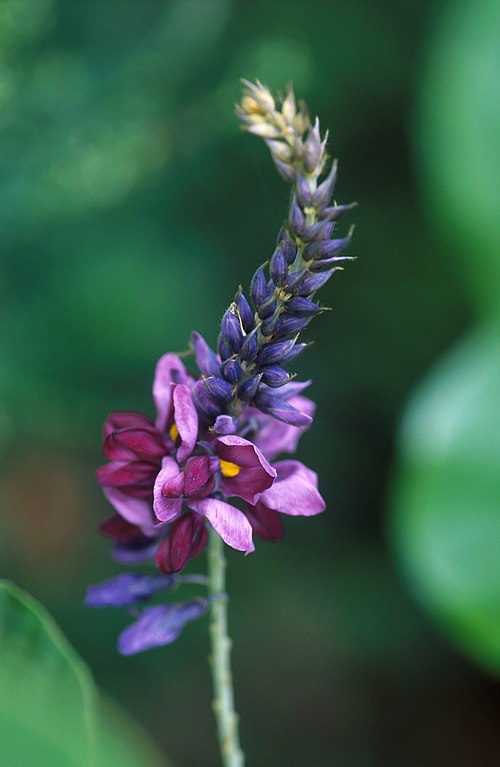
Fabaceae
family of plants
Fabaceae
Wikipedia Q44448 where this came from — the thing this word names — Fabaceae
Fabaceae or Leguminosae, commonly known as the legume, pea, or bean family, is a large and agriculturally important family of flowering plants. It includes trees, shrubs, and perennial or annual herbaceous plants, which are easily recognized by their fruit (legume) and their compound, stipulate leaves. The family is widely distributed, and is the third-largest land plant family in number of species, behind only the Orchidaceae and Asteraceae, with about 765 genera and nearly 20,000 known species.
… 1,855 more Fold this article
The five largest genera of the family are Astragalus (over 3,000 species), Acacia (over 1,000 species), Indigofera (around 700 species), Crotalaria (around 700 species), and Mimosa (around 400 species), which constitute about a quarter of all legume species. The c. 19,000 known legume species amount to about 7% of flowering plant species. Fabaceae is the most common family found in tropical rainforests and dry forests of the Americas and Africa.
Recent molecular and morphological evidence supports the conclusion that the Fabaceae is a single monophyletic family. This conclusion has been supported not only by the degree of interrelation shown by different groups within the family compared with that found among the Leguminosae and their closest relations, but also by all the recent phylogenetic studies based on DNA sequences. These studies confirm that the Fabaceae are a monophyletic group that is closely related to the families Polygalaceae, Surianaceae and Quillajaceae and that they belong to the order Fabales.
Along with the cereals, some fruits and tropical roots, a number of Leguminosae have been staple human foods for millennia, and their use is closely related to human evolution.
The family Fabaceae includes a number of plants that are common in agriculture, including Glycine max (soybean), Phaseolus (beans), Pisum sativum (pea), Cicer arietinum (chickpeas), Vicia faba (broad bean), Vigna unguiculata (cowpea), Medicago sativa (alfalfa), Arachis hypogaea (peanut), Ceratonia siliqua (carob), Tamarindus indica (tamarind), Trigonella foenum-graecum (fenugreek), and Glycyrrhiza glabra (liquorice). A number of species are also weedy pests in different parts of the world, including Cytisus scoparius (broom), Robinia pseudoacacia (black locust), Ulex europaeus (gorse), Pueraria montana (kudzu), and a number of Lupinus species.
 Wikipedia (English)
read this at Wikipedia (English)
where this came from — Wikipedia (English)
a kind of Fabales fabids Eurosids Rosids superrosids Core eudicots Eudicots Mesangiospermae
Public linked claims
What the existing sources assert about these meanings. These are source claims, not curated endorsements.
-
a large family of trees, shrubs, vines, and herbs bearing bean pods; divided for convenience into the subfamilies Caesalpiniaceae, Mimosaceae, Papilionaceae refers to Fabaceae
Open English WordNet 2025 · assertion revision 4360040
Source, evidence and revision history -
a large family of trees, shrubs, vines, and herbs bearing bean pods; divided for convenience into the subfamilies Caesalpiniaceae, Mimosaceae, Papilionaceae refers to Fabaceae
Open English WordNet 2025 · assertion revision 4360664
Source, evidence and revision history
Sources
-
 Wikidata
-
Wikipedia (English)
Wikipedia (English)
-
Open English WordNet 2025
Open English WordNet 2025
-
GIPHY
GIPHY
-
Urban Dictionary
Urban Dictionary
5 sources on this page