All materials · salamander
Search the dictionaries, texts, images and API records available for this entry. Source matches are not curated endorsements.
Return to the curated articleSource / API coverage for this entry
Counts above cover loaded, permitted materials. Unavailable or not-yet-loaded sources are not evidence of an empty catalogue. Browser-only results remain on your device.
- Bing News · not loaded for this entry
- CineGraph · not loaded for this entry
- Wikimedia Commons · not loaded for this entry
- GIPHY · browser results · inspect complete records for status
- The Guardian · not loaded for this entry
- The Met · not loaded for this entry
- Open Library · not loaded for this entry
- Openverse · not loaded for this entry
- Pexels · not loaded for this entry
- PoetryDB · not loaded for this entry
- Spotify · not loaded for this entry
- Unsplash · not loaded for this entry
- Wikiquote · not loaded for this entry
Inspect complete source records and provider status
salamander
+1 variants
- /ˈsæləˌmændə/ Received-Pronunciation
- /ˈsæləˌmændɚ/ General-American
- /ˈsæləˌmɑːndə/ Received-Pronunciation, obsolete
- recording Southern-England
noun
order of amphibians Wikidata where this came from — Wikidata
Definitions
4 dictionaries
 Samuel Johnson
18th century ·
1755 ·
noun ·
823 characters
An animal supposed to live in the fire, and imagined to be very poisonous. Ambrose Parey has a picture of the salamander, with a receipt for her bite; but there is no such creature, the name being now given to a poor har
Samuel Johnson
18th century · 1755 · noun · 823 characters
An animal supposed to live in the fire, and imagined to be very poisonous. Ambrose Parey has a picture of the salamander, with a receipt for her bite; but there is no such creature, the name being now given to a poor har
An animal supposed to live in the fire, and imagined to be very poisonous. Ambrose Parey has a picture of the salamander, with a receipt for her bite; but there is no such creature, the name being now given to a poor harmless insect.
The salamander liveth in the fire, and hath force also to extinguish it. Bacon's Natural History.
According to this hypothesis the whole lunar world is a torrid zone, and may be supposed uninhabitable, except they are
salamanders which dwell therein. Glanv. Sceps.
Read the rest of this entry · 323 characters Fold this entry
Whereas it is commonly said that a salamander extinguisheth
fire, we have found by experience, that on hot coals it dieth
immediately. Brown's Vulgar Errours.
The artist was so encompassed with fire and smoke, that
one would have thought nothing but a salamander could have
been safe in such a situation. Addison's Guardian.
Read this at Samuel Johnson where this came from — Samuel Johnson, A Dictionary of the English Language
 Ambrose Bierce
20th century ·
1911 ·
noun ·
280 characters
Originally a reptile inhabiting fire; later, an anthropomorphous immortal, but still a pyrophile. Salamanders are now believed to be extinct, the last one of which we have an account having been seen in Carcassonne by th
Ambrose Bierce
20th century · 1911 · noun · 280 characters
Originally a reptile inhabiting fire; later, an anthropomorphous immortal, but still a pyrophile. Salamanders are now believed to be extinct, the last one of which we have an account having been seen in Carcassonne by th
Originally a reptile inhabiting fire; later, an anthropomorphous immortal, but still a pyrophile. Salamanders are now believed to be extinct, the last one of which we have an account having been seen in Carcassonne by the Abbe Belloc, who exorcised it with a bucket of holy water.
Read this at Ambrose Bierce where this came from — Ambrose Bierce, The Devil's Dictionary
 Open English WordNet 2025
2025 ·
noun ·
3 senses
any of various typically terrestrial amphibians that resemble lizards and that return to water only to breed
Open English WordNet 2025
2025 · noun · 3 senses
any of various typically terrestrial amphibians that resemble lizards and that return to water only to breed
-
●
any of various typically terrestrial amphibians that resemble lizards and that return to water only to breed
broader amphibian vertebrate chordate animal organism living thing whole object
-
●
reptilian creature supposed to live in fire
broader mythical monster mythical being imaginary being imagination creativity ability cognition psychological feature
-
●
fire iron consisting of a metal rod with a handle; used to stir a fire
broader fire iron implement instrumentality artifact whole object physical entity entity
Read this at Open English WordNet 2025 where this came from — Open English WordNet 2025
 Wiktionary (English) via Kaikki
2026 ·
noun ·
9 senses
A long, slender, chiefly terrestrial amphibian of the order Caudata, superficially resembling a lizard.
Wiktionary (English) via Kaikki
2026 · noun · 9 senses
A long, slender, chiefly terrestrial amphibian of the order Caudata, superficially resembling a lizard.
-
1
A long, slender, chiefly terrestrial amphibian of the order Caudata, superficially resembling a lizard. (countable, uncountable)
-
“[…]and most plainly Pierius, whose words in his hieroglyphicks are these: "Whereas it is commonly said that a salamander extinguisheth fire, we have found by experience that it is so far from quenching hot coals, that it dyeth immediately therein."”
1672, Thomas Browne, “Pseudodoxia Epidemica”, in Simon Wilkin, editor, The Works of Sir Thomas Browne, volume 1, published 1852, page 292
Wiktionary (English) via Kaikki
Plausible
-
“Devils Lake is where I began my career as a limnologist in 1964, studying the lake’s neotenic salamanders and chironomids, or midge flies.[…]The Devils Lake Basin is an endorheic, or closed, basin covering about 9,800 square kilometers in northeastern North Dakota.”
2012 January 26, Douglas Larson, “Runaway Devils Lake”, in American Scientist, volume 100, number 1, archived from the original on 23 May 2012, page 46
Wiktionary (English) via Kaikki
Plausible
-
-
2
A creature much like a lizard that is resistant to and lives in fire (in which it is often depicted in heraldry), hence the elemental being of fire. (countable, uncountable)
-
““Not a chance, Ranger,” Bob Mason was speaking. “This little cuss is a salamander. He's been travelling through fire all day and there isn't a blister on him. …””
1920, Peter B. Kyne, chapter XI, in The Understanding Heart
Wiktionary (English) via Kaikki
Plausible
-
“"There is a vulgar error," says the author of the Brief Natural History, p. 91, "that a salamander lives in the fire. Yet both Galen and Dioscorides refute this opinion; and Mathiolus, in his Commentaries upon Dioscorides, a very famous physician, affirms of them, that by casting of many a salamander into the fire for tryal he found it false. The same experiment is likewise avouched by Joubertus."”
1849, John Brand, Observations on the Popular Antiquities of Great Britain: Chiefly Illustrating the Origin of Our Vulgar and Provincial Customs, Ceremonies, and Superstitions, volume 3, page 372
Wiktionary (English) via Kaikki
Plausible
-
-
3
A metal utensil with a flat head which is heated and put over a dish to brown the top. (countable, uncountable)
show 6 more
-
4
A small broiler (North America) or grill (Britain) that heats the food from above, used in professional cookery primarily for browning. (countable, uncountable)
-
“Overfired grills, or salamanders, can, in addition, be used for making toast and salamandering. They have the heat source above the food[…]. This may comprise sets of burners firing below refractory or metal frets, or surface combustion plaques.”
2006, Frank Saxon, editor, Tolley's Industrial and Commercial Gas Installation Practice [Gas Service Technology; 3], 4th edition, Oxford; Burlington, Mass.: Elsevier Newnes, →ISBN, page 35
Wiktionary (English) via Kaikki
Plausible
-
-
5
A pouched gopher (Geomys pinetis etc.) (archaic, countable, uncountable)
-
6
A large poker. (UK, countable, obsolete, uncountable)
-
“Multitudes had little Tin Kettles in their Houses, with Small-coal kindled, to light their Pipes withal; though in some places they use Candles, in others Salamanders”
1698, William King, A journey to London […] , translation of original by Samuel Sorbière
Wiktionary (English) via Kaikki
Plausible
-
-
7
Solidified material in a furnace hearth. (uncountable)
-
“Salamander tapping is done at the salamander base, which is the bottom-most level of the liquid pool in a blast furnace hearth. A high degree of precision is required to tap the salamander base effectively”
2019, Ian Cameron, Mitren Sukhram, Kyle Lefebvre, Blast Furnace Ironmaking
Wiktionary (English) via Kaikki
Plausible
similar Shadrach -
-
8
A portable stove used to heat or dry buildings under construction. (countable, uncountable)
-
“The necessary fires alone — the salamanders and tinner's pots — had caused dozens of small blazes.”
2003, Erik Larson, The Devil in the White City, Vintage Books, page 192
Wiktionary (English) via Kaikki
Plausible
-
-
9
A fire-eater (performer who pretends to swallow fire). (UK, countable, obsolete, slang, uncountable)
Read this at Wiktionary (English) via Kaikki where this came from — Wiktionary (English) via Kaikki
 Urban Dictionary
read this at Urban Dictionary
Asking Urban Dictionary…
Crowd-sourced and unreviewed. Fetched by your browser; nothing is stored here.
Out in the world
1 things · every match says why it is here
Artworks
1
Saved catalog
-
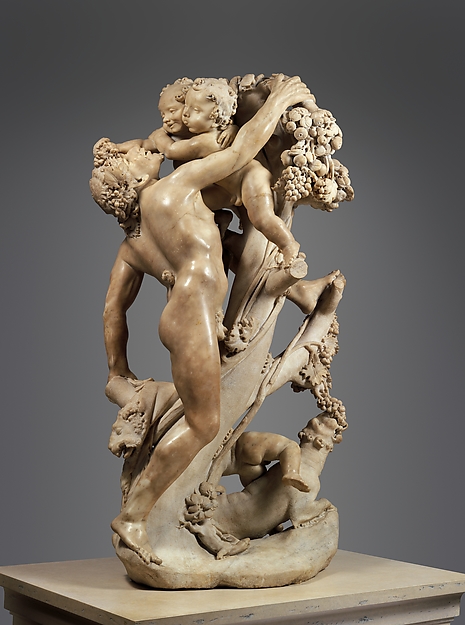
Bacchanal: A Faun Teased by Children
ca. 1616–17 Artwork
Gian Lorenzo Bernini
Purchase, The Annenberg Fund Inc. Gift, Fletcher, Rogers, and Louis V. Bell Funds, and Gift of J. Pierpont Morgan, by exchange, 1976
Open at The Met
Held since 17 Sep 2026.
GIFs
 GIPHY

Looking for GIFs…
Fetched by your browser on this visit; nothing is stored here.
Search matches, not reviewed interpretations. Hover, focus or press Play to animate.
Matches for “salamander” · About these results
Artworks
Saved catalog · The Met
Catalog matches from The Met, held locally rather than searched for on this visit. None is an accepted interpretation: a contributor connects an exact meaning and reviewers decide the claim. Browse saved artworks
- Bacchanal: A Faun Teased by Children: Direct depiction of “Caudata” (Q53663) tagged “Salamanders”. · not yet reviewed
Subjects
1 subject · 0 addressed
Found by name and by the sources. Not reviewed: a shared name is not a shared identity.
Subject
Caudata
order of amphibians
Unclassified
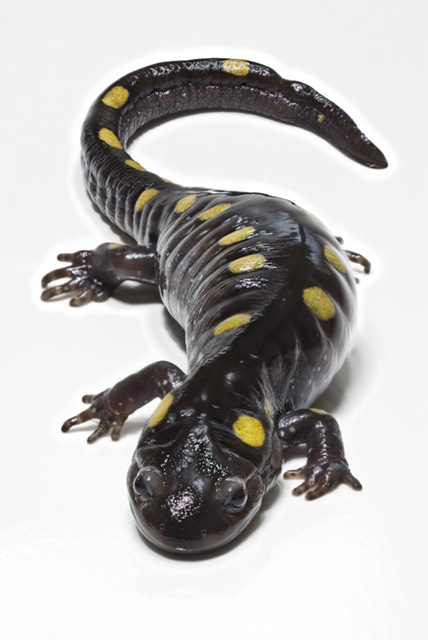
Caudata
order of amphibians
Caudata
Wikipedia Q53663 where this came from — the thing this word names — Caudata
Salamanders are a group of amphibians typically characterized by their lizard-like appearance, with slender bodies, blunt snouts, short limbs projecting at right angles to the body, and the presence of a tail in both larvae and adults. All ten extant salamander families are grouped together under the order Urodela, the sole surviving order from the group Caudata.
… 2,068 more Fold this article
Urodela is a scientific Latin term based on the Ancient Greek οὐρά δήλη: ourà dēlē "conspicuous tail". Caudata is the Latin for "tailed ones", from cauda: "tail".
Salamander diversity is highest in eastern North America, especially in the Appalachian Mountains; most species are found in the Holarctic realm, with some species present in the Neotropical realm. Salamanders never have more than four toes on their front legs and five on their rear legs, but some species have fewer digits and others lack hind limbs. Their permeable skin usually makes them reliant on habitats in or near water or other cool, damp places. Some salamander species are fully aquatic throughout their lives, some take to the water intermittently, and others are entirely terrestrial as adults.
This group of amphibians is capable of regenerating lost limbs as well as other damaged parts of their bodies. Researchers seek to reverse engineer the regenerative processes for potential human medical applications, such as brain and spinal cord injury treatment or preventing harmful scarring during heart surgery recovery. The salamander's ability to regenerate is not limited to limbs but extends to vital organs such as the heart, jaw, and parts of the spinal cord, contrasting most other vertebrates. This ability is special in that it occurs without any type of scarring. This has made salamanders a widespread model organism in scientific research aimed at understanding and achieving regenerative processes for medical advancements in human and animal biology.
Members of the family Salamandridae are mostly known as newts and lack the costal grooves along the sides of their bodies typical of other groups. The skin of some species contains the powerful poison tetrodotoxin; these salamanders tend to be slow-moving and have bright warning coloration to advertise their toxicity. Salamanders typically lay eggs in water and have aquatic larvae, but great variation occurs in their lifecycles. Some species in harsh environments reproduce while still in the Salamander larval state.
 Wikipedia (English)
read this at Wikipedia (English)
where this came from — Wikipedia (English)
a kind of amphibian batrachomorph Tetrapoda Stegocephalia fishapod eotetrapodiform tetrapodomorph Dipnotetrapodomorpha
may also refer to
- Caudata — order of amphibians
Public linked claims
What the existing sources assert about these meanings. These are source claims, not curated endorsements.
-
A long, slender, chiefly terrestrial amphibian of the order Caudata, superficially resembling a lizard. refers to Caudata
Wiktionary (English) via Kaikki · assertion revision 3860923
Source, evidence and revision history -
salamander lexeme entity candidate Caudata
Wikipedia (English) · assertion revision 1450745
Source, evidence and revision history
Sources
-
Ambrose Bierce, The Devil's Dictionary
Ambrose Bierce
-
Samuel Johnson, A Dictionary of the English Language
Samuel Johnson
-
 The Met
-
 Wikidata
-
Wikipedia (English)
Wikipedia (English)
-
Wiktionary (English) via Kaikki
Wiktionary (English) via Kaikki
-
Open English WordNet 2025
Open English WordNet 2025
-
GIPHY
GIPHY
-
Urban Dictionary
Urban Dictionary
9 sources on this page