All materials · elephant
Search the dictionaries, texts, images and API records available for this entry. Source matches are not curated endorsements.
Return to the curated articleSource / API coverage for this entry
Counts above cover loaded, permitted materials. Unavailable or not-yet-loaded sources are not evidence of an empty catalogue. Browser-only results remain on your device.
- Bing News · not loaded for this entry
- CineGraph · not loaded for this entry
- Wikimedia Commons · not loaded for this entry
- GIPHY · browser results · inspect complete records for status
- The Guardian · not loaded for this entry
- The Met · not loaded for this entry
- Open Library · not loaded for this entry
- Openverse · not loaded for this entry
- Pexels · not loaded for this entry
- PoetryDB · not loaded for this entry
- Spotify · not loaded for this entry
- Unsplash · not loaded for this entry
- Wikiquote · not loaded for this entry
Inspect complete source records and provider status
elephant
+4 variants
- /ˈe.lɪ.ˈfæːnʈ/ India
- /ˈe.lɪ.ˈfenʈ/ India
- /ˈeləfənt/ Australia, New-Zealand
- /ˈɛləfənt/ Canada, General-American
- /ˈɛlɪfənt/ Received-Pronunciation
- /elefant/ Philippines
- recording General-American
noun
large terrestrial mammals from Africa and Asia Wikidata where this came from — Wikidata
Definitions
3 dictionaries
 Samuel Johnson
18th century ·
1755 ·
noun ·
1,484 characters
The largest of all quadrupeds, of whose sagacity, faithfulness, prudence, and even understanding, many surprising relations are given. This animal is not carnivorous, but feeds on hay, herbs, and all sorts of pulse; and
Samuel Johnson
18th century · 1755 · noun · 1,484 characters
The largest of all quadrupeds, of whose sagacity, faithfulness, prudence, and even understanding, many surprising relations are given. This animal is not carnivorous, but feeds on hay, herbs, and all sorts of pulse; and
The largest of all quadrupeds, of whose sagacity, faithfulness, prudence, and even understanding, many surprising relations are given. This animal is not carnivorous, but feeds on hay, herbs, and all sorts of pulse; and it is said to be extremely long lifed. It is naturally very gentle; but when enraged, no creature is more terrible. He is supplied with a trunk, or long hollow cartilage, like a large trumpet, which hangs between his teeth, and serves him for hands: by one blow with his trunk he will kill a camel or a horse, and will raise a prodigious weight with it.
Read the rest of this entry · 905 characters Fold this entry
His teeth are the ivory so well known in Europe, some of which have been seen as large as a man's thigh, and a fathom in length. Wild elephants are taken with the help of a female ready for the male: she is confined to a narrow place, round which pits are dug; and these being covered with a little earth scattered over hurdles, the male elephants easily fall into the snare. In copulation the female receives the male lying upon her back; and such is his pudicity, that he never covers the female so long as any one appears in sight.
Calmet.
He loves to hear,
That unicorns may be betray'd with trees,
And bears with glasses, elephants with holes. Sh. Jul. Cæs.
The elephant hath joints, but not for courtesy;
His legs are for necessity, not flexure. Sh. Troil. and Cressida.
2. Ivory; the teeth of elephants.
High o'er the gate, in elephant and gold,
The crowd shall Cæsar's Indian war behold. Dryden's Virg.
Read this at Samuel Johnson where this came from — Samuel Johnson, A Dictionary of the English Language
 Open English WordNet 2025
2025 ·
noun ·
2 senses
five-toed pachyderm
Open English WordNet 2025
2025 · noun · 2 senses
five-toed pachyderm
-
●
five-toed pachydermpart of Elephantidae
broader pachyderm placental mammal vertebrate chordate animal organism living thing
-
●
the symbol of the Republican Party; introduced in cartoons by Thomas Nast in 1874
broader emblem symbol representational process basic cognitive process process cognition psychological feature abstraction
Read this at Open English WordNet 2025 where this came from — Open English WordNet 2025
 Wiktionary (English) via Kaikki
2026 ·
noun ·
6 senses
A large mammal of the family Elephantidae in the order Proboscidea, having a trunk, and native to Africa and Asia.
Wiktionary (English) via Kaikki
2026 · noun · 6 senses
A large mammal of the family Elephantidae in the order Proboscidea, having a trunk, and native to Africa and Asia.
-
1
A large mammal of the family Elephantidae in the order Proboscidea, having a trunk, and native to Africa and Asia. (countable, uncountable)
-
2
Anything huge and ponderous. (countable, figuratively, uncountable)
-
3
Synonym of elephant paper. (countable, uncountable)similar elephant paper
show 3 more
-
4
used when counting to add length, so that each count takes about one second (UK, childish, countable, uncountable)
-
5
Ivory. (obsolete, uncountable)
-
“He sent rich gifts of elephant and gold.”
1697, Virgil, “(please specify the book number)”, in John Dryden, transl., The Works of Virgil: Containing His Pastorals, Georgics, and Æneis. […], London: […] Jacob Tonson, […], →OCLC
Wiktionary (English) via Kaikki
Plausible
-
-
6
A xiangqi piece that is moved two points diagonally, may not jump over intervening pieces and may not cross the river. (countable, uncountable)
Read this at Wiktionary (English) via Kaikki where this came from — Wiktionary (English) via Kaikki
 Urban Dictionary
read this at Urban Dictionary
Asking Urban Dictionary…
Crowd-sourced and unreviewed. Fetched by your browser; nothing is stored here.
Out in the world
12 things · every match says why it is here
Artworks
12
Saved catalog
-

Devananda's Fourteen Auspicious Dreams Foretelling the Birth of Mahavira: Folio from a Kalpasutra Manuscript
ca. 1465 Artwork
Master of the Jaunpur Kalpasutra
Purchase, Cynthia Hazen Polsky Gift, 1992
Open at The Met -

The Garden of Earthly Delights
1490 Artwork
Hieronymus Bosch
The Garden of Earthly Delights by Bosch High Resolution 2.jpg · Wikimedia Commons
Open at Wikidata -
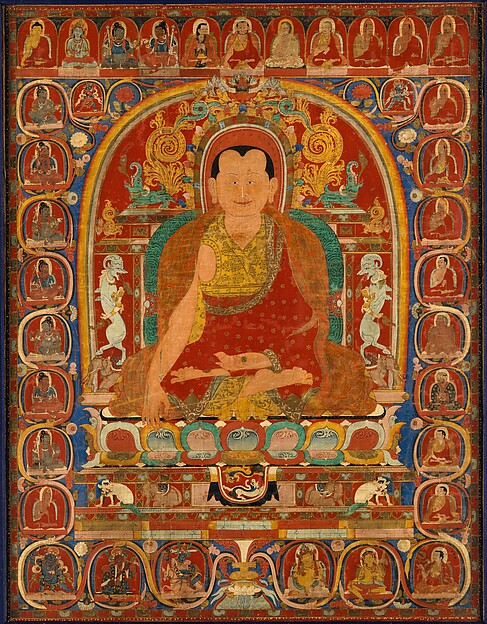
Lineage Portrait of an Abbot
ca. 1350 Artwork
Purchase, Miriam and Ira D. Wallach Philanthropic Fund Gift, 1991
Open at The Met -

-

-

Standing Ganesha
second half 7th century Artwork
Rogers, Louis V. Bell and Fletcher Funds, 1982
Open at The Met -

Drum panel with scenes of the Great Departure and Temptation of the Buddha
first half 3rd century CE Artwork
Fletcher Fund, 1928
Open at The Met -

Seated Ganesha
ca. 15th century Artwork
Gift of Steven Kossak, The Kronos Collections, in honor of Helen Cook, 1983
Open at The Met -
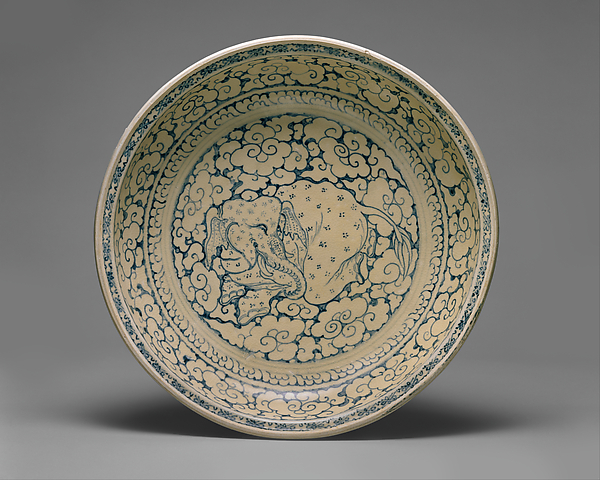
Dish with Recumbent Elephant Surrounded by Clouds
15th–16th century Artwork
Purchase, Friends of Asian Art Gifts, 1998
Open at The Met -

Footed Dish with Equestrian Hunting Scene
ca. 8th century Artwork
Purchase, Friends of Asian Art Gifts, 1999
Open at The Met -

A Pair of Royal Earrings
ca. 1st century BCE Artwork
Gift of John and Evelyn Kossak, The Kronos Collections, 1981
Open at The Met -
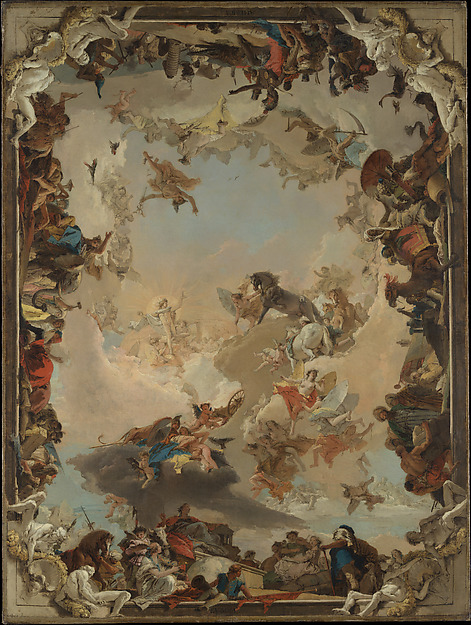
Allegory of the Planets and Continents
1752 Artwork
Giovanni Battista Tiepolo
Gift of Mr. and Mrs. Charles Wrightsman, 1977
Open at The Met
Held since 17 Sep 2026.
GIFs
 GIPHY

Looking for GIFs…
Fetched by your browser on this visit; nothing is stored here.
Search matches, not reviewed interpretations. Hover, focus or press Play to animate.
Matches for “elephant” · About these results
Artworks
Saved catalog · The Met, Wikidata
Catalog matches from The Met, Wikidata, held locally rather than searched for on this visit. None is an accepted interpretation: a contributor connects an exact meaning and reviewers decide the claim. Browse saved artworks
- Devananda's Fourteen Auspicious Dreams Foretelling the Birth of Mahavira: Folio from a Kalpasutra Manuscript: Direct depiction of “elephant” (Q7378) tagged “Elephants”. · not yet reviewed
- The Garden of Earthly Delights: Direct depiction of “elephant” (Q7378) tagged “elephant”. · not yet reviewed
- Lineage Portrait of an Abbot: Direct depiction of “elephant” (Q7378) tagged “Elephants”. · not yet reviewed
- The Dream: Direct depiction of “elephant” (Q7378) tagged “elephant”. · not yet reviewed
- Vishnu: Direct depiction of “elephant” (Q7378) tagged “Elephants”. · not yet reviewed
- Standing Ganesha: Direct depiction of “elephant” (Q7378) tagged “Elephants”. · not yet reviewed
- Drum panel with scenes of the Great Departure and Temptation of the Buddha: Direct depiction of “elephant” (Q7378) tagged “Elephants”. · not yet reviewed
- Seated Ganesha: Direct depiction of “elephant” (Q7378) tagged “Elephants”. · not yet reviewed
- Dish with Recumbent Elephant Surrounded by Clouds: Direct depiction of “elephant” (Q7378) tagged “Elephants”. · not yet reviewed
- Footed Dish with Equestrian Hunting Scene: Direct depiction of “elephant” (Q7378) tagged “Elephants”. · not yet reviewed
- A Pair of Royal Earrings: Direct depiction of “elephant” (Q7378) tagged “Elephants”. · not yet reviewed
- Allegory of the Planets and Continents: Direct depiction of “elephant” (Q7378) tagged “Elephants”. · not yet reviewed
Subjects
13 subjects · 0 addressed
Found by name and by the sources. Not reviewed: a shared name is not a shared identity.
Subject
elephant
large terrestrial mammals from Africa and Asia
Unclassified
Subject
Elephant
Wikimedia disambiguation page
Unclassified
Subject
Elephant
book
Unclassified
Subject
Elephant
human settlement in Pennsylvania, United States
Unclassified
Subject
Elephant
single
Unclassified
Subject
Elephant
2020 American documentary film
Unclassified
Subject
Elephant
1993 film
Unclassified
Subject
Elephant
2003 drama film directed by Gus Van Sant
Unclassified
Subject
Elephant
2012 song by Tame Impala
Unclassified
Subject
Elephant
2003 studio album by the White Stripes
Unclassified
Subject
Elephant
1989 film directed by Alan John Clarke
Unclassified
Subject
Elephant
1934 concrete sculpture in Szczecin, Poland
Unclassified
Subject
Elephant
collection of short stories
Unclassified
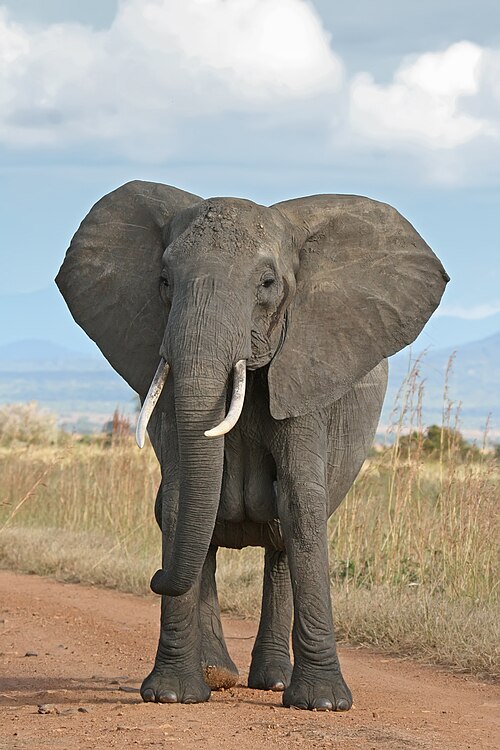
elephant
large terrestrial mammals from Africa and Asia
Elephantidae
Wikipedia Q7378 where this came from — the thing this word names — elephant
Elephants are the largest living land animals. Three living species are currently recognised: the African bush elephant (Loxodonta africana), the African forest elephant (L. cyclotis), and the Asian elephant (Elephas maximus). They are the only surviving members of the family Elephantidae and the order Proboscidea; extinct relatives include mammoths and mastodons.
… 2,710 more Fold this article
Distinctive features of elephants include a long proboscis called a trunk, tusks, large ear flaps, pillar-like legs, and tough but sensitive grey skin. The trunk is prehensile, bringing food and water to the mouth and grasping objects. Tusks, which are derived from the incisor teeth, serve both as weapons and as tools for moving objects and digging. The large ear flaps assist in maintaining a constant body temperature as well as in communication. African elephants have larger ears and concave backs, whereas Asian elephants have smaller ears and convex or level backs.
Elephants are scattered throughout sub-Saharan Africa, South Asia, and Southeast Asia. They live in different habitats, including savannahs, forests, deserts, and marshes. They are herbivorous, and they stay near water when it is accessible. They are considered to be keystone species, due to their impact on their environments. Elephants have a fission–fusion society, in which multiple family groups come together to socialise. Females (cows) tend to live in family groups, which can consist of one female with its calves or several related females with offspring. The leader of a female group, usually the oldest cow, is known as the matriarch.
Males (bulls) leave their family groups when they reach puberty and may live alone or with other males. Adult bulls mostly interact with family groups when looking for a mate. They enter a state of increased testosterone and aggression known as musth, which helps them gain dominance over other males as well as reproductive success. Calves are the centre of attention in their family groups and rely on their mothers for as long as three years. Elephants can live up to 70 years in the wild. They communicate by touch, sight, smell, and sound; elephants use infrasound and seismic communication over long distances. Elephant intelligence has been compared with that of primates and cetaceans. They appear to have self-awareness, and possibly show concern for dying and dead individuals of their kind.
African bush elephants and Asian elephants are listed as endangered and African forest elephants as critically endangered on the IUCN Red Lists. One of the biggest threats to elephant populations is the ivory trade, as the animals are poached for their ivory tusks. Other threats to wild elephants include habitat destruction and conflicts with local people. Elephants are used as working animals in Asia. In the past, they were used in war; today, they are often controversially put on display in zoos, or employed for entertainment in circuses. Elephants have an iconic status in human culture and have been widely featured in art, folklore, religion, literature, and popular culture.
 Wikipedia (English)
read this at Wikipedia (English)
where this came from — Wikipedia (English)
a kind of mammal mammaliaform Mammaliamorpha prozostrodontian probainognathian Eucynodontia Epicynodontia Cynodontia
may also refer to
- elephant — large terrestrial mammals from Africa and Asia
Public linked claims
What the existing sources assert about these meanings. These are source claims, not curated endorsements.
-
A large mammal of the family Elephantidae in the order Proboscidea, having a trunk, and native to Africa and Asia. refers to elephant
Wiktionary (English) via Kaikki · assertion revision 3860555
Source, evidence and revision history -
elephant lexeme entity candidate elephant
Wikipedia (English) · assertion revision 1439774
Source, evidence and revision history
Sources
-
Samuel Johnson, A Dictionary of the English Language
Samuel Johnson
-
 The Met
-
 Wikidata
-
Wikipedia (English)
Wikipedia (English)
-
Wiktionary (English) via Kaikki
Wiktionary (English) via Kaikki
-
Open English WordNet 2025
Open English WordNet 2025
-
GIPHY
GIPHY
-
Urban Dictionary
Urban Dictionary
8 sources on this page