All materials · clupeid
Search the dictionaries, texts, images and API records available for this entry. Source matches are not curated endorsements.
Return to the curated articleSource / API coverage for this entry
Counts above cover loaded, permitted materials. Unavailable or not-yet-loaded sources are not evidence of an empty catalogue. Browser-only results remain on your device.
- Bing News · not loaded for this entry
- CineGraph · not loaded for this entry
- Wikimedia Commons · not loaded for this entry
- GIPHY · browser results · inspect complete records for status
- The Guardian · not loaded for this entry
- The Met · not loaded for this entry
- Open Library · not loaded for this entry
- Openverse · not loaded for this entry
- Pexels · not loaded for this entry
- PoetryDB · not loaded for this entry
- Spotify · not loaded for this entry
- Unsplash · not loaded for this entry
- Wikiquote · not loaded for this entry
Inspect complete source records and provider status
clupeid
noun
family of fishes (the herrings, shads, sardines, hilsa and menhadens) Wikidata where this came from — Wikidata
Definitions
2 dictionaries
 Open English WordNet 2025
2025 ·
noun ·
1 sense
any of numerous soft-finned schooling food fishes of shallow waters of northern seas
Open English WordNet 2025
2025 · noun · 1 sense
any of numerous soft-finned schooling food fishes of shallow waters of northern seas
-
●
any of numerous soft-finned schooling food fishes of shallow waters of northern seaspart of Clupeidae
broader soft-finned fish teleost fish bony fish fish aquatic vertebrate vertebrate chordate animal
Read this at Open English WordNet 2025 where this came from — Open English WordNet 2025
 Wiktionary (English) via Kaikki
2026 ·
noun ·
1 sense
Any of many soft-finned fish of the family Clupeidae.
Wiktionary (English) via Kaikki
2026 · noun · 1 sense
Any of many soft-finned fish of the family Clupeidae.
-
1
Any of many soft-finned fish of the family Clupeidae.
-
“The open water expanses of the lake have been occupied mainly by two species of clupeids, as well as by Eutropius niloticus and Physailia pellucida.”
1973, Willis A. Evans, John Vanderpuye, “Early Development of Fish Populations and Fisheries of Volta Lake”, in William C. Ackermann, Gilbert F. White, E. B. Worthington, editors, Man-Made Lakes: Their Problems and Environmental Effects, page 117
Wiktionary (English) via Kaikki
Plausible
-
“In the pelagic zone of Lake Tanganyika, the endemic clupeids are planktivores which migrate surfacewards at night (cf. marine clupeids, p. 227).”
1987, R. H. Lowe-McConnell, Ecological Studies in Tropical Fish Communities, page 90
Wiktionary (English) via Kaikki
Plausible
1 more quotation for this sense
-
“Although most marine fishes studied thus far cannot detect sound frequencies above about 500 Hz, at least some clupeids can detect considerably higher frequencies.”
2008, Gene Helfman, Bruce B. Collette, Douglas E. Facey, Brian W. Bowen, The Diversity of Fishes: Biology, Evolution, and Ecology, page 80
Wiktionary (English) via Kaikki
Plausible
-
Read this at Wiktionary (English) via Kaikki where this came from — Wiktionary (English) via Kaikki
 Urban Dictionary
read this at Urban Dictionary
Asking Urban Dictionary…
Crowd-sourced and unreviewed. Fetched by your browser; nothing is stored here.
Out in the world
every match says why it is here
GIFs
 GIPHY

Looking for GIFs…
Fetched by your browser on this visit; nothing is stored here.
Search matches, not reviewed interpretations. Hover, focus or press Play to animate.
Subjects
1 subject · 0 addressed
Found by name and by the sources. Not reviewed: a shared name is not a shared identity.
Subject
Clupeidae
family of fishes (the herrings, shads, sardines, hilsa and menhadens)
Unclassified
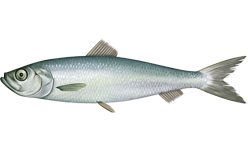
Clupeidae
family of fishes (the herrings, shads, sardines, hilsa and menhadens)
Clupeidae
Wikipedia Q27141 where this came from — the thing this word names — Clupeidae
Clupeidae is a family of clupeiform ray-finned fishes, comprising, for instance, the herrings and sprats. Many members of the family have a body protected with shiny cycloid (very smooth and uniform) scales, a single dorsal fin, and a fusiform body for quick, evasive swimming and pursuit of prey composed of small planktonic animals. Due to their small size and position in the lower trophic level of many marine food webs, the levels of methylmercury they bioaccumulate are very low, reducing the risk of mercury poisoning when consumed.
The earliest known fossil members of this group are the stem-clupeids Italoclupea and Lecceclupea from the late Campanian/early Maastrichtian of Italy.
 Wikipedia (English)
read this at Wikipedia (English)
where this came from — Wikipedia (English)
a kind of clupeiform Actinopteri actinopterygian class Osteichthyes Eugnathostomata gnathostome vertebrate Chordata
may also refer to
- Clupeidae — family of fishes (the herrings, shads, sardines, hilsa and menhadens)
Public linked claims
What the existing sources assert about these meanings. These are source claims, not curated endorsements.
-
clupeid lexeme entity candidate Clupeidae
Wikipedia (English) · assertion revision 1445376
Source, evidence and revision history -
Any of many soft-finned fish of the family Clupeidae. refers to Clupeidae
Wikipedia (English) · assertion revision 4343835
Source, evidence and revision history
Sources
-
 Wikidata
-
Wikipedia (English)
Wikipedia (English)
-
Wiktionary (English) via Kaikki
Wiktionary (English) via Kaikki
-
Open English WordNet 2025
Open English WordNet 2025
-
GIPHY
GIPHY
-
Urban Dictionary
Urban Dictionary
6 sources on this page