All materials · banknote
Search the dictionaries, texts, images and API records available for this entry. Source matches are not curated endorsements.
Return to the curated articleSource / API coverage for this entry
Counts above cover loaded, permitted materials. Unavailable or not-yet-loaded sources are not evidence of an empty catalogue. Browser-only results remain on your device.
- Bing News · not loaded for this entry
- CineGraph · not loaded for this entry
- Wikimedia Commons · not loaded for this entry
- GIPHY · browser results · inspect complete records for status
- The Guardian · not loaded for this entry
- The Met · not loaded for this entry
- Open Library · not loaded for this entry
- Openverse · not loaded for this entry
- Pexels · not loaded for this entry
- PoetryDB · not loaded for this entry
- Spotify · not loaded for this entry
- Unsplash · not loaded for this entry
- Wikiquote · not loaded for this entry
Inspect complete source records and provider status
banknote
+4 variants
- /ˈbeɪ̯ŋkˌnoʊ̯t/
- /ˈbeɪ̯ŋkˌnɔʊ̯t/
- /ˈbæŋkˌnoʊ̯t/ General-American
- /ˈbæŋkˌnɔʊ̯t/ General-American
- /ˈbæŋkˌnɵ̞ʊ̯t/ Received-Pronunciation
- /ˈbæŋknəʊ̯t/ Received-Pronunciation
- recording US
noun
form of physical currency made of paper or polymer Wikidata where this came from — Wikidata
Definitions
2 dictionaries
 Open English WordNet 2025
2025 ·
noun ·
1 sense
a piece of paper money (especially one issued by a central bank)
Open English WordNet 2025
2025 · noun · 1 sense
a piece of paper money (especially one issued by a central bank)
-
●
a piece of paper money (especially one issued by a central bank)
broader paper money currency medium of exchange standard system of measurement measure abstraction entity
Read this at Open English WordNet 2025 where this came from — Open English WordNet 2025
 Wiktionary (English) via Kaikki
2026 ·
noun ·
2 senses
A piece of currency made of paper or polymer.
Wiktionary (English) via Kaikki
2026 · noun · 2 senses
A piece of currency made of paper or polymer.
-
1
A piece of currency made of paper or polymer.
-
2
A promissory note issued by a bank, payable at a given time to a specific beneficiary. (historical)
-
“Was Captain Macheath here this Morning, for the Bank-notes he left with you last Week?”
1728, John Gay, The Beggar's Opera, I.4
Wiktionary (English) via Kaikki
Plausible
similar bank paper -
Read this at Wiktionary (English) via Kaikki where this came from — Wiktionary (English) via Kaikki
Examples
2 named by the record
-
2
filed as instances of banknote by
 Wikidata
, none of them a word yet
 Urban Dictionary
read this at Urban Dictionary
Asking Urban Dictionary…
Crowd-sourced and unreviewed. Fetched by your browser; nothing is stored here.
Out in the world
every match says why it is here
GIFs
 GIPHY

Looking for GIFs…
Fetched by your browser on this visit; nothing is stored here.
Search matches, not reviewed interpretations. Hover, focus or press Play to animate.
Subjects
1 subject · 0 addressed
Found by name and by the sources. Not reviewed: a shared name is not a shared identity.
Subject
banknote
form of physical currency made of paper or polymer
Unclassified
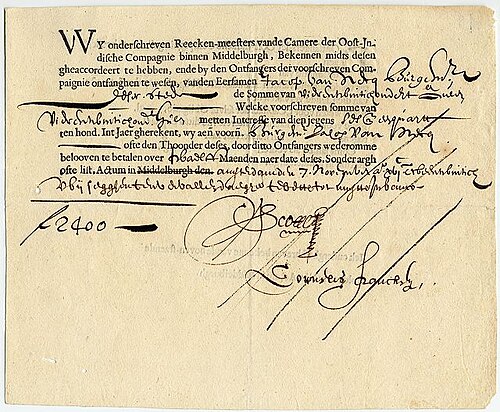
banknote
form of physical currency made of paper or polymer
Wikipedia Q47433 where this came from — the thing this word names — banknote
A banknote or bank note – also called a bill (North American English) or simply a note – is a type of paper money that is made and distributed ("issued") by a bank of issue, payable to the bearer on demand. Banknotes were originally issued by commercial banks, which were legally required to redeem the notes for legal tender (usually gold or silver coin) when presented to the chief cashier of the originating bank.
… 1,145 more Fold this article
These commercial banknotes were only traded at face value in the market served by the issuing bank. Commercial banknotes have primarily been replaced by national banknotes issued by central banks or monetary authorities.
By extension, the word "banknote" is sometimes used (including by collectors) to refer more generally to paper money, but in a strict sense notes that have not been issued by banks, e.g. government notes, are not banknotes.
National banknotes are often, but not always, legal tender, meaning that courts of law are required to recognize them as satisfactory payment of money debts. Historically, banks sought to ensure that they could always pay customers in coins when they presented banknotes for payment. This practice of "backing" notes with something of substance is the basis for the history of central banks backing their currencies in gold or silver. Today, most national currencies have no backing in precious metals or commodities and have value only by fiat. Except for non-circulating high-value or precious metal issues, coins are used for lower-value monetary units, while banknotes are used for higher values.
 Wikipedia (English)
read this at Wikipedia (English)
where this came from — Wikipedia (English)
Public linked claims
What the existing sources assert about these meanings. These are source claims, not curated endorsements.
-
Chao instance of banknote
Wikidata · assertion revision 1212829
Source, evidence and revision history -
silver certificate instance of banknote
Wikidata · assertion revision 1230957
Source, evidence and revision history -
A piece of currency made of paper or polymer. refers to banknote
Wiktionary (English) via Kaikki · assertion revision 3915358
Source, evidence and revision history
Sources
-
Wikidata
Wikidata
-
Wikipedia (English)
Wikipedia (English)
-
Wiktionary (English) via Kaikki
Wiktionary (English) via Kaikki
-
Open English WordNet 2025
Open English WordNet 2025
-
GIPHY
GIPHY
-
Urban Dictionary
Urban Dictionary
6 sources on this page