All materials · worm
Search the dictionaries, texts, images and API records available for this entry. Source matches are not curated endorsements.
Return to the curated articleSource / API coverage for this entry
Counts above cover loaded, permitted materials. Unavailable or not-yet-loaded sources are not evidence of an empty catalogue. Browser-only results remain on your device.
- Bing News · not loaded for this entry
- CineGraph · not loaded for this entry
- Wikimedia Commons · not loaded for this entry
- GIPHY · browser results · inspect complete records for status
- The Guardian · not loaded for this entry
- The Met · not loaded for this entry
- Open Library · not loaded for this entry
- Openverse · not loaded for this entry
- Pexels · not loaded for this entry
- PoetryDB · not loaded for this entry
- Spotify · not loaded for this entry
- Unsplash · not loaded for this entry
- Wikiquote · not loaded for this entry
Inspect complete source records and provider status
worm
+4 variants
- /wɜːm/ Received-Pronunciation
- /wɝm/ US
- recording Australia
- recording General-American
- recording UK
- recording US
noun
any animal with a long, pipe-like body and no limbs Wikidata where this came from — Wikidata
Definitions
3 dictionaries
 Samuel Johnson
18th century ·
1755 ·
noun ·
1,516 characters
1. A small harmless serpent that lives in the earth. Both the princes Thy broken faith hath made a prey to worms. Shakespeare. Help me into some house, Or I shall faint;—a plague o'both your houses! They have made worms
Samuel Johnson
18th century · 1755 · noun · 1,516 characters
1. A small harmless serpent that lives in the earth. Both the princes Thy broken faith hath made a prey to worms. Shakespeare. Help me into some house, Or I shall faint;—a plague o'both your houses! They have made worms
1. A small harmless serpent that lives in the earth.
Both the princes
Thy broken faith hath made a prey to worms. Shakespeare.
Help me into some house,
Or I shall faint;—a plague o'both your houses!
They have made worms meat of me. Shakespeare.
Though worms devour me, though I turn to mold,
Yet in my flesh I shall his face behold:
I from my marble monument shall rise
Again intire, and see him with these eyes. Sandy's Par.
Read the rest of this entry · 1,077 characters Fold this entry
At once came forth whatever creeps the ground,
Insect or worm. Milton.
2. A poisonous serpent.
The mortal worm. Shakespeare.
3. Animal bred in the body.
Physicians observe these worms engendered within the body
of man. Harvey on Consumptions.
4. The animal that spins silk.
Thou owest the worm no silk, the sheep no wool. Shakesp.
5. Grubs that gnaw wood and furniture.
'Tis no awkward claim,
Pick'd from the worm-holes of long vanish'd days,
Nor from the dust of old oblivion rak'd. Shakesp. Hen. V.
6. Something tormenting.
The worm of conscience still begnaw thy soul. Shakesp.
The chains of darkness, and th' undying worm. Milton.
7. Any thing vermiculated, or turned round; any thing spiral.
The threads of screws, when bigger than can be made in
screw-plates, are called worms. The length of a worm begins
at the one end of the spindle, and ends at the other; the
breadth of the worm is contained between any two grooves on
the spindle; the depth of the worm is cut into the diameter
of the spindle, viz. the depth between the outside of the
worm, and the bottom of the groove. Moxon.
Read this at Samuel Johnson where this came from — Samuel Johnson, A Dictionary of the English Language
 Open English WordNet 2025
2025 ·
noun ·
4 senses
any of numerous relatively small elongated soft-bodied animals especially of the phyla Annelida and Chaetognatha and Nematoda and Nemertea and Platyhelminthes; also many insect larvae
Open English WordNet 2025
2025 · noun · 4 senses
any of numerous relatively small elongated soft-bodied animals especially of the phyla Annelida and Chaetognatha and Nematoda and Nemertea and Platyhelminthes; also many insect larvae
-
●
any of numerous relatively small elongated soft-bodied animals especially of the phyla Annelida and Chaetognatha and Nematoda and Nemertea and Platyhelminthes; also many insect larvae
broader invertebrate animal organism living thing whole object physical entity entity
-
●
screw thread on a gear with the teeth of a worm wheel or rackpart of worm gear
broader screw fastener restraint device instrumentality artifact whole object
-
●
a software program capable of reproducing itself that can spread from one computer to the next over a network
broader malevolent program program software code coding system writing written communication communication
1 more from this source · 1 senses
-
●
a person who has a nasty or unethical character undeserving of respect
broader unpleasant person unwelcome person actor causal agent physical entity entity
Read this at Open English WordNet 2025 where this came from — Open English WordNet 2025
 Wiktionary (English) via Kaikki
2026 ·
noun ·
19 senses
A generally tubular invertebrate of the annelid phylum; an earthworm.
Wiktionary (English) via Kaikki
2026 · noun · 19 senses
A generally tubular invertebrate of the annelid phylum; an earthworm.
-
1
A generally tubular invertebrate of the annelid phylum; an earthworm.
-
“‘Children crawled over each other like little grey worms in the gutters,’ he said. ‘The only red things about them were their buttocks and they were raw. Their faces looked as if snails had slimed on them and their mothers were like great sick beasts whose byres had never been cleared.[…]’”
1963, Margery Allingham, chapter 7, in The China Governess: A Mystery, London: Chatto & Windus, →OCLC
Wiktionary (English) via Kaikki
Plausible
-
-
2
More loosely, any of various tubular invertebrates resembling annelids but not closely related to them, such as velvet worms, acorn worms, flatworms, or roundworms. See Appendix:English worms.
-
“Leaning that I might eat, I stretched and clung Over the shapeless depth in which those corpses hung. A woman’s shape, now lank and cold and blue, The dwelling of the many-coloured worm, Hung there […]”
1817 December, Percy Bysshe Shelley, “The Revolt of Islam. […]”, in [Mary] Shelley, editor, The Poetical Works of Percy Bysshe Shelley. […], volume I, London: Edward Moxon […], published 1839, →OCLC, page 216
Wiktionary (English) via Kaikki
Plausible
-
-
3
Any creeping or crawling animal, such as a snake (cf. “dragon”; blindworm, slowworm, “legless lizard”), snail, or caterpillar. (archaic, poetic)
-
“[…] No, ’tis slander, Whose edge is sharper than the sword, whose tongue Outvenoms all the worms of Nile […]”
1611 April (first recorded performance), William Shakespeare, “The Tragedie of Cymbeline”, in Mr. William Shakespeares Comedies, Histories, & Tragedies […] (First Folio), London: […] Isaac Iaggard, and Ed[ward] Blount, published 1623, →OCLC, [Act III, scene iv]
Wiktionary (English) via Kaikki
Plausible
-
“When Cerberus perceived us, the great worm! His mouth he opened and displayed his tusks; Not a limb had he that was motionless.”
1867, Dante Alighieri, “The Divine Comedy”, in Henry Wadsworth Longfellow, transl., Inferno, volume I, Boston: Ticknor & Fields, Canto 6, lines 22-24, p. 35
Wiktionary (English) via Kaikki
Plausible
-
show 16 more
-
4
A maggot or any other insect larva with similar shape and behavior. (archaic, broadly, informal, poetic)
-
5
A dragon, today especially Germanic dragon, more often of the serpentine or wingless type, for example sea serpent, but also any kind of dragon. (archaic, poetic)
-
“In the Cross of Cong (A.D. 1123) the Celtic inter-laced patterns are found side by side with the "worm-dragon" ornament ..”
1922, A. Walsh, Scandinavian Relations with Ireland during the Viking Period
Wiktionary (English) via Kaikki
Plausible
-
“Indeed the allusion to the more renowned worm killed by the Wælsing is sufficient indication that the poet selected a dragon of well-founded purpose[.]”
1936, J. R. R. Tolkien, Beowulf: The Monsters and the Critics, Norwood, Pa.: Norwood Editions, published 1976, page 9
Wiktionary (English) via Kaikki
Plausible
1 more quotation for this sense
-
“The after fifty years a foul worm, a dragon, took it upon itself to hold sway through the heavens at night.”
1961, Norma Lorre Goodrich, “Beowulf”, in The Medieval Myths, New York: The New American Library, page 39
Wiktionary (English) via Kaikki
Plausible
similar wyrm -
-
6
Either a mythical "dragon" (especially wingless), a gigantic sea serpent, or a creature that resembles a Mongolian death worm. (archaic, poetic)similar wyrm
-
7
A contemptible or devious being.
-
“But I am a worme, and no man; a reproach of men, and despised of the people.”
1611, The Holy Bible, […] (King James Version), London: […] Robert Barker, […], →OCLC, Psalms 22:6
Wiktionary (English) via Kaikki
Plausible
-
“Would he devote that Sacred Head For ſuch a Worm as I?”
1707, Isaac Watts, “Godly Sorrow ariſing from the Sufferings of Chriſt”, in Hymns and Spiritual Songs, London: J. Humfreys, page 86
Wiktionary (English) via Kaikki
Plausible
1 more quotation for this sense
-
“Lord, why is this, I trembling cry'd, Wilt thou purſue thy worm to death?”
1779, John Newton, “Prayer anſwered by croſſes”, in Olney hymns, in three books, London: W. Oliver, page 353
Wiktionary (English) via Kaikki
Plausible
-
-
8
A self-replicating program that propagates through a network by copying itself, differing from a virus which seeks to propagate by inserting its code into other executable files.
-
9
A graphical representation of the total runs scored across a number of overs.
-
10
Anything helical, especially the thread of a screw.
-
“If the Worms of the Nut or Spindle be worn, the Spindle must be examin'd by the Smith”
1683, Joseph Moxon, Mechanick exercises
Wiktionary (English) via Kaikki
Plausible
-
-
11
A spiral instrument or screw, often like a double corkscrew, used for drawing balls from firearms.
-
12
The spiral wire of a corkscrew.
-
13
A muscular band in the tongue of some animals, such as dogs; the lytta.
-
14
The condensing tube of a still, often curved and wound to save space.
-
15
A short revolving screw whose threads drive, or are driven by, a worm wheel or rack by gearing into its teeth.similar worm screw
-
16
An internal tormentor; something that gnaws or afflicts one’s mind with remorse. (figuratively)
-
“The worm of conscience still begnaw thy soul!”
c. 1593 (date written), William Shakespeare, “The Tragedy of Richard the Third: […]”, in Mr. William Shakespeares Comedies, Histories, & Tragedies […] (First Folio), London: […] Isaac Iaggard, and Ed[ward] Blount, published 1623, →OCLC, [Act I, scene iii]
Wiktionary (English) via Kaikki
Plausible
-
-
17
A strip of linked tiles sharing parallel edges in a tiling.
-
18
The lytta.
-
19
A dance, or dance move, in which the dancer lies on the floor and undulates the body horizontally thereby moving forwards.
Read this at Wiktionary (English) via Kaikki where this came from — Wiktionary (English) via Kaikki
Examples
1 named by the record
-
1
filed as an instance of worm by
 Wikidata
, none of them a word yet
 Urban Dictionary
read this at Urban Dictionary
Asking Urban Dictionary…
Crowd-sourced and unreviewed. Fetched by your browser; nothing is stored here.
Out in the world
every match says why it is here
GIFs
 GIPHY

Looking for GIFs…
Fetched by your browser on this visit; nothing is stored here.
Search matches, not reviewed interpretations. Hover, focus or press Play to animate.
Subjects
2 subjects · 0 addressed
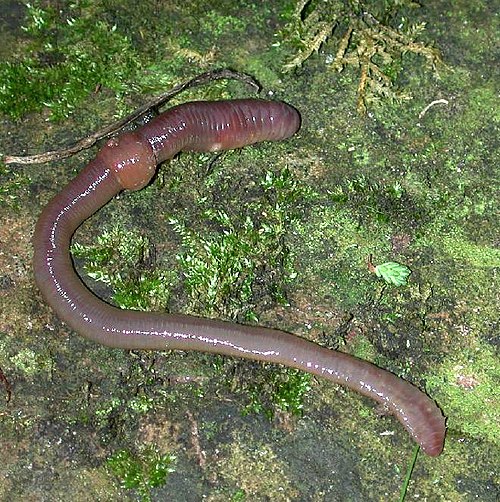
worm
any animal with a long, pipe-like body and no limbs
Wikipedia Q47253 where this came from — the thing this word names — worm
Worms are many different distantly related bilateral animals that typically have a long cylindrical tube-like body, no limbs, and usually no eyes.
Worms vary in size from microscopic to over 1 metre (3.3 ft) in length for marine polychaete worms (bristle worms); 6.7 metres (22 ft) for the African giant earthworm, Microchaetus rappi; and 58 metres (190 ft) for the marine nemertean worm (bootlace worm), Lineus longissimus.
… 943 more Fold this article
Various types of worm occupy a small variety of parasitic niches, living inside the bodies of other animals. Free-living worm species do not live on land but instead live in marine or freshwater environments or underground by burrowing.
In biology, "worm" refers to an obsolete taxon, Vermes, used by Carolus Linnaeus and Jean-Baptiste Lamarck for all non-arthropod invertebrate animals, now seen to be paraphyletic. The name stems from the Old English word wyrm. Most animals called "worms" are invertebrates, but the term is also used for the amphibian caecilians and the slowworm Anguis, a legless burrowing lizard. Invertebrate animals commonly called "worms" include annelids, nematodes, flatworms, nemertea, chaetognaths, priapulids, and insect larvae such as grubs and maggots.
The term "helminth" is sometimes used to refer to parasitic worms. The term is more commonly used in medicine, and usually refers to roundworms and tapeworms.
 Wikipedia (English)
read this at Wikipedia (English)
where this came from — Wikipedia (English)
a kind of bilaterian ParaHoxozoa eumetazoan animal Apoikozoa Filozoa Holozoa Opisthokonta
may also refer to
- worm — any animal with a long, pipe-like body and no limbs
Public linked claims
What the existing sources assert about these meanings. These are source claims, not curated endorsements.
-
maggot instance of worm
Wikidata · assertion revision 1225196
Source, evidence and revision history -
worm lexeme entity candidate worm
Wikipedia (English) · assertion revision 1443708
Source, evidence and revision history -
More loosely, any of various tubular invertebrates resembling annelids but not closely related to them, such as velvet worms, acorn worms, flatworms, or roundworms. See Appendix:English worms. refers to worm
Wikipedia (English) · assertion revision 4348271
Source, evidence and revision history
Sources
-
Samuel Johnson, A Dictionary of the English Language
Samuel Johnson
-
Wikidata
Wikidata
-
Wikipedia (English)
Wikipedia (English)
-
Wiktionary (English) via Kaikki
Wiktionary (English) via Kaikki
-
Open English WordNet 2025
Open English WordNet 2025
-
GIPHY
GIPHY
-
Urban Dictionary
Urban Dictionary
7 sources on this page