All materials · rabbit
Search the dictionaries, texts, images and API records available for this entry. Source matches are not curated endorsements.
Return to the curated articleSource / API coverage for this entry
Counts above cover loaded, permitted materials. Unavailable or not-yet-loaded sources are not evidence of an empty catalogue. Browser-only results remain on your device.
- Bing News · not loaded for this entry
- CineGraph · not loaded for this entry
- Wikimedia Commons · not loaded for this entry
- GIPHY · browser results · inspect complete records for status
- The Guardian · not loaded for this entry
- The Met · not loaded for this entry
- Open Library · not loaded for this entry
- Openverse · not loaded for this entry
- Pexels · not loaded for this entry
- PoetryDB · not loaded for this entry
- Spotify · not loaded for this entry
- Unsplash · not loaded for this entry
- Wikiquote · not loaded for this entry
Inspect complete source records and provider status
rabbit
+4 variants
- /ˈɹæbət/
- /ˈɹæbɪt/
- /ˈɹabɪt/ British, Southern, Standard
- /ˈɾabɪt/ Scotland, Wales
- recording
- recording Australia
- recording US
noun
mammals of the family Leporidae Wikidata where this came from — Wikidata
Definitions
3 dictionaries
 Samuel Johnson
18th century ·
1755 ·
noun ·
821 characters
A furry animal that lives on plants, and burrows in the ground. I knew a wench married, as she went to the garden for parsly to stuff a rabbit. Shakesp. Taming of the Shrew. A company of scholars, going to catch conies,
Samuel Johnson
18th century · 1755 · noun · 821 characters
A furry animal that lives on plants, and burrows in the ground. I knew a wench married, as she went to the garden for parsly to stuff a rabbit. Shakesp. Taming of the Shrew. A company of scholars, going to catch conies,
A furry animal that lives on plants, and burrows in the ground.
I knew a wench married, as she went to the garden for
parsly to stuff a rabbit. Shakesp. Taming of the Shrew.
A company of scholars, going to catch conies, carried one
with them which had not much wit, and gave in charge, that
if he saw any, he should be silent for fear of scaring of them;
but he no sooner espied a company of rabbits, but he cried
aloud, ecce multi cuniculi; which he had no sooner said, but
the conies ran to their burrows; and he being checked by
them for it, answered, who would have thought that the
rabbits understood Latin? Bacon's Apophthegms.
A joint made by paring two pieces so that they wrap over one another.
Having drove in the hooks, they set the rabbets of the door
within the rabbets of the door-post. Moxon's Mechan. Exer.
Read this at Samuel Johnson where this came from — Samuel Johnson, A Dictionary of the English Language
 Open English WordNet 2025
2025 ·
noun ·
3 senses
any of various burrowing animals of the family Leporidae having long ears and short tails; some domesticated and raised for pets or food
Open English WordNet 2025
2025 · noun · 3 senses
any of various burrowing animals of the family Leporidae having long ears and short tails; some domesticated and raised for pets or food
- ●
broader leporid lagomorph placental mammal vertebrate chordate animal organism
-
●
flesh of any of various rabbits or hares (wild or domesticated) eaten as food
broader game meat solid food food substance matter physical entity entity
-
●
the fur of a rabbit
broader fur animal skin animal product animal material material substance matter physical entity
Read this at Open English WordNet 2025 where this came from — Open English WordNet 2025
 Wiktionary (English) via Kaikki
2026 ·
noun ·
10 senses
A mammal of most genera of the family Leporidae, with long ears, long hind legs and a short, fluffy tail. (Those of the larger kind are instead called hares)
Wiktionary (English) via Kaikki
2026 · noun · 10 senses
A mammal of most genera of the family Leporidae, with long ears, long hind legs and a short, fluffy tail. (Those of the larger kind are instead called hares)
-
1
A mammal of most genera of the family Leporidae, with long ears, long hind legs and a short, fluffy tail. (Those of the larger kind are instead called hares) (countable, uncountable)
-
“Orion hit a rabbit once; but though sore wounded it got to the bury, and, struggling in, the arrow caught the side of the hole and was drawn out. Indeed, a nail filed sharp is not of much avail as an arrowhead; you must have it barbed, and that was a little beyond our skill.”
1879, R[ichard] J[efferies], “The Old Punt: A Curious ‘Turnpike’”, in The Amateur Poacher, London: Smith, Elder, & Co., […], →OCLC, pages 19–20
Wiktionary (English) via Kaikki
Plausible
-
-
2
The meat from this animal. (uncountable)
-
3
The fur of a rabbit typically used to imitate another animal's fur. (uncountable)
show 7 more
-
4
A runner in a distance race whose goal is mainly to set the pace, either to tire a specific rival so that a teammate can win or to help another break a record; a pacesetter. (countable, uncountable)
-
5
A very poor batsman, selected as a bowler or wicket-keeper. (countable, uncountable)similar walking wicket
-
6
A batsman who is frequently dismissed by the same bowler (said to be that player's rabbit). (countable, uncountable)similar bunny
-
7
A large element at the beginning of a list of items to be bubble sorted, and thus tending to be quickly swapped into its correct position. Compare turtle. (countable, uncountable)
-
8
Rarebit; Welsh rabbit or a similar dish: melted cheese served atop toast. (countable, uncountable)
-
“The cheese mixture may be served with toast on the side or poured on top of toast and grilled until golden brown and bubbling. Other variations include Buck rabbit, a Welsh rabbit with a poached egg on top, and Yorkshire rabbit with bacon ...”
2018, Helen Saberi, Teatimes: A World Tour, Reaktion Books, →ISBN
Wiktionary (English) via Kaikki
Plausible
-
“CHEESE TOASTED, OR RABBIT.”
1858, Mrs. N. K. M. Lee, The American Family Cook Book, page 47
Wiktionary (English) via Kaikki
Plausible
1 more quotation for this sense
-
“Hannah Glasse offered recipes for Scotch, Welsh, and English rabbit. This is her Scotch rabbit: Toast a piece of bread very nicely […] Cut a slice of cheese, […]”
2019, Mark Kurlansky, Milk: A 10,000-Year History, Bloomsbury Publishing, →ISBN
Wiktionary (English) via Kaikki
Plausible
-
-
9
A pneumatically-controlled tool used to insert small samples of material inside the core of a nuclear reactor. (countable, uncountable)
-
10
A vibrator with a shaft and a clitoral stimulator usually shaped like a rabbit's ears. (countable, uncountable)
-
“Rabbits come in many forms/In colors, shapes and sizes./ They satisfy a lady's needs,/Indulging her sweet vices.”
2013 07, larry morgan, FOOTSTEPS: Poetic Reflections on the Opposite Sex and Life's Other Contradictions., iUniverse, →ISBN, page 37
Wiktionary (English) via Kaikki
Plausible
-
“First, she showed us the standard dildos before moving on to the rabbits—vibrators with little ears to stimulate the clit.”
2018 August 29, Vivienne Savage, A Man of Many Talons, Payne & Taylor
Wiktionary (English) via Kaikki
Plausible
1 more quotation for this sense
-
“She reached into her night stand for some lubricant and her rabbit vibrator.”
2023 June 6, Madeline Cox, 250 Sexy Erotic Stories: Age Gap, Taboo Dark Reverse Harem, Forbidden Naughty Family, Tales for Adults, BDSM, Rough Daddies Dom, Sexy Hot Story for Women and Men, PaperGram LLC, →ISBN
Wiktionary (English) via Kaikki
Plausible
-
Read this at Wiktionary (English) via Kaikki where this came from — Wiktionary (English) via Kaikki
 Urban Dictionary
read this at Urban Dictionary
Asking Urban Dictionary…
Crowd-sourced and unreviewed. Fetched by your browser; nothing is stored here.
Out in the world
12 things · every match says why it is here
Artworks
12
Saved catalog
-

-

The Garden of Earthly Delights
1490 Artwork
Hieronymus Bosch
The Garden of Earthly Delights by Bosch High Resolution 2.jpg · Wikimedia Commons
Open at Wikidata -

The Genius of Castiglione
ca. 1645–47 (published 1648) Artwork
Giovanni Benedetto Castiglione (Il Grechetto)
Purchase, Joseph Pulitzer Bequest, 1917
Open at The Met -

Diana leaving her Bath
1742 Artwork
François Boucher
Diane sortant du bain - François Boucher - Musée du Louvre Peintures INV 2712.jpg · Wikimedia Commons
Open at Wikidata -

-

The Garden of Eden with the Fall of Man
1615 Artwork
Jan Brueghel the Elder, Peter Paul Rubens
Jan Brueghel de Oude en Peter Paul Rubens - Het aards paradijs met de zondeval van Adam en Eva.jpg · Wikimedia Commons
Open at Wikidata -

"Bahram Gur Sees a Herd of Deer Mesmerized by Dilaram' s Music", Folio from a Khamsa (Quintet) of Amir Khusrau Dihlavi
1597–98 Artwork
Amir Khusrau Dihlavi
Gift of Alexander Smith Cochran, 1913
Open at The Met -

The Vision of Saint Eustace
1400 Artwork
Pisanello
Pisanello 018.jpg · Wikimedia Commons
Open at Wikidata -

The Unicorn Purifies Water (from the Unicorn Tapestries)
1495–1505 Artwork
Gift of John D. Rockefeller Jr., 1937
Open at The Met -

Madonna of the Rabbit
1530 Artwork
Titian
La Vierge au Lapin à la Loupe.jpg · Wikimedia Commons
Open at Wikidata -
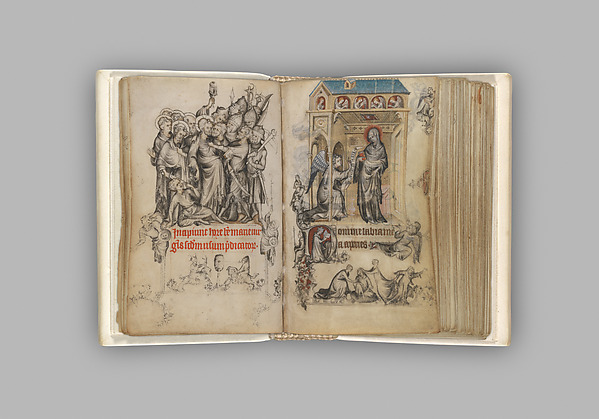
The Hours of Jeanne d'Evreux, Queen of France
ca. 1324–28 Artwork
Jean Pucelle
The Cloisters Collection, 1954
Open at The Met -

Parnassus
1500 Artwork
Andrea Mantegna
La Parnasse, by Andrea Mantegna, from C2RMF retouched.jpg · Wikimedia Commons
Open at Wikidata
Held since 17 Sep 2026.
GIFs
 GIPHY

Looking for GIFs…
Fetched by your browser on this visit; nothing is stored here.
Search matches, not reviewed interpretations. Hover, focus or press Play to animate.
Matches for “rabbit” · About these results
Artworks
Saved catalog · The Met, Wikidata
Catalog matches from The Met, Wikidata, held locally rather than searched for on this visit. None is an accepted interpretation: a contributor connects an exact meaning and reviewers decide the claim. Browse saved artworks
- Embroidered Picture: Direct depiction of “rabbit” (Q9394) tagged “Rabbits”. · not yet reviewed
- The Garden of Earthly Delights: Direct depiction of “rabbit” (Q9394) tagged “rabbit”. · not yet reviewed
- The Genius of Castiglione: Direct depiction of “rabbit” (Q9394) tagged “Rabbits”. · not yet reviewed
- Diana leaving her Bath: Direct depiction of “rabbit” (Q9394) tagged “rabbit”. · not yet reviewed
- Adam and Eve: Direct depiction of “rabbit” (Q9394) tagged “Rabbits”. · not yet reviewed
- The Garden of Eden with the Fall of Man: Direct depiction of “rabbit” (Q9394) tagged “rabbit”. · not yet reviewed
- "Bahram Gur Sees a Herd of Deer Mesmerized by Dilaram' s Music", Folio from a Khamsa (Quintet) of Amir Khusrau Dihlavi: Direct depiction of “rabbit” (Q9394) tagged “Rabbits”. · not yet reviewed
- The Vision of Saint Eustace: Direct depiction of “rabbit” (Q9394) tagged “rabbit”. · not yet reviewed
- The Unicorn Purifies Water (from the Unicorn Tapestries): Direct depiction of “rabbit” (Q9394) tagged “Rabbits”. · not yet reviewed
- Madonna of the Rabbit: Direct depiction of “rabbit” (Q9394) tagged “rabbit”. · not yet reviewed
- The Hours of Jeanne d'Evreux, Queen of France: Direct depiction of “rabbit” (Q9394) tagged “Rabbits”. · not yet reviewed
- Parnassus: Direct depiction of “rabbit” (Q9394) tagged “rabbit”. · not yet reviewed
Subjects
1 subject · 0 addressed
Found by name and by the sources. Not reviewed: a shared name is not a shared identity.
Subject
rabbit
mammals of the family Leporidae
Unclassified

rabbit
mammals of the family Leporidae
Wikipedia Q9394 where this came from — the thing this word names — rabbit
Rabbits, or bunnies, are small mammals in the family Leporidae (which also includes the hares), which is in the order Lagomorpha (which also includes pikas). They are familiar throughout the world as a small herbivore, a prey animal, a domesticated form of livestock, and a pet, having a widespread effect on ecologies and cultures. The most widespread rabbit genera are Oryctolagus and Sylvilagus.
… 2,556 more Fold this article
The former, Oryctolagus, includes the European rabbit, Oryctolagus cuniculus, which is the ancestor of the hundreds of breeds of domestic rabbit and has been introduced on every continent except Antarctica. The latter, Sylvilagus, includes over 13 wild rabbit species, among them the cottontails and tapetis. Wild rabbits not included in Oryctolagus and Sylvilagus include several species of limited distribution, including the pygmy rabbit, volcano rabbit, and Sumatran striped rabbit.
Rabbits are a paraphyletic grouping, and do not constitute a clade, as hares (belonging to the genus Lepus) are nested within the Leporidae clade and are not described as rabbits. Although once considered rodents, lagomorphs diverged earlier and have a number of traits rodents lack, including two extra incisors. Similarities between rabbits and rodents were once attributed to convergent evolution, but studies in molecular biology have found a common ancestor between lagomorphs and rodents and place them in the clade Glires.
Rabbit physiology is suited to escaping predators and surviving in various habitats, living either alone or in groups in nests or burrows. As prey animals, rabbits are constantly aware of their surroundings, having a wide field of vision and ears with high surface area to detect potential predators. The ears of a rabbit are essential for thermoregulation and contain a high density of blood vessels. The bone structure of a rabbit's hind legs, which is longer than that of the fore legs, allows for quick hopping, which is beneficial for escaping predators and can provide powerful kicks if captured. Rabbits are typically nocturnal and often sleep with their eyes open. They reproduce quickly, having short pregnancies, large litters of four to twelve kits, and no particular mating season; however, the mortality rate of rabbit embryos is high, and there exist several widespread diseases that affect rabbits, such as rabbit hemorrhagic disease and myxomatosis. In some regions, especially Australia, rabbits have caused ecological problems and are regarded as a pest.
Humans have used rabbits as livestock since at least the first century BC in ancient Rome, raising them for their meat, fur and wool. The various breeds of the European rabbit have been developed to suit each of these products; the practice of raising and breeding rabbits as livestock is known as cuniculture. Rabbits are seen in human culture globally, appearing as a symbol of fertility, cunning, and innocence in major religions, historical and contemporary art.
 Wikipedia (English)
read this at Wikipedia (English)
where this came from — Wikipedia (English)
a kind of Leporidae Lagomorpha Glires Gliriformes Euarchontoglires Boreoeutheria placental eutherian mammal
may also refer to
- rabbit — mammals of the family Leporidae
Public linked claims
What the existing sources assert about these meanings. These are source claims, not curated endorsements.
-
A mammal of most genera of the family Leporidae, with long ears, long hind legs and a short, fluffy tail. (Those of the larger kind are instead called hares) refers to rabbit
Wiktionary (English) via Kaikki · assertion revision 3860950
Source, evidence and revision history -
rabbit lexeme entity candidate rabbit
Wikipedia (English) · assertion revision 1450772
Source, evidence and revision history
Sources
-
Samuel Johnson, A Dictionary of the English Language
Samuel Johnson
-
 The Met
-
 Wikidata
-
Wikipedia (English)
Wikipedia (English)
-
Wiktionary (English) via Kaikki
Wiktionary (English) via Kaikki
-
Open English WordNet 2025
Open English WordNet 2025
-
GIPHY
GIPHY
-
Urban Dictionary
Urban Dictionary
8 sources on this page