All materials · mouse hare
Search the dictionaries, texts, images and API records available for this entry. Source matches are not curated endorsements.
Return to the curated articleSource / API coverage for this entry
Counts above cover loaded, permitted materials. Unavailable or not-yet-loaded sources are not evidence of an empty catalogue. Browser-only results remain on your device.
- Bing News · not loaded for this entry
- CineGraph · not loaded for this entry
- Wikimedia Commons · not loaded for this entry
- GIPHY · browser results · inspect complete records for status
- The Guardian · not loaded for this entry
- The Met · not loaded for this entry
- Open Library · not loaded for this entry
- Openverse · not loaded for this entry
- Pexels · not loaded for this entry
- PoetryDB · not loaded for this entry
- Spotify · not loaded for this entry
- Unsplash · not loaded for this entry
- Wikiquote · not loaded for this entry
Inspect complete source records and provider status
Definitions
1 dictionary
 Open English WordNet 2025
2025 ·
noun ·
1 sense
small short-eared burrowing mammal of rocky uplands of Asia and western North America
Open English WordNet 2025
2025 · noun · 1 sense
small short-eared burrowing mammal of rocky uplands of Asia and western North America
-
●
small short-eared burrowing mammal of rocky uplands of Asia and western North Americapart of Ochotonidae
broader lagomorph placental mammal vertebrate chordate animal organism living thing
Read this at Open English WordNet 2025 where this came from — Open English WordNet 2025
 Urban Dictionary
read this at Urban Dictionary
Asking Urban Dictionary…
Crowd-sourced and unreviewed. Fetched by your browser; nothing is stored here.
Out in the world
every match says why it is here
GIFs
 GIPHY

Looking for GIFs…
Fetched by your browser on this visit; nothing is stored here.
Search matches, not reviewed interpretations. Hover, focus or press Play to animate.
Subjects
1 subject · 0 addressed
Found by name and by the sources. Not reviewed: a shared name is not a shared identity.
Subject
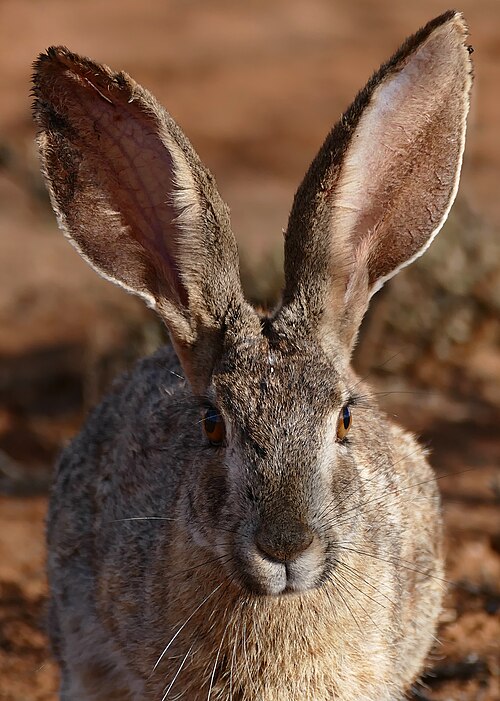
hare
genus of mammals in the family Leporidae
Unclassified
hare
genus of mammals in the family Leporidae
Lepus
Wikipedia Q46076 where this came from — the thing this word names — hare
Hares are mammals belonging to the genus Lepus. They are herbivores and live solitarily or in pairs. They nest in depressions in the ground called forms, and their young are able to fend for themselves shortly after birth. The genus includes the largest lagomorphs. Most are fast runners with long, powerful hind legs, and large ears that dissipate body heat. Hare species are native to Africa, Eurasia and North America.
… 665 more Fold this article
A hare less than one year old is called a leveret. A group of hares may be called either a husk or a down.
Members of the Lepus genus are considered true hares, distinguishing them from rabbits which make up the rest of the Leporidae family. There are five species with common names that include the word "hare" which are not considered true hares: the hispid hare, and four species known as red rock hares (belonging to the genus Pronolagus). Conversely, several Lepus species are called "jackrabbits", but classed as hares rather than rabbits. The pet known as the Belgian hare is a domesticated European rabbit which has been selectively bred to resemble a hare.
 Wikipedia (English)
read this at Wikipedia (English)
where this came from — Wikipedia (English)
a kind of Leporidae Lagomorpha Glires Gliriformes Euarchontoglires Boreoeutheria placental eutherian mammal
may also refer to
- hare — genus of mammals in the family Leporidae
Public linked claims
What the existing sources assert about these meanings. These are source claims, not curated endorsements.
-
mouse hare lexeme entity candidate hare
Wikipedia (English) · assertion revision 1445550
Source, evidence and revision history -
small short-eared burrowing mammal of rocky uplands of Asia and western North America refers to hare
Wikipedia (English) · assertion revision 4344965
Source, evidence and revision history
Sources
-
 Wikidata
-
Wikipedia (English)
Wikipedia (English)
-
Open English WordNet 2025
Open English WordNet 2025
-
GIPHY
GIPHY
-
Urban Dictionary
Urban Dictionary
5 sources on this page