All materials · empress
Search the dictionaries, texts, images and API records available for this entry. Source matches are not curated endorsements.
Return to the curated articleSource / API coverage for this entry
Counts above cover loaded, permitted materials. Unavailable or not-yet-loaded sources are not evidence of an empty catalogue. Browser-only results remain on your device.
- Bing News · not loaded for this entry
- CineGraph · not loaded for this entry
- Wikimedia Commons · not loaded for this entry
- GIPHY · browser results · inspect complete records for status
- The Guardian · not loaded for this entry
- The Met · not loaded for this entry
- Open Library · not loaded for this entry
- Openverse · not loaded for this entry
- Pexels · not loaded for this entry
- PoetryDB · not loaded for this entry
- Spotify · not loaded for this entry
- Unsplash · not loaded for this entry
- Wikiquote · not loaded for this entry
Inspect complete source records and provider status
Definitions
3 dictionaries
 Samuel Johnson
18th century ·
1755 ·
noun ·
663 characters
1. The queen of an emperour. Let your nimble feet Tread subtile circles, that may always meet In point to him; and figures, to express The grace of him, and his great emperess. Ben. Johnson. 2. A female invested with imp
Samuel Johnson
18th century · 1755 · noun · 663 characters
1. The queen of an emperour. Let your nimble feet Tread subtile circles, that may always meet In point to him; and figures, to express The grace of him, and his great emperess. Ben. Johnson. 2. A female invested with imp
1. The queen of an emperour.
Let your nimble feet
Tread subtile circles, that may always meet
In point to him; and figures, to express
The grace of him, and his great emperess. Ben. Johnson.
2. A female invested with imperial dignity; a female sovereign.
Empress of this fair world, resplendent Eve! Milton.
Yet, London, empress of the northern clime,
By an high fate thou greatly didst expire. Dryden.
Read the rest of this entry · 260 characters Fold this entry
Wisdom, thou say'st, from heav'n receiv'd her birth;
Her beams transmitted to the subject earth:
Yet this great empress of the human soul,
Does only with imagin'd power controul,
If restless passion, by rebellious sway,
Compels the weak usurper to obey. Prior.
Read this at Samuel Johnson where this came from — Samuel Johnson, A Dictionary of the English Language
 Open English WordNet 2025
2025 ·
noun ·
1 sense
a woman emperor or the wife of an emperor
Open English WordNet 2025
2025 · noun · 1 sense
a woman emperor or the wife of an emperor
-
●
a woman emperor or the wife of an emperor
broader emperor sovereign head of state representative negotiator communicator actor causal agent
Read this at Open English WordNet 2025 where this came from — Open English WordNet 2025
 Wiktionary (English) via Kaikki
2026 ·
noun ·
6 senses
The female monarch (ruler) of an empire.
Wiktionary (English) via Kaikki
2026 · noun · 6 senses
The female monarch (ruler) of an empire.
-
1
The female monarch (ruler) of an empire.
-
“Sit downe by her: adorned with my Crowne, As if thou wert the Empreſſe of the world.”
c. 1587–1588 (date written), [Christopher Marlowe], Tamburlaine the Great. […] The First Part […], 2nd edition, part 1, London: […] [R. Robinson for] Richard Iones, […], published 1592, →OCLC; reprinted as Tamburlaine the Great (A Scolar Press Facsimile), Menston, Yorkshire; London: Scolar Press, 1973, →ISBN, Act III, scene iii
Wiktionary (English) via Kaikki
Plausible
-
-
2
The wife or widow of an emperor or equated ruler.
-
“Empress, imperial regent, and even emperor herself (r. 797–802), Irene was an important and powerful figure at the Byzantine court in the late eighth and early ninth century.”
2008, Encyclopedia of Barbarian Europe: Society in Transformation, page 211
Wiktionary (English) via Kaikki
Plausible
-
-
3
The third trump or major arcana card of most tarot decks.
show 3 more
-
4
A female chimpanzee. (rare)
-
5
A deciduous tree, Paulownia tomentosa
-
6
A fairy chess piece which combines the moves of the rook and the knight.
Read this at Wiktionary (English) via Kaikki where this came from — Wiktionary (English) via Kaikki
Examples
3 named by the record
-
3
named under a sense of empress by
Open English WordNet 2025
 Urban Dictionary
read this at Urban Dictionary
Asking Urban Dictionary…
Crowd-sourced and unreviewed. Fetched by your browser; nothing is stored here.
Out in the world
2 things · every match says why it is here
Artworks
2
Saved catalog
-
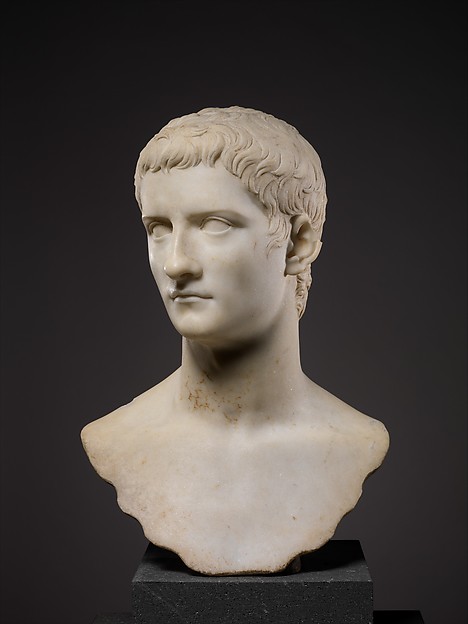
Marble portrait bust of the emperor Gaius, known as Caligula
37–41 CE Artwork
Rogers Fund, 1914
Open at The Met -
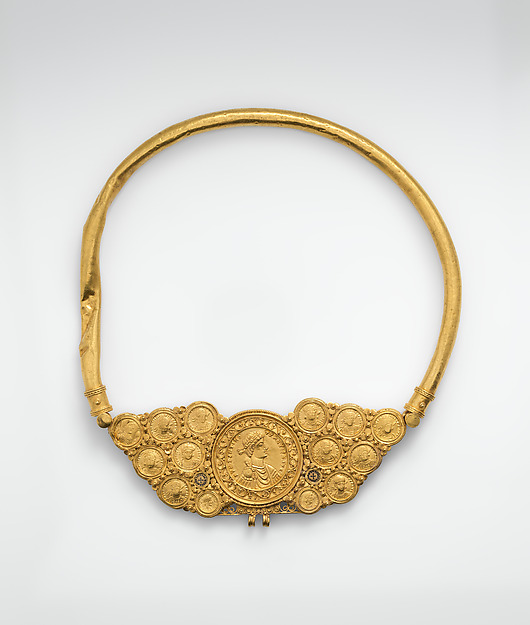
Pectoral with Coins and Pseudo-Medallion
ca. 539–50 Artwork
Gift of J. Pierpont Morgan, 1917
Open at The Met
Held since 17 Sep 2026.
GIFs
 GIPHY

Looking for GIFs…
Fetched by your browser on this visit; nothing is stored here.
Search matches, not reviewed interpretations. Hover, focus or press Play to animate.
Matches for “empress” · About these results
Artworks
Saved catalog · The Met
Catalog matches from The Met, held locally rather than searched for on this visit. None is an accepted interpretation: a contributor connects an exact meaning and reviewers decide the claim. Browse saved artworks
- Marble portrait bust of the emperor Gaius, known as Caligula: Direct depiction of “emperor” (Q39018) tagged “Emperors”. · not yet reviewed
- Pectoral with Coins and Pseudo-Medallion: Direct depiction of “emperor” (Q39018) tagged “Emperors”. · not yet reviewed
Subjects
1 subject · 0 addressed
Found by name and by the sources. Not reviewed: a shared name is not a shared identity.
Subject
emperor
type of monarch
Unclassified

An emperor (from Latin: imperator, via Old French: empereor) is the (male) ruler of an empire. Empress, the female equivalent, may indicate an emperor's wife (empress consort), mother/grandmother (empress dowager/grand empress dowager), or a woman who rules in her own right and name (empress regnant or suo jure). Emperors are generally recognised to be of the highest monarchic honour and rank, surpassing kings.
… 4,330 more Fold this article
In Europe, the title of Emperor has been used since the Middle Ages, considered in those times equal or almost equal in dignity to that of Pope due to the latter's position as visible head of the Church and spiritual leader of the Catholic part of Western Europe. The emperor of Japan is the only currently reigning monarch whose title is translated into English as "Emperor".
Both emperors and kings are monarchs or sovereigns, both emperor and empress are considered monarchical titles. In as much as there is a strict definition of emperor, it is that an emperor has no relations implying the superiority of any other ruler and typically rules over more than one nation. Therefore, a king might be obliged to pay tribute to another ruler, or be restrained in his actions in some unequal fashion, but an emperor should in theory be completely free of such restraints. However, monarchs heading empires have not always used the title in all contexts—the British sovereign did not assume the title Empress of the British Empire even during the incorporation of India, though she was declared Empress of India.
In Western Europe, the title of Emperor was used exclusively by the Holy Roman Emperor, whose imperial authority was derived from the concept of translatio imperii, i.e., they claimed succession to the authority of the Roman emperors, thus linking themselves to Roman institutions and traditions as part of state ideology. Although initially ruling much of Central Europe and northern Italy, by the 19th century, the emperor exercised little power beyond the German-speaking states.
Although technically an elective title, by the late 16th century, the imperial title had in practice come to be inherited by the Habsburg Archdukes of Austria and, following the Thirty Years' War, their control over the states (outside the Habsburg monarchy, i.e. Austria, Bohemia and various territories outside the empire) had become nearly non-existent. However, Napoleon Bonaparte was crowned Emperor of the French in 1804 and was shortly followed by Francis II, Holy Roman Emperor, who declared himself Emperor of Austria in the same year. The position of Holy Roman Emperor nonetheless continued until Francis II abdicated that position in 1806. In Eastern Europe, the monarchs of Russia also used translatio imperii to wield imperial authority as successors to the Eastern Roman Empire. Their status was officially recognised by the Holy Roman Emperor in 1514, although not officially used by the Russian monarchs until 1547. However, the Russian emperors are better known by their Russian-language title of Tsar even after Peter the Great adopted the title of Emperor of All Russia in 1721.
Historians have liberally used "emperor" and "empire" anachronistically and out of its Roman and European context to describe any large state from the past or the present. Some titles are considered equivalent to "emperor" or are translated as "emperor". Examples of that are Roman emperors' titles, King of Kings, Khalifa, Huangdi, Cakravartin, Great Khan, Aztec monarchs' title, Inca monarchs' title, etc. Sometimes this reference has even extended to non-monarchically ruled states and their spheres of influence, such as the Athenian Empire of the late 5th century BC, the Angevin Empire of the Plantagenets and the Soviet and US "empires" of the Cold War era. However, such "empires" did not need to be headed by an "emperor". "Empire" became identified instead with vast territorial holdings rather than the title of its ruler by the mid-18th century.
For purposes of protocol, the size and scope of a kingdom or empire may determine precedence in international diplomatic relations, but currently, precedence among heads of state who are sovereigns—whether they be kings, queens, emperors, empresses, princes, princesses and presidents may be determined by the size and scope or time that each one has been continuously in office. Outside the European context, "emperor" was the translation given to holders of titles who were accorded the same precedence as European emperors in diplomatic terms. In reciprocity, these rulers might accredit equal titles in their native languages to their European peers. Through centuries of international convention, this has become the dominant rule to identifying an emperor in the modern era.
 Wikipedia (English)
read this at Wikipedia (English)
where this came from — Wikipedia (English)
a kind of monarch
may also refer to
- emperor — type of monarch
Public linked claims
What the existing sources assert about these meanings. These are source claims, not curated endorsements.
-
queen of Great Britain and Ireland and empress of India from 1837 to 1901; the last Hanoverian ruler of England (1819-1901) instance of a woman emperor or the wife of an emperor
Open English WordNet 2025 · assertion revision 4043442
Source, evidence and revision history -
queen of Great Britain and Ireland and empress of India from 1837 to 1901; the last Hanoverian ruler of England (1819-1901) instance of a woman emperor or the wife of an emperor
Open English WordNet 2025 · assertion revision 4043443
Source, evidence and revision history -
empress of Russia who succeeded her husband Peter the Great (1684-1727) instance of a woman emperor or the wife of an emperor
Open English WordNet 2025 · assertion revision 4118189
Source, evidence and revision history -
empress of Russia who succeeded her husband Peter the Great (1684-1727) instance of a woman emperor or the wife of an emperor
Open English WordNet 2025 · assertion revision 4118190
Source, evidence and revision history -
empress of Russia who greatly increased the territory of the empire (1729-1796) instance of a woman emperor or the wife of an emperor
Open English WordNet 2025 · assertion revision 4158626
Source, evidence and revision history -
empress of Russia who greatly increased the territory of the empire (1729-1796) instance of a woman emperor or the wife of an emperor
Open English WordNet 2025 · assertion revision 4158627
Source, evidence and revision history -
empress of Russia who greatly increased the territory of the empire (1729-1796) instance of a woman emperor or the wife of an emperor
Open English WordNet 2025 · assertion revision 4158628
Source, evidence and revision history -
empress lexeme entity candidate emperor
Wikipedia (English) · assertion revision 1446243
Source, evidence and revision history -
The female monarch (ruler) of an empire. refers to emperor
Wikipedia (English) · assertion revision 4344437
Source, evidence and revision history
Sources
-
Samuel Johnson, A Dictionary of the English Language
Samuel Johnson
-
 The Met
-
 Wikidata
-
Wikipedia (English)
Wikipedia (English)
-
Wiktionary (English) via Kaikki
Wiktionary (English) via Kaikki
-
Open English WordNet 2025
Open English WordNet 2025
-
GIPHY
GIPHY
-
Urban Dictionary
Urban Dictionary
8 sources on this page