All materials · cattle
Search the dictionaries, texts, images and API records available for this entry. Source matches are not curated endorsements.
Return to the curated articleSource / API coverage for this entry
Counts above cover loaded, permitted materials. Unavailable or not-yet-loaded sources are not evidence of an empty catalogue. Browser-only results remain on your device.
- Bing News · not loaded for this entry
- CineGraph · not loaded for this entry
- Wikimedia Commons · not loaded for this entry
- GIPHY · browser results · inspect complete records for status
- The Guardian · not loaded for this entry
- The Met · not loaded for this entry
- Open Library · not loaded for this entry
- Openverse · not loaded for this entry
- Pexels · not loaded for this entry
- PoetryDB · not loaded for this entry
- Spotify · not loaded for this entry
- Unsplash · not loaded for this entry
- Wikiquote · not loaded for this entry
Inspect complete source records and provider status
cattle
+2 variants
- [ˈkʰæɾəl] ~ [ˈkʰæɾl̩]
- [ˈkʰætʰəl] ~ [ˈkʰætʰl̩]
- /ˈkæɾəl/
- /ˈkætəl/
- recording US
noun
large, domesticated, cloven-hooved herbivores Wikidata where this came from — Wikidata
Definitions
3 dictionaries
 Samuel Johnson
18th century ·
1755 ·
noun ·
387 characters
1. Beasts of pasture; not wild nor domestick. Make poor men's cattle break their necks. Shakesp. T. Andr. And God made the beast of the earth after his kind, and cattle after their kind, and every thing that creepeth upo
Samuel Johnson
18th century · 1755 · noun · 387 characters
1. Beasts of pasture; not wild nor domestick. Make poor men's cattle break their necks. Shakesp. T. Andr. And God made the beast of the earth after his kind, and cattle after their kind, and every thing that creepeth upo
1. Beasts of pasture; not wild nor domestick.
Make poor men's cattle break their necks. Shakesp. T. Andr.
And God made the beast of the earth after his kind, and
cattle after their kind, and every thing that creepeth upon the
earth after his kind. Gen. i. 25.
2. It is used in reproach of human beings.
Boys and women are for the most part cattle of this colour.
Shakesp. As you like it.
Read this at Samuel Johnson where this came from — Samuel Johnson, A Dictionary of the English Language
 Open English WordNet 2025
2025 ·
noun ·
1 sense
domesticated bovine animals as a group regardless of sex or age
Open English WordNet 2025
2025 · noun · 1 sense
domesticated bovine animals as a group regardless of sex or age
 Wiktionary (English) via Kaikki
2026 ·
noun ·
5 senses
Domesticated animals of the species Bos taurus (cows, bulls, steers, oxen etc), and other hoofed mammals of the genus Bos.
Wiktionary (English) via Kaikki
2026 · noun · 5 senses
Domesticated animals of the species Bos taurus (cows, bulls, steers, oxen etc), and other hoofed mammals of the genus Bos.
-
1
Domesticated animals of the species Bos taurus (cows, bulls, steers, oxen etc), and other hoofed mammals of the genus Bos. (plural, plural-normally)
-
2
Certain other livestock, such as sheep, pigs or goats. Also rarely applied to horses. (plural, plural-normally)
-
“Mr. Jos had hired a pair of horses for his open carriage, with which cattle, and the smart London vehicle, he made a very tolerable figure in the drives about Brussels.”
1848, William Makepeace Thackeray, chapter 29, in Vanity Fair, page 246
Wiktionary (English) via Kaikki
Plausible
-
“The Dover mail was in its usual genial position that the guard suspected the passengers, the passengers suspected one another and the guard, they all suspected everybody else, and the coachman was sure of nothing but the horses; as to which cattle he could with a clear conscience have taken his oath on the two Testaments that they were not fit for the journey.”
1859, Charles Dickens, A Tale of Two Cities, Book the First, chapter 2
Wiktionary (English) via Kaikki
Plausible
1 more quotation for this sense
-
“Mangcorn is utilized partly as human food, and partly as fodder for cattle, especially for fattening swine, for which purpose it is considered peculiarly adapted.”
1923, Norwegian Trade Review, numbers 6-8, page 39
Wiktionary (English) via Kaikki
Plausible
-
-
3
People who resemble domesticated bovine animals in behavior or destiny. (derogatory, figuratively, plural, plural-normally)
-
“"Come, that will do," interrupted Joolby with an impatient growl; "talk, talk, talk—that's all it ever comes to with your kind of cattle. Do you still think that you are playing at charades, girl? […]"”
1934, Ernest Bramah, The Bravo of London
Wiktionary (English) via Kaikki
Plausible
-
“"I always knew it, but I always denied it, because I'm one of them, and I'm like them." ¶"We're just cattle," the Prison Governor said, relieved now.”
1961, Gerald Hanley, The Journey Homeward, page 155
Wiktionary (English) via Kaikki
Plausible
-
show 2 more
-
4
chattel (English, countable, obsolete, plural, plural-normally, sometimes)
-
“That then every person so offending and convict, shall for his third offence, forfeit to our Sovereign Lady the Queen, all his goods and cattles, and shall suffer imprisonment during his life.”
1552, Parliament of England, An Act for the Uniformity of Common Prayer, and Service in the Church, and Administration of the Sacraments
Wiktionary (English) via Kaikki
Plausible
-
“1684 July. Mistris Dorothy Gray, Adminnestratrix of the Goods and Cattles of Mr Edward Gray, late of Plymouth, deceased, […]”
1684, Records of the Colony of New Plymouth, in New England, published 1856
Wiktionary (English) via Kaikki
Plausible
-
-
5
Used in restricted contexts to refer to the meat derived from cattle. (plural, plural-normally, rare, uncountable)
-
“The temptation of a lone white man was too great for any gathering of myall-natives, and sheep-fat and cattle-steak seemed there for the spearing, so that a stockman always ran the risk of attack, especially if his shepherds interfered with the native women.”
a. 1964, Stephen Henry Roberts, The Squatting Age in Australia, 1835-1847, Melbourne University Press, published 1964, page 315
Wiktionary (English) via Kaikki
Plausible
-
““But you cooked a human being and ate him,” say I. “I couldn’t help it,” says she. “I remember the cattle steaks of the old days, the juicy pork, the dripping joints of lamb, the venison.””
a. 1978, Barry Hannah, “Eating Wife and Friends”, in Airships, Grove Press, published 1994, →ISBN, page 137
Wiktionary (English) via Kaikki
Plausible
1 more quotation for this sense
-
“Believe it or not Big Mac is one of the ultra radicals who provide fast food cattle burgers to interstate vehicles who drive all over the place providing scraps for rats, cats, flies, etc, so that the Mad Cow Disease might spread even faster than it would otherwise do.”
1996 April 3, Emmett Jordan, “Re: AR activist arrested for spreading 'Mad Cow' disease in US”, in rec.food.veg (Usenet)
Wiktionary (English) via Kaikki
Plausible
-
Read this at Wiktionary (English) via Kaikki where this came from — Wiktionary (English) via Kaikki
 Urban Dictionary
read this at Urban Dictionary
Asking Urban Dictionary…
Crowd-sourced and unreviewed. Fetched by your browser; nothing is stored here.
Out in the world
5 things · every match says why it is here
Artworks
5
Saved catalog
-

Pichhwai for the Festival of Cows
late 18th century Artwork
Purchase, Friends of Asian Art Gifts, 2003
Open at The Met -

Young Ladies of the Village
1851 Artwork
Gustave Courbet
Young Ladies of the Village 1852 Gustave Courbet.jpg · Wikimedia Commons
Open at Wikidata -
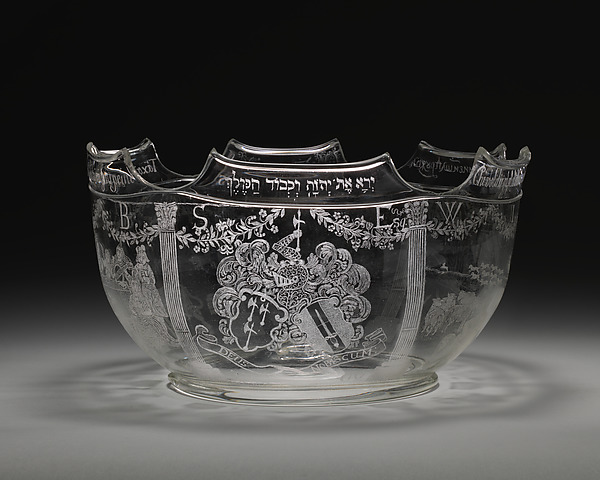
Monteith with the Gibbs and Nelthorpe coats of arms
1700 Artwork
Bequest of Florence Ellsworth Wilson, 1943
Open at The Met -

The Adoration of the Magi
1475 Artwork
Hieronymus Bosch
Adoration of the Magi Hieronymus Bosch autograph ca. 1470–75 (NY).jpg · Wikimedia Commons
Open at Wikidata -

The Adoration of the Shepherds
1374 Artwork
Bartolo di Fredi
The Cloisters Collection, 1925
Open at The Met
Held since 17 Sep 2026.
GIFs
 GIPHY

Looking for GIFs…
Fetched by your browser on this visit; nothing is stored here.
Search matches, not reviewed interpretations. Hover, focus or press Play to animate.
Matches for “cattle” · About these results
Artworks
Saved catalog · The Met, Wikidata
Catalog matches from The Met, Wikidata, held locally rather than searched for on this visit. None is an accepted interpretation: a contributor connects an exact meaning and reviewers decide the claim. Browse saved artworks
- Pichhwai for the Festival of Cows: Direct depiction of “cattle” (Q830) tagged “Cows”. · not yet reviewed
- Young Ladies of the Village: Direct depiction of “cattle” (Q830) tagged “cattle”. · not yet reviewed
- Monteith with the Gibbs and Nelthorpe coats of arms: Direct depiction of “cattle” (Q830) tagged “Cows”. · not yet reviewed
- The Adoration of the Magi: Direct depiction of “cattle” (Q830) tagged “cattle”. · not yet reviewed
- The Adoration of the Shepherds: Direct depiction of “cattle” (Q830) tagged “Cows”. · not yet reviewed
Subjects
2 subjects · 0 addressed
Found by name and by the sources. Not reviewed: a shared name is not a shared identity.
Subject
Bos taurus
species of mammal
Unclassified
Subject
cattle
large, domesticated, cloven-hooved herbivores
Unclassified
the sources name more than one thing
- Bos taurus — species of mammal (Q19610691 · wordnet_wikidata · 0.9)
- cattle — large, domesticated, cloven-hooved herbivores (Q830 · wiktionary_qid · 0.95)

cattle
large, domesticated, cloven-hooved herbivores
Wikipedia Q830 where this came from — the thing this word names — cattle
Cattle (Bos taurus) are large, domesticated, bovid ungulates widely kept as livestock. They are prominent modern members of the subfamily Bovinae and the most widespread species of the genus Bos.
Taurine cattle are widely distributed across Europe and temperate areas of Asia, the Americas, and Australia. Zebus are found mainly in India and tropical areas of Asia, America, and Australia.
… 938 more Fold this article
Sanga cattle are found primarily in sub-Saharan Africa. These types, sometimes classified as separate species or subspecies, are further divided into over 1,000 recognized breeds.
Cattle are commonly raised for meat, for dairy products, and for leather. As draft animals, they pull carts and farm implements. Cattle are considered sacred animals within Hinduism, and it is illegal to kill them in some parts of the Indian subcontinent. Small breeds such as the miniature Zebu are kept as pets.
About 10,500 years ago, taurine cattle were domesticated from wild aurochs progenitors in central Anatolia, the Levant and Western Iran. A separate domestication event occurred in the Indian subcontinent, which gave rise to zebu. There were over 940 million cattle in the world by 2022. Cattle farming is responsible for about 7% of global greenhouse gas emissions. They were one of the first domesticated animals to have a fully-mapped genome.
 Wikipedia (English)
read this at Wikipedia (English)
where this came from — Wikipedia (English)
may also refer to
- cattle — large, domesticated, cloven-hooved herbivores
Public linked claims
What the existing sources assert about these meanings. These are source claims, not curated endorsements.
-
Domesticated animals of the species Bos taurus (cows, bulls, steers, oxen etc), and other hoofed mammals of the genus Bos. refers to cattle
Wiktionary (English) via Kaikki · assertion revision 3860611
Source, evidence and revision history -
cattle lexeme entity candidate cattle
Wikipedia (English) · assertion revision 1450553
Source, evidence and revision history -
domesticated bovine animals as a group regardless of sex or age refers to Bos taurus
Open English WordNet 2025 · assertion revision 4350821
Source, evidence and revision history -
domesticated bovine animals as a group regardless of sex or age refers to Bos taurus
Open English WordNet 2025 · assertion revision 4351269
Source, evidence and revision history
Sources
-
Samuel Johnson, A Dictionary of the English Language
Samuel Johnson
-
 The Met
-
 Wikidata
-
Wikipedia (English)
Wikipedia (English)
-
Wiktionary (English) via Kaikki
Wiktionary (English) via Kaikki
-
Open English WordNet 2025
Open English WordNet 2025
-
GIPHY
GIPHY
-
Urban Dictionary
Urban Dictionary
8 sources on this page