All materials · class Hexapoda
Search the dictionaries, texts, images and API records available for this entry. Source matches are not curated endorsements.
Return to the curated articleSource / API coverage for this entry
Counts above cover loaded, permitted materials. Unavailable or not-yet-loaded sources are not evidence of an empty catalogue. Browser-only results remain on your device.
- Bing News · not loaded for this entry
- CineGraph · not loaded for this entry
- Wikimedia Commons · not loaded for this entry
- GIPHY · browser results · inspect complete records for status
- The Guardian · not loaded for this entry
- The Met · not loaded for this entry
- Open Library · not loaded for this entry
- Openverse · not loaded for this entry
- Pexels · not loaded for this entry
- PoetryDB · not loaded for this entry
- Spotify · not loaded for this entry
- Unsplash · not loaded for this entry
- Wikiquote · not loaded for this entry
Inspect complete source records and provider status
Definitions
1 dictionary
 Open English WordNet 2025
2025 ·
noun ·
1 sense
insects; about five-sixths of all known animal species
Open English WordNet 2025
2025 · noun · 1 sense
insects; about five-sixths of all known animal species
-
●
insects; about five-sixths of all known animal speciesparts Anoplura Coleoptera Collembola Corrodentia Dermaptera Dictyoptera Diptera Embiodea Ephemerida Exopterygota Hemiptera Hymenopterapart of Arthropoda
broader class taxonomic group biological group group abstraction entity
Read this at Open English WordNet 2025 where this came from — Open English WordNet 2025
 Urban Dictionary
read this at Urban Dictionary
Asking Urban Dictionary…
Crowd-sourced and unreviewed. Fetched by your browser; nothing is stored here.
Out in the world
10 things · every match says why it is here
Artworks
4
Saved catalog
-

-
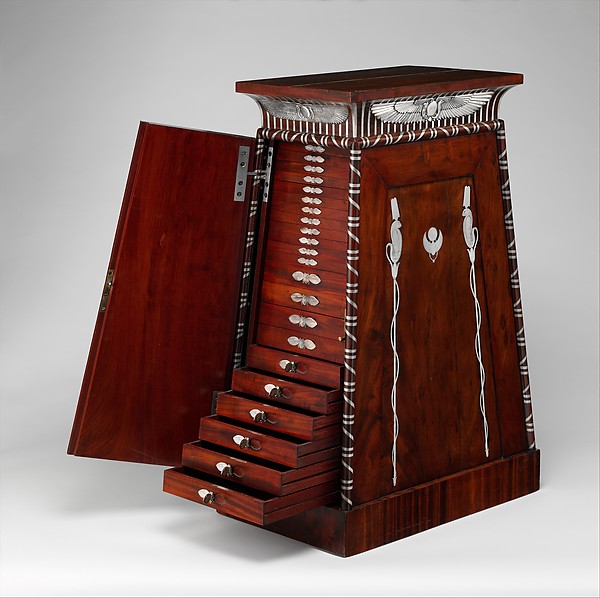
Coin cabinet
ca. 1809–19 Artwork
Charles Percier
Bequest of Collis P. Huntington, 1900
Open at The Met -

Still Life with Flowers, a Snail and Insects
1589 Artwork
Joris Hoefnagel
Purchase, Charles and Jessie Price, Jean A. Bonna, and Annette de la Renta Gifts, and The Elisha Whittelsey Collection, The Elisha Whittelsey Fund, 2008
Open at The Met -

Held since 17 Sep 2026.
Quotes
6
 Wikiquote, public domain
👑 Public domain
-
“Say, will the falcon, stooping from above, Smit with her varying plumage, spare the dove? Admires the jay the insect's gilded wings? Or hears the hawk when Philomela sings?”
Alexander PopeAn Essay on Man, 1733
Wikiquote, public domain
Verified
Wikiquote, CC BY-SA 4.0 held locally Evidence
-
“Even insects express anger, terror, jealousy, and love by their stridulation.”
Charles DarwinThe Expression of the Emotions in Man and Animals, 1872
Wikiquote, public domain
Verified
Wikiquote, CC BY-SA 4.0 held locally Evidence
-
“No insect hangs its nest on threads as frail as those which will sustain the weight of human vanity; and the sense of being of importance among the insignificant was enough to restore to Miss Bart the gratifying consciousness of power.”
Edith WhartonThe House of Mirth, 1905
Wikiquote, public domain
Verified
Wikiquote, CC BY-SA 4.0 held locally Evidence
-
“"What sort of insects do you rejoice in, where you come from?" the Gnat inquired. "I don't rejoice in insects at all," Alice explained, "because I'm rather afraid of them—at least the large kinds. But I can tell you the names of some of them." "Of course they answer to their names?" the Gnat remarked carelessly. "I never knew them to do it." "What's the use of their having names," the Gnat said, "if they won't answer to them?" "No use to them," said Alice; "but it's useful to the people who name them, I suppose. If not, why do things have names at all?"”
Lewis CarrollThrough the Looking-Glass, 1871
Wikiquote, public domain
Verified
Wikiquote, CC BY-SA 4.0 held locally Evidence
-
“I wonder if that's the reason insects are so fond of flying into candles - because they want to turn into Snap-dragon-flies!”
Lewis CarrollThrough the Looking-Glass, 1871
Wikiquote, public domain
Verified
Wikiquote, CC BY-SA 4.0 held locally Evidence
-
“"If these shadows remain unaltered by the Future, none other of my race," returned the Ghost, "will find him here. What then? If he be like to die, he had better do it, and decrease the surplus population." Scrooge hung his head to hear his own words quoted by the Spirit, and was overcome with penitence and grief. "Man," said the Ghost, "if man you be in heart, not adamant, forbear that wicked cant until you have discovered What the surplus is, and Where it is. Will you decide what men shall live, what men shall die? It may be, that in the sight of Heaven, you are more worthless and less fit to live than millions like this poor man's child. Oh God! to hear the Insect on the leaf pronouncing on the too much life among his hungry brothers in the dust."”
Charles DickensA Christmas Carol, 1843
Wikiquote, public domain
Verified
Wikiquote, CC BY-SA 4.0 held locally Evidence
Held since 24 Sep 2026.
GIFs
 GIPHY

Looking for GIFs…
Fetched by your browser on this visit; nothing is stored here.
Search matches, not reviewed interpretations. Hover, focus or press Play to animate.
Matches for “class Hexapoda” · About these results
Artworks
Saved catalog · The Met
Catalog matches from The Met, held locally rather than searched for on this visit. None is an accepted interpretation: a contributor connects an exact meaning and reviewers decide the claim. Browse saved artworks
- Waistcoat: Direct depiction of “insect” (Q1390) tagged “Insects”. · not yet reviewed
- Coin cabinet: Direct depiction of “insect” (Q1390) tagged “Insects”. · not yet reviewed
- Still Life with Flowers, a Snail and Insects: Direct depiction of “insect” (Q1390) tagged “Insects”. · not yet reviewed
- Shō: Direct depiction of “insect” (Q1390) tagged “Insects”. · not yet reviewed
Quotes
Wikiquote, public domain · a verified public-domain selection
Public-domain lines from Wikiquote, public domain, held locally rather than searched for on this visit. Each was found in a Project Gutenberg text its credited author wrote before 1931, so the line and the credit agree with a primary source.
- Say, will the falcon, stooping from above, Smit with her varying plumage, spare the dove? Admires the jay the insect's gilded wings? Or hears the hawk when Philomela sings?: From Wikiquote's page “Falcons”, the page of the concept this meaning refers to (Q1390). From Wikiquote's page “Falcons”, the page of the concept this meaning refers to (Q43489).
- Even insects express anger, terror, jealousy, and love by their stridulation.: From Wikiquote's page “Insect”, the page of the concept this meaning refers to (Q1390).
- No insect hangs its nest on threads as frail as those which will sustain the weight of human vanity; and the sense of being of importance among the insignificant was enough to restore to Miss Bart the gratifying consciousness of power.: From Wikiquote's page “Insect”, the page of the concept this meaning refers to (Q1390).
- "What sort of insects do you rejoice in, where you come from?" the Gnat inquired. "I don't rejoice in insects at all," Alice explained, "because I'm rather afraid of them—at least the large kinds. But I can tell you the names of some of them." "Of course they answer to their names?" the Gnat remarked carelessly. "I never knew them to do it." "What's the use of their having names," the Gnat said, "if they won't answer to them?" "No use to them," said Alice; "but it's useful to the people who name them, I suppose. If not, why do things have names at all?": From Wikiquote's page “Insect”, the page of the concept this meaning refers to (Q1390).
- I wonder if that's the reason insects are so fond of flying into candles - because they want to turn into Snap-dragon-flies!: From Wikiquote's page “Insect”, the page of the concept this meaning refers to (Q1390).
- "If these shadows remain unaltered by the Future, none other of my race," returned the Ghost, "will find him here. What then? If he be like to die, he had better do it, and decrease the surplus population." Scrooge hung his head to hear his own words quoted by the Spirit, and was overcome with penitence and grief. "Man," said the Ghost, "if man you be in heart, not adamant, forbear that wicked cant until you have discovered What the surplus is, and Where it is. Will you decide what men shall live, what men shall die? It may be, that in the sight of Heaven, you are more worthless and less fit to live than millions like this poor man's child. Oh God! to hear the Insect on the leaf pronouncing on the too much life among his hungry brothers in the dust.": From Wikiquote's page “Insect”, the page of the concept this meaning refers to (Q1390).
Subjects
2 subjects · 0 addressed
the sources name more than one thing
- insect — class of arthropods (Q1390 · wordnet_wikidata · 0.9)
- Hexapoda — subphylum of arthropods (Q105146 · wordnet_ili · 0.85)

insect
class of arthropods
Insecta
Wikipedia Q1390 where this came from — the thing this word names — insect
Insects (from Latin insectum) are invertebrates of the class Insecta. They are the largest group within the arthropod phylum. Insects have an exoskeleton, a three-part body (head, thorax and abdomen), three pairs of jointed legs, compound eyes, and a pair of antennae. Insects are the most diverse group of animals, with more than a million described species; they represent more than half of all animal species.
… 2,850 more Fold this article
The insect nervous system consists of a brain and a ventral nerve cord. Insects breathe air through a system of paired openings along their sides, connected to small tubes that take air directly to the tissues. The blood therefore does not carry oxygen; it is only partly contained in vessels, and some circulates in an open hemocoel. Insect vision is mainly through their compound eyes, with additional small ocelli. Many insects can hear, using tympanal organs. Their sense of smell is via receptors, usually on the antennae and the mouthparts.
Most insects reproduce by laying eggs. Insect growth is constrained by the inelastic exoskeleton, so development involves a series of molts. The immature stages often differ from the adults in structure, habit, and habitat. Groups that undergo four-stage metamorphosis often have a nearly immobile pupa. Adult insects typically move about by walking and flying; some can swim. Insects are the only invertebrates that can achieve sustained powered flight; insect flight evolved just once. Many insects are at least partly aquatic, and have larvae with gills; in some species, the adults too are aquatic. Some species, such as water striders, can walk on the surface of water. Insects are mostly solitary, but some, such as bees, ants and termites, are social and live in large, well-organized colonies. Others, such as earwigs, provide maternal care, guarding their eggs and young. Insects can communicate with each other in a variety of ways. Male moths can sense the pheromones of female moths over great distances. Other species communicate with sounds: crickets stridulate, or rub their wings together, to attract a mate and repel other males. Lampyrid beetles communicate with light.
Insects that undergo three-stage metamorphosis lack a pupa, developing through a series of increasingly adult-like nymphal stages. Fossilized insects of enormous size have been found from the Paleozoic era, including giant dragonfly-like insects with wingspans of 55 to 70 cm (22 to 28 in). The most diverse insect groups appear to have coevolved with flowering plants. Humans regard many insects as pests, especially those that damage crops, and attempt to control them using insecticides and other techniques. Others are parasitic, and may act as vectors of diseases. Insect pollinators are essential to the reproduction of many flowering plants and so to their ecosystems. Many insects are ecologically beneficial as predators of pest insects, while a few provide direct economic benefit. Two species in particular are economically important and were domesticated many centuries ago: silkworms for silk and honey bees for honey. Insects are intentionally consumed as food in 80% of the world's nations, by people in roughly 3,000 ethnic groups. Human activities are having serious effects on insect biodiversity.
 Wikipedia (English)
read this at Wikipedia (English)
where this came from — Wikipedia (English)
a kind of class Hexapoda Allotriocarida pancrustacean Mandibulata arthropod ecdysozoan protostome bilaterian
Public linked claims
What the existing sources assert about these meanings. These are source claims, not curated endorsements.
-
insects; about five-sixths of all known animal species refers to insect
Open English WordNet 2025 · assertion revision 4369633
Source, evidence and revision history -
insects; about five-sixths of all known animal species refers to Hexapoda
Open English WordNet 2025 · assertion revision 4370431
Source, evidence and revision history
Sources
-
Wikiquote, public domain
Wikiquote
-
 The Met
-
 Wikidata
-
Wikipedia (English)
Wikipedia (English)
-
Open English WordNet 2025
Open English WordNet 2025
-
GIPHY
GIPHY
-
Urban Dictionary
Urban Dictionary
7 sources on this page