All materials · Pole
Search the dictionaries, texts, images and API records available for this entry. Source matches are not curated endorsements.
Return to the curated articleSource / API coverage for this entry
Counts above cover loaded, permitted materials. Unavailable or not-yet-loaded sources are not evidence of an empty catalogue. Browser-only results remain on your device.
- Bing News · not loaded for this entry
- CineGraph · not loaded for this entry
- Wikimedia Commons · not loaded for this entry
- GIPHY · browser results · inspect complete records for status
- The Guardian · not loaded for this entry
- The Met · not loaded for this entry
- Open Library · not loaded for this entry
- Openverse · not loaded for this entry
- Pexels · not loaded for this entry
- PoetryDB · not loaded for this entry
- Spotify · not loaded for this entry
- Unsplash · not loaded for this entry
- Wikiquote · not loaded for this entry
Inspect complete source records and provider status
Pole
+10 variants
- [pʰɒɫ]
- /pɒl/
- [pʰɒʊɫ] Received-Pronunciation
- [pʰoːɫ] Wales
- [pʰoəɫ] Canada, US
- [pʰoɫ] Scotland
- [pʰoʊɫ] Canada, US
- /pɐʉl/ Australia, New-Zealand
- /pəʊl/ Received-Pronunciation
- /poːl/ Wales
- /pol/ Scotland
- /poʊl/ Canada, US
- recording US
noun
West Slavic ethnic group Wikidata where this came from — Wikidata
Definitions
2 dictionaries
 Open English WordNet 2025
2025 ·
noun ·
1 sense
a native or inhabitant of Poland
Open English WordNet 2025
2025 · noun · 1 sense
a native or inhabitant of Poland
 Wiktionary (English) via Kaikki
2026 ·
noun ·
1 sense
A person from Poland or of Polish descent.
Wiktionary (English) via Kaikki
2026 · noun · 1 sense
A person from Poland or of Polish descent.
-
1
A person from Poland or of Polish descent.
-
“The Poles are well dressed, handsome, and somehow on a larger scale than their surroundings, as if they have grown since the war and Poland itself has not.”
1989, Priit J. Vesilind, “The Baltic: Arena of Power”, in National Geographic, volume 175, number 5, page 626
Wiktionary (English) via Kaikki
Plausible
-
Read this at Wiktionary (English) via Kaikki where this came from — Wiktionary (English) via Kaikki
 Urban Dictionary
read this at Urban Dictionary
Asking Urban Dictionary…
Crowd-sourced and unreviewed. Fetched by your browser; nothing is stored here.
Out in the world
every match says why it is here
GIFs
 GIPHY

Looking for GIFs…
Fetched by your browser on this visit; nothing is stored here.
Search matches, not reviewed interpretations. Hover, focus or press Play to animate.
Subjects
9 subjects · 0 addressed
Found by name and by the sources. Not reviewed: a shared name is not a shared identity.
Subject
Poles
West Slavic ethnic group
Unclassified
Subject
Pole
Wikimedia disambiguation page
Unclassified
Subject
POLE
protein-coding gene in the species Homo sapiens
Unclassified
Subject
Pole
2003 album by Pole
Unclassified
Subject
Pole
family name
Unclassified
Subject
Pole
German electronic musician
Unclassified
Subject
Pole
village in Lubusz Voivodeship, Poland
Unclassified
Subject
pole
isolated singularity of a holomorphic function 𝑓 such that 1/𝑓 has a zero and is holomorphic at the singularity
Unclassified
Subject
Pole
composition
Unclassified
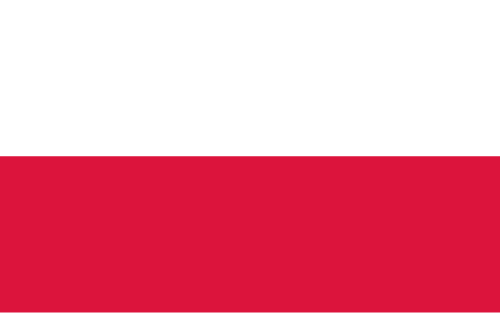
Poles
West Slavic ethnic group
Wikipedia Q1026 where this came from — the thing this word names — Poles
Polish people, or Poles, are a West Slavic ethnic group and a nation who share a common history, culture, the Polish language and are identified with the country of Poland in Central Europe. The preamble to the Constitution of the Republic of Poland defines the Polish nation as comprising all the citizens of Poland, regardless of heritage or ethnicity. The majority of Poles adhere to Roman Catholicism.
… 1,171 more Fold this article
The population of self-declared Poles in Poland is estimated at 37,394,000 out of an overall population of 38,512,000 (based on the 2011 census), of whom 36,522,000 declared Polish alone. A wide-ranging Polish diaspora (the Polonia) exists throughout Eurasia, the Americas, and Australasia. Today, the largest urban concentrations of Poles are within the Warsaw metropolitan area and the Katowice urban area.
Ethnic Poles are considered to be the descendants of the ancient West Slavic Lechites and other tribes that inhabited the Polish territories during the late antiquity period. Poland's recorded history dates back over a thousand years to c. 930–960 AD, when the Western Polans – an influential tribe in the Greater Poland region – united various Lechitic clans under what became the Piast dynasty, thus creating the first Polish state. The subsequent Christianization of Poland by the Catholic Church, in 966 CE, marked Poland's advent to the community of Western Christendom. However, throughout its existence, the Polish state followed a tolerant policy towards minorities resulting in numerous ethnic and religious identities of the Poles, such as Polish Jews.
 Wikipedia (English)
read this at Wikipedia (English)
where this came from — Wikipedia (English)
a kind of people
Public linked claims
What the existing sources assert about these meanings. These are source claims, not curated endorsements.
-
A person from Poland or of Polish descent. refers to Poles
Wiktionary (English) via Kaikki · assertion revision 3915166
Source, evidence and revision history
Sources
-
 Wikidata
-
Wikipedia (English)
Wikipedia (English)
-
Wiktionary (English) via Kaikki
Wiktionary (English) via Kaikki
-
Open English WordNet 2025
Open English WordNet 2025
-
GIPHY
GIPHY
-
Urban Dictionary
Urban Dictionary
6 sources on this page