All materials · plant
Search the dictionaries, texts, images and API records available for this entry. Source matches are not curated endorsements.
Return to the curated articleSource / API coverage for this entry
Counts above cover loaded, permitted materials. Unavailable or not-yet-loaded sources are not evidence of an empty catalogue. Browser-only results remain on your device.
- Bing News · not loaded for this entry
- CineGraph · not loaded for this entry
- Wikimedia Commons · not loaded for this entry
- GIPHY · browser results · inspect complete records for status
- The Guardian · not loaded for this entry
- The Met · not loaded for this entry
- Open Library · not loaded for this entry
- Openverse · not loaded for this entry
- Pexels · not loaded for this entry
- PoetryDB · not loaded for this entry
- Spotify · not loaded for this entry
- Unsplash · not loaded for this entry
- Wikiquote · not loaded for this entry
Inspect complete source records and provider status
plant
+10 variants
- [pʰl̥æːnt] ~ [pʰl̥ɛːnt] ~ [pʰl̥eːnt]
- [pʰl̥eənt]
- /plæːnt/
- [pʰl̥ænt] US
- [pʰl̥ant] ~ [pʰl̥änt] Northern-England
- [pʰl̥ɐ̞ːnt] Australia, New-Zealand, South
- [pʰl̥ɑːnt] Received-Pronunciation, Southern-England
- /plænt/ US
- /plant/ Northern-England
- /plɐːnt/ Australia, New-Zealand, South
- /plɑːnt/ Received-Pronunciation, Southern-England
- recording Southern-England
- recording US, æ-tensing
noun
living thing in the kingdom of photosynthetic eukaryotes Wikidata where this came from — Wikidata
Definitions
3 dictionaries
 Samuel Johnson
18th century ·
1755 ·
noun ·
5,769 characters
1. Any thing produced from seed; any vegetable production. What comes under this denomination, Ray has distributed under twenty-seven genders or kinds: 1. The imperfect plants, which do either totally want both flower an
Samuel Johnson
18th century · 1755 · noun · 5,769 characters
1. Any thing produced from seed; any vegetable production. What comes under this denomination, Ray has distributed under twenty-seven genders or kinds: 1. The imperfect plants, which do either totally want both flower an
1. Any thing produced from seed; any vegetable production.
What comes under this denomination, Ray has distributed
under twenty-seven genders or kinds: 1. The imperfect plants,
which do either totally want both flower and seed, or else
seem to do so. 2. Plants producing either no flower at all,
or an imperfect one, whose seed is so small as not to be discernible by the naked eye. 3. Those whose seeds are not so
small, as singly to be invisible, but yet havé an imperfect or
staminous flower; i. e. such a one, as is without the petala,
having only the stamina and the perianthium. 4. Such as
have a compound flower, and emit a kind of white juice or
milk when their stalks are cut off or their branches broken
off. 5. Such as have a compound flower of a discous figure,
the seed pappous, or winged with downe, but emit no milk.
6. The herbæ capitatæ, or such whose flower is composed of
many small, long, fistulous or hollow flowers gathered round
together in a round button or head, which is usually covered
with a squamous or scaly coat. 7. Such as have their leaves
entire and undivided into jags. 8. The corymbiferous plants,
which have a compound discous flower, but the seeds have no
downe adhering to them. 9. Plants with a perfect flower,
and having only one single seed belonging to each single
flower. 10. Such as have rough, hairy or bristly seeds. 11.
The umbelliserous plants, which have a pentapetalous
flower, and belonging to each single flower are two seeds,
lying naked and joining together; they are called umbelliserous, because the plant, with its branches and flowers, hath
an head like a lady's umbrella: [1.] Such as have a broad flat
seed almost of the figure of a leaf, which are encompassed
round about with something like leaves. [2.] Such as have
a longish seed, swelling out in the middle, and larger than
the former. [3.] Such as have a shorter seed. [4.] Such as
have a tuberose root. [5.] Such as have a wrinkled, channelated or striated seed. 12. The stellate plants, which are so
called, because their leaves grow on their stalks at certain intervals or distances in the form of a radiant star: their flowers
are really monopetalous, divided into four segments, which
look like so many petala; and each flower is succeeded by
two seeds at the bottom of it. 13. The asperisolia, or rough
leaved plants: they have their leaves placed alternately, or
in no certain order on their stalks; they have a monopetalous
flower cut or divided into five partitions, and after every
flower there succeed usually four seeds. 14. The suffrutices,
or verticilate plants: their leaves grow by pairs on their stalks,
one leaf right against another; their leaf is monopetalous,
and usually in form of an helmet. 15. Such as have naked
seeds, more than four, succeeding their flowers, which therefore they call polyspermæ plantæ semine nudo; by naked
seeds, they mean such as are not included in any seed pod.
16. Bacciferous plants, or such as bear berries. 17. Multisiliquous, or corniculate plants, or such as have, after each
flower, many distinct, long, slender, and many times crooked
cases or siliquæ, in which their seed is contained, and which,
when they are ripe, open themselves and let the seeds drop
out. 18. Such as have a monopetalous flower, either uniform or difform, and after each flower a peculiar seed-case
containing the seed, and this often divided into many distinct cells. 19. Such as have an uniform tetrapetalous
flower, but bear these seeds in oblong siliquous cases. 20.
Vasculiferous plants, with a tetrapetalous flower, but often
anomalous. 21. Leguminous plants, or such as bear pulse,
with a papilionaceous flower. 22. Vasculiferous plants, with
a pentapetalous flower; these have, besides the common calix, a peculiar case containing their seed, and their flower
consisting of five leaves. 23. Plants with a true bulbous
root, which consists but of one round ball or head, out of
whose lower part go many fibres to keep it firm in the earth:
the plants of this kind come up but with one leaf; they have
no foot stalk, and are long and slender: the seed vessels are
divided into three partitions: their flower is sexapetalous.
24. Such as have their fruits approaching to a bulbous form:
these emit, at first coming up, but one leaf, and in leaves,
flowers and roots resemble the true bulbous plant. 25. Culmiserous plants, with a grasiy leaf, are such as have a smooth
hollow-jointed stalk, with one sharp-pointed leaf at each joint,
encompassing the stalk, and set out without any foot stalk: their
seed is contained within a chaffy husk. 26. Plants with a
grassy leaf, but not culmiferous, with an imperfect or staminous flower. 27. Plants whose place of growth is uncertain
and various, chiefly water plants.
Butchers and villains,
How sweet a plant have you untimely cropt. Shakesp.
Read the rest of this entry · 921 characters Fold this entry
Between the vegetable and sensitive province there are plantanimals and some kind of insects arising from vegetables, that
seem to participate of both. Hale's Origin of Mankind.
The next species of life above the vegetable, is that of
sense; wherewith some of those productions, which we call
plant-animals, are endowed. Grew's Cosmol.
It continues to be the same plant, as long as it partakes of
the same life, though that life be communicated to new particles of matter, vitally united to the living plant, in a like
continued organization, conformable to that sort of plants. Locke.
Once I was skill'd in ev'ry herb that grew,
And ev'ry plant that drinks the morning dew. Pope.
2. A sapling.
A man haunts the forest, that abuses our young plants with
carving Rosalind on their barks. Shakesp. As You like it.
Take a plant of stubborn oak,
And labour him with many a stubborn stroke. Dryden.
3.
The sole of the foot. Ainsworth.
Read this at Samuel Johnson where this came from — Samuel Johnson, A Dictionary of the English Language
 Open English WordNet 2025
2025 ·
noun ·
4 senses
(botany) a living organism lacking the power of locomotion
Open English WordNet 2025
2025 · noun · 4 senses
(botany) a living organism lacking the power of locomotion
- ●
broader organism living thing whole object physical entity entity
-
●
buildings for carrying on industrial labor
broader building complex structure artifact whole object physical entity entity
-
●
something planted secretly for discovery by another
broader contrivance scheme plan of action plan idea content cognition psychological feature
1 more from this source · 1 senses
-
●
an actor situated in the audience whose acting is rehearsed but seems spontaneous to the audience
broader actor performer entertainer actor causal agent physical entity entity
Read this at Open English WordNet 2025 where this came from — Open English WordNet 2025
 Wiktionary (English) via Kaikki
2026 ·
noun ·
19 senses
An organism that is not an animal, especially an organism capable of photosynthesis, and typically a small or herbaceous organism of this kind, rather than a tree.
Wiktionary (English) via Kaikki
2026 · noun · 19 senses
An organism that is not an animal, especially an organism capable of photosynthesis, and typically a small or herbaceous organism of this kind, rather than a tree.
-
1
An organism that is not an animal, especially an organism capable of photosynthesis, and typically a small or herbaceous organism of this kind, rather than a tree.
-
“In plants, the ability to recognize self from nonself plays an important role in fertilization, because self-fertilization will result in less diverse offspring than fertilization with pollen from another individual. Many genes with reproductive roles also have antibacterial and immune functions, which indicate that the threat of microbial attack on the sperm or egg may be a major influence on rapid evolution during reproduction.”
2013 May-June, Katrina G. Claw, “Rapid Evolution in Eggs and Sperm”, in American Scientist, volume 101, number 3, page 217
Wiktionary (English) via Kaikki
Plausible
-
-
2
An organism of the kingdom Plantae, and now specifically, a living organism of the Embryophyta (land plants) or of the Chlorophyta (green algae), a eukaryote that includes double-membraned chloroplasts in its cells containing chlorophyll a and b, or any organism closely related to such an organism.
-
3
Now specifically, a multicellular eukaryote that includes chloroplasts in its cells, which have a cell wall.
show 16 more
-
4
A young tree, vine, shrub, or herb; a sapling. (obsolete)
-
“Take, Shepherd, take a Plant of ſtubborn Oak; / And labour him with many a ſturdy ſtroke: / Or with hard Stones, demoliſh from afar / His haughty Creſt, the feat of all the War.”
1694, “The Third Book of Virgil's Georgicks”, in John Dryden, transl., The Annual Miscellany, for the Year 1694, 2nd edition, London: Jacob Tonson, published 1708, page 185
Wiktionary (English) via Kaikki
Plausible
-
-
5
Any creature that grows on soil or similar surfaces, including plants and fungi. (proscribed)
-
“Some plants, such as mushrooms found in the wild, are difficult to identify. Some plants are poisonous, and an inexperienced individual may make mistakes in identification of wild plants, with tragic results.”
2007 November 19, Ping-chung Leung, Harry H S Fong, Alternative Treatment For Cancer, World Scientific, →ISBN, page 205
Wiktionary (English) via Kaikki
Plausible
-
-
6
A factory or other industrial or institutional building or facility. (countable)
-
“The US group does have another vaccine plant in Ireland – in Carlow – but it is understood the Dundalk site is the only live virus vaccine facility in MSD’s Irish network.”
2025 6 Jan, Dominic Coyle, “Drug giant MSD buys Wuxi’s Irish vaccines plant in €500m deal”, in The Irish Times, archived from the original on 03 Feb 2025
Wiktionary (English) via Kaikki
Plausible
-
-
7
Machinery and other supplies and equipment, such as the kind used in heavy industry, light industry, earthmoving, or construction. (uncountable)
-
“And Dan indignantly waved his long, brown arm over the plant, which consisted of the engine, the boring apparatus, and a dilapidated spring-cart that was pulled by a lean, lonely-looking horse[.]”
1911, ‘Steel Rudd’, The Book of Dan, Brisbane: University of Queensland Press, published 1970, page 1
Wiktionary (English) via Kaikki
Plausible
similar capital equipment -
-
8
The equipment and work animals of a drover or other rural worker travelling through the countryside. (Australia)
-
“Nigger smoke-talks had told him of the patrol and of Felix’s mustering plant. Once he had absorbed the ‘outside’ news the night’s new the conversation started in earnest.”
1937, Ion L. Idriess, Over the Range, Sydney: Angus and Robertson, published 1947, page 44
Wiktionary (English) via Kaikki
Plausible
-
-
9
An object placed surreptitiously in order to cause suspicion to fall upon a person.
-
10
A stash or cache of hidden goods. (obsolete, slang)
-
11
Anyone assigned to behave as a member of the public during a covert operation (as in a police investigation).
-
12
A person, placed amongst an audience, whose role is to cause confusion, laughter etc.
-
13
A play in which the cue ball knocks one (usually red) ball onto another, in order to pot the second; a set.
-
“O’Sullivan risked a plant that went badly astray, splitting the reds.”
2008 April 28, Phil Yates, The Times
Wiktionary (English) via Kaikki
Plausible
-
“The company's product range includes tools, construction plant, diggers, dumpers and rollers.”
2007 January 26, “HSS buys Laois tool hire business”, in RTÉ News, archived from the original on 03 Feb 2025
Wiktionary (English) via Kaikki
Plausible
-
-
14
The sole of the foot. (obsolete)
-
“Knotty legs, and plants of clay, / Seek for eaſe, or love delay.”
1611, Ben Jonson, “Oberon, the Faery Prince”, in The Works of Ben Jonson, volume V, London: D. Midwinter et al., published 1756, page 384
Wiktionary (English) via Kaikki
Plausible
-
-
15
A plan; a swindle; a trick. (dated, slang)
-
“It wasn’t a bad plant that of mine, on Fikey, the man accused of forging the Sou’ Westeru Railway debentures—it was only t’ other day—because the reason why? I’ll tell you.”
1850 March 30, Charles Dickens, “A Detective Police Party”, in Household Words, volume 1, page 413
Wiktionary (English) via Kaikki
Plausible
-
“Now, Max, by what combination of circumstances is a rogue to know my password, to be able to forge my signature, to possess himself of my key, and to resemble me personally? And, finally, how is he possibly to determine beforehand whether there is anything in my safe to repay so elaborate a plant?”
1914, Ernest Bramah, Max Carrados
Wiktionary (English) via Kaikki
Plausible
-
-
16
An oyster which has been bedded, in distinction from one of natural growth.
-
17
A young oyster suitable for transplanting. (US, dialectal)
-
18
A system, such as a motor, whose behaviour is being regulated or controlled by a control system.
-
19
A position in the street to sell from; a pitch. (UK, obsolete, slang)
Read this at Wiktionary (English) via Kaikki where this came from — Wiktionary (English) via Kaikki
 Urban Dictionary
read this at Urban Dictionary
Asking Urban Dictionary…
Crowd-sourced and unreviewed. Fetched by your browser; nothing is stored here.
Out in the world
12 things · every match says why it is here
Artworks
11
Saved catalog
-

-

Venus of Urbino
1538 Artwork
Titian
Tiziano's Venere di Urbino (from The History BLog).jpg · Wikimedia Commons
Open at Wikidata -
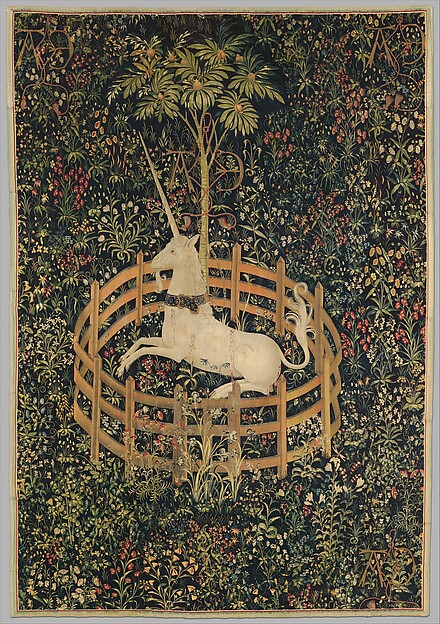
The Unicorn Rests in a Garden (from the Unicorn Tapestries)
1495–1505 Artwork
Gift of John D. Rockefeller Jr., 1937
Open at The Met -

Truth Coming Out of Her Well
1896 Artwork
Jean-Léon Gérôme
Jean Léon Gerome 1896 La Vérité sortant du puits.JPG · Wikimedia Commons
Open at Wikidata -

Dance in the City
1883 Artwork
Pierre-Auguste Renoir
Danse à la ville (Pierre-Auguste Renoir)-WUS07474 (cropped).jpg · Wikimedia Commons
Open at Wikidata -

La Promenade
1870 Artwork
Pierre-Auguste Renoir
La Promenade, by Pierre-Auguste Renoir, edited.jpg · Wikimedia Commons
Open at Wikidata -

-

Young Greeks Attending a Cock Fight
1846 Artwork
Jean-Léon Gérôme
Jean-Léon Gérôme - Young Greeks Attending a Cock Fight - Google Art Project.jpg · Wikimedia Commons
Open at Wikidata -

-

The Young Shepherdess
1885 Artwork
William-Adolphe Bouguereau
The young shepherdess, by William-Adolphe Bouguereau.jpg · Wikimedia Commons
Open at Wikidata -

Cupid and Psyche
1798 Artwork
François Gérard
Psyché et l'Amour - François Gérard - Musée du Louvre Peintures INV 4739 ; L 3778.jpg · Wikimedia Commons
Open at Wikidata
Held since 17 Sep 2026.
Quotes
1
 Wikiquote, public domain
👑 Public domain
-
“I think that I shall never see/ A poem lovely as a tree.”
Joyce KilmerTrees and Other Poems, 1914
Wikiquote, public domain
Verified
Wikiquote, CC BY-SA 4.0 held locally Evidence
Held since 24 Sep 2026.
GIFs
 GIPHY

Looking for GIFs…
Fetched by your browser on this visit; nothing is stored here.
Search matches, not reviewed interpretations. Hover, focus or press Play to animate.
Matches for “plant” · About these results
Artworks
Saved catalog · The Met, Wikidata
Catalog matches from The Met, Wikidata, held locally rather than searched for on this visit. None is an accepted interpretation: a contributor connects an exact meaning and reviewers decide the claim. Browse saved artworks
- Wrack: Direct depiction of “plant” (Q756) tagged “Plants”. · not yet reviewed
- Venus of Urbino: Direct depiction of “plant” (Q756) tagged “plant”. · not yet reviewed
- The Unicorn Rests in a Garden (from the Unicorn Tapestries): Direct depiction of “plant” (Q756) tagged “Plants”. · not yet reviewed
- Truth Coming Out of Her Well: Direct depiction of “plant” (Q756) tagged “plant”. · not yet reviewed
- Dance in the City: Direct depiction of “plant” (Q756) tagged “plant”. · not yet reviewed
- La Promenade: Direct depiction of “plant” (Q756) tagged “plant”. · not yet reviewed
- The Dream: Direct depiction of “plant” (Q756) tagged “plant”. · not yet reviewed
- Young Greeks Attending a Cock Fight: Direct depiction of “plant” (Q756) tagged “plant”. · not yet reviewed
- The Reading: Direct depiction of “plant” (Q756) tagged “plant”. · not yet reviewed
- The Young Shepherdess: Direct depiction of “plant” (Q756) tagged “plant”. · not yet reviewed
- Cupid and Psyche: Direct depiction of “plant” (Q756) tagged “plant”. · not yet reviewed
Quotes
Wikiquote, public domain · a verified public-domain selection
Public-domain lines from Wikiquote, public domain, held locally rather than searched for on this visit. Each was found in a Project Gutenberg text its credited author wrote before 1931, so the line and the credit agree with a primary source.
- I think that I shall never see/ A poem lovely as a tree.: From Wikiquote's page “Plants”, the page of the concept this meaning refers to (Q756).
Subjects
1 subject · 0 addressed
Found by name and by the sources. Not reviewed: a shared name is not a shared identity.
Subject
plant
living thing in the kingdom of photosynthetic eukaryotes
Unclassified

plant
living thing in the kingdom of photosynthetic eukaryotes
Plantae
Wikipedia Q756 where this came from — the thing this word names — plant
Plants are the eukaryotic organisms that constitute the kingdom Plantae (/'plænteɪ/). They are predominantly photosynthetic or came from photosynthetic ancestors, meaning that they obtain their energy from sunlight by using the green pigment chlorophyll in their chloroplasts to produce sugars from carbon dioxide and water. Over the course of time, some plants have evolved to be parasitic, meaning they take energy from other organisms.
… 1,453 more Fold this article
Except for glaucophytes, some green algae and a few red algae, most plants are multicellular.
Historically, as in Aristotle's biology, the plant kingdom encompassed all living things that were not animals, and included algae and fungi. Definitions have narrowed since then; current definitions exclude fungi and some of the algae. By the definition used in this article, plants form the clade Viridiplantae (green plants), which consists of the green algae and the embryophytes or land plants (hornworts, liverworts, mosses, lycophytes, ferns, conifers and other gymnosperms, and flowering plants). A definition based on genomes includes the Viridiplantae, along with the red algae and the glaucophytes, in the clade Archaeplastida.
There are about 380,000 known species of plants, of which the majority, some 260,000, produce seeds. They range in size from single cells to the tallest trees. Green plants provide a substantial proportion of the world's molecular oxygen. The sugars they produce by photosynthesis provide the energy for most of Earth's ecosystems, and other organisms, including animals, are herbivores or otherwise dependent on plant materials.
Grain, fruit, and vegetables are basic human foods and have been domesticated for millennia. People use plants for many purposes, such as building materials, such as wood, ornaments, writing materials, and, in great variety, for medicines. The scientific study of plants is known as botany.
 Wikipedia (English)
read this at Wikipedia (English)
where this came from — Wikipedia (English)
a kind of Archaeplastida CAM Diaphoretickes eukaryote Cytota Biota organism
Public linked claims
What the existing sources assert about these meanings. These are source claims, not curated endorsements.
-
An organism of the kingdom Plantae, and now specifically, a living organism of the Embryophyta (land plants) or of the Chlorophyta (green algae), a eukaryote that includes double-membraned chloroplasts in its cells containing chlorophyll a and b, or any organism closely related to such an organism. refers to plant
Wiktionary (English) via Kaikki · assertion revision 3914559
Source, evidence and revision history
Sources
-
Samuel Johnson, A Dictionary of the English Language
Samuel Johnson
-
Wikiquote, public domain
Wikiquote
-
 The Met
-
 Wikidata
-
Wikipedia (English)
Wikipedia (English)
-
Wiktionary (English) via Kaikki
Wiktionary (English) via Kaikki
-
Open English WordNet 2025
Open English WordNet 2025
-
GIPHY
GIPHY
-
Urban Dictionary
Urban Dictionary
9 sources on this page