All materials · eyas
Search the dictionaries, texts, images and API records available for this entry. Source matches are not curated endorsements.
Return to the curated articleSource / API coverage for this entry
Counts above cover loaded, permitted materials. Unavailable or not-yet-loaded sources are not evidence of an empty catalogue. Browser-only results remain on your device.
- Bing News · not loaded for this entry
- CineGraph · not loaded for this entry
- Wikimedia Commons · not loaded for this entry
- GIPHY · browser results · inspect complete records for status
- The Guardian · not loaded for this entry
- The Met · not loaded for this entry
- Open Library · not loaded for this entry
- Openverse · not loaded for this entry
- Pexels · not loaded for this entry
- PoetryDB · not loaded for this entry
- Spotify · not loaded for this entry
- Unsplash · not loaded for this entry
- Wikiquote · not loaded for this entry
Inspect complete source records and provider status
Definitions
3 dictionaries
 Samuel Johnson
18th century ·
1755 ·
noun ·
163 characters
A young hawk just taken from the nest, not able to prey for itself. Hanmer. There is, sir, an aiery of children, little eyases, that cry out. Shakespeare's Hamlet.
Samuel Johnson
18th century · 1755 · noun · 163 characters
A young hawk just taken from the nest, not able to prey for itself. Hanmer. There is, sir, an aiery of children, little eyases, that cry out. Shakespeare's Hamlet.
A young hawk just taken from the nest, not able to prey for itself.
Hanmer.
There is, sir, an aiery of children, little eyases, that cry out.
Shakespeare's Hamlet.
Read this at Samuel Johnson where this came from — Samuel Johnson, A Dictionary of the English Language
 Open English WordNet 2025
2025 ·
noun ·
1 sense
an unfledged or nestling hawk
Open English WordNet 2025
2025 · noun · 1 sense
an unfledged or nestling hawk
-
●
an unfledged or nestling hawk
broader hawk bird of prey bird vertebrate chordate animal organism living thing
Read this at Open English WordNet 2025 where this came from — Open English WordNet 2025
 Wiktionary (English) via Kaikki
2026 ·
noun ·
2 senses
A young hawk or falcon in the nest, or that has not yet fledged, especially one that will be trained for falconry.
Wiktionary (English) via Kaikki
2026 · noun · 2 senses
A young hawk or falcon in the nest, or that has not yet fledged, especially one that will be trained for falconry.
-
1
A young hawk or falcon in the nest, or that has not yet fledged, especially one that will be trained for falconry.similar eyasmusket
-
2
Something diminutive and immature or untrained. (figuratively)
-
“Are we to suppose the following lines of Plautus to have been delivered by an "eyas?"”
1828, Thomas Keightley, The Fairy Mythology, volume II, London: William Harrison Ainsworth, page 234
Wiktionary (English) via Kaikki
Plausible
-
Read this at Wiktionary (English) via Kaikki where this came from — Wiktionary (English) via Kaikki
 Urban Dictionary
read this at Urban Dictionary
Asking Urban Dictionary…
Crowd-sourced and unreviewed. Fetched by your browser; nothing is stored here.
Out in the world
8 things · every match says why it is here
Artworks
7
Saved catalog
-

-
-

Pectoral and Necklace of Sithathoryunet with the Name of Senwosret II
ca. 1887–1878 B.C. Artwork
Purchase, Rogers Fund and Henry Walters Gift, 1916
Open at The Met -

Arm Panel From a Ceremonial Chair of Thutmose IV
ca. 1396–1386 BCE Artwork
Theodore M. Davis Collection, Bequest of Theodore M. Davis, 1915
Open at The Met -
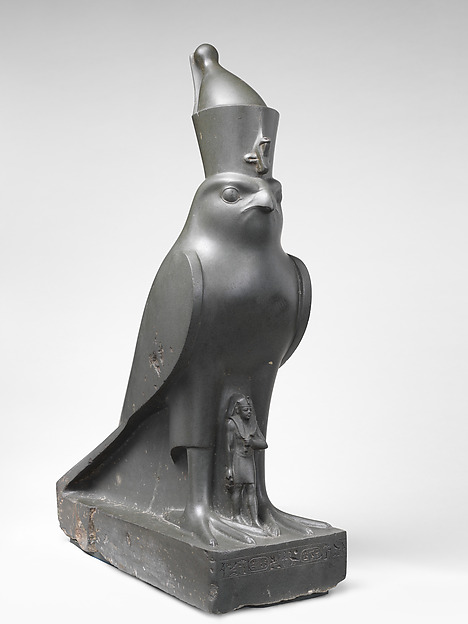
Statue of Horus as a falcon protecting King Nectanebo II
360–343 BCE Artwork
Rogers Fund, 1934
Open at The Met -

Statuette of Kary carrying a standard of Horus
ca. 1290–1224 BCE Artwork
Rogers Fund, 1965
Open at The Met -

Inlay of the Horus falcon on the hieroglyph for "gold"
360–343 BCE Artwork
Purchase, Edward S. Harkness Gift, 1926
Open at The Met
Held since 17 Sep 2026.
Quotes
1
 Wikiquote, public domain
👑 Public domain
-
“Say, will the falcon, stooping from above, Smit with her varying plumage, spare the dove? Admires the jay the insect's gilded wings? Or hears the hawk when Philomela sings?”
Alexander PopeAn Essay on Man, 1733
Wikiquote, public domain
Verified
Wikiquote, CC BY-SA 4.0 held locally Evidence
Held since 24 Sep 2026.
GIFs
 GIPHY

Looking for GIFs…
Fetched by your browser on this visit; nothing is stored here.
Search matches, not reviewed interpretations. Hover, focus or press Play to animate.
Matches for “eyas” · About these results
Artworks
Saved catalog · The Met
Catalog matches from The Met, held locally rather than searched for on this visit. None is an accepted interpretation: a contributor connects an exact meaning and reviewers decide the claim. Browse saved artworks
- Mirror Case: Direct depiction of “falcon” (Q43489) tagged “Falcons”. · not yet reviewed
- Rebecchino: Direct depiction of “falcon” (Q43489) tagged “Falcons”. · not yet reviewed
- Pectoral and Necklace of Sithathoryunet with the Name of Senwosret II: Direct depiction of “falcon” (Q43489) tagged “Falcons”. · not yet reviewed
- Arm Panel From a Ceremonial Chair of Thutmose IV: Direct depiction of “falcon” (Q43489) tagged “Falcons”. · not yet reviewed
- Statue of Horus as a falcon protecting King Nectanebo II: Direct depiction of “falcon” (Q43489) tagged “Falcons”. · not yet reviewed
- Statuette of Kary carrying a standard of Horus: Direct depiction of “falcon” (Q43489) tagged “Falcons”. · not yet reviewed
- Inlay of the Horus falcon on the hieroglyph for "gold": Direct depiction of “falcon” (Q43489) tagged “Falcons”. · not yet reviewed
Quotes
Wikiquote, public domain · a verified public-domain selection
Public-domain lines from Wikiquote, public domain, held locally rather than searched for on this visit. Each was found in a Project Gutenberg text its credited author wrote before 1931, so the line and the credit agree with a primary source.
- Say, will the falcon, stooping from above, Smit with her varying plumage, spare the dove? Admires the jay the insect's gilded wings? Or hears the hawk when Philomela sings?: From Wikiquote's page “Falcons”, the page of the concept this meaning refers to (Q1390). From Wikiquote's page “Falcons”, the page of the concept this meaning refers to (Q43489).
Subjects
1 subject · 0 addressed
Found by name and by the sources. Not reviewed: a shared name is not a shared identity.
Subject
falcon
genus of birds
Unclassified

falcon
genus of birds
Falco
Wikipedia Q43489 where this came from — the thing this word names — falcon
Falcons () are birds of prey in the genus Falco, which includes about 40 species. Some small species of falcons with long, narrow wings are called hobbies, and some that hover while hunting are called kestrels. Falcons are widely distributed on all continents of the world except Antarctica, though closely related raptors did occur there in the Eocene.
Adult falcons have thin, tapered wings, which enable them to fly at high speed and change direction rapidly.
… 1,395 more Fold this article
Fledgling falcons, in their first year of flying, have longer flight feathers, which make their configuration more like that of a general-purpose bird such as a broadwing. This makes flying easier while still learning the aerial skills required to be effective hunters like the adults.
The falcons are the largest genus in the Falconinae subfamily of Falconidae, which also includes two other subfamilies comprising caracaras and a few other species of "falcons". All these birds kill prey with their beaks, using a tomial "tooth" on the side of their beaks—unlike the hawks, eagles and other larger birds of prey from the unrelated family Accipitridae, who use talons on their feet.
The largest falcon is the gyrfalcon at up to 65 cm (26 in) in length. The smallest falcon species is the pygmy falcon, which measures just 20 cm (7.9 in). As with hawks and owls, falcons exhibit sexual dimorphism, with the females typically larger than the males, thus allowing a wider range of prey species.
As is the case with many birds of prey, falcons have exceptional powers of vision; the visual acuity of one species has been measured at 2.6 times that of human eyes. They are fast fliers, with the Peregrine falcons having been recorded diving at speeds of 320 km/h (200 mph), making them the fastest-moving creatures on Earth; the fastest recorded dive attained a vertical speed of 390 km/h (240 mph).
 Wikipedia (English)
read this at Wikipedia (English)
where this came from — Wikipedia (English)
a kind of Falconinae Falconidae order Falconiformes Eufalconimorphae Australaves Telluraves Passerea neoavian
may also refer to
- falcon — genus of birds
Public linked claims
What the existing sources assert about these meanings. These are source claims, not curated endorsements.
-
eyas lexeme entity candidate falcon
Wikipedia (English) · assertion revision 1446468
Source, evidence and revision history -
A young hawk or falcon in the nest, or that has not yet fledged, especially one that will be trained for falconry. refers to falcon
Wikipedia (English) · assertion revision 4344567
Source, evidence and revision history
Sources
-
Samuel Johnson, A Dictionary of the English Language
Samuel Johnson
-
Wikiquote, public domain
Wikiquote
-
 The Met
-
 Wikidata
-
Wikipedia (English)
Wikipedia (English)
-
Wiktionary (English) via Kaikki
Wiktionary (English) via Kaikki
-
Open English WordNet 2025
Open English WordNet 2025
-
GIPHY
GIPHY
-
Urban Dictionary
Urban Dictionary
9 sources on this page