All materials · cupid
Search the dictionaries, texts, images and API records available for this entry. Source matches are not curated endorsements.
Return to the curated articleSource / API coverage for this entry
Counts above cover loaded, permitted materials. Unavailable or not-yet-loaded sources are not evidence of an empty catalogue. Browser-only results remain on your device.
- Bing News · not loaded for this entry
- CineGraph · not loaded for this entry
- Wikimedia Commons · not loaded for this entry
- GIPHY · browser results · inspect complete records for status
- The Guardian · not loaded for this entry
- The Met · not loaded for this entry
- Open Library · not loaded for this entry
- Openverse · not loaded for this entry
- Pexels · not loaded for this entry
- PoetryDB · not loaded for this entry
- Spotify · not loaded for this entry
- Unsplash · not loaded for this entry
- Wikiquote · not loaded for this entry
Inspect complete source records and provider status
cupid
noun
Roman deity, counterpart of Eros Wikidata where this came from — Wikidata
Definitions
3 dictionaries
 Ambrose Bierce
20th century ·
1911 ·
noun ·
563 characters
The so-called god of love. This bastard creation of a barbarous fancy was no doubt inflicted upon mythology for the sins of its deities. Of all unbeautiful and inappropriate conceptions this is the most reasonless and of
Ambrose Bierce
20th century · 1911 · noun · 563 characters
The so-called god of love. This bastard creation of a barbarous fancy was no doubt inflicted upon mythology for the sins of its deities. Of all unbeautiful and inappropriate conceptions this is the most reasonless and of
The so-called god of love. This bastard creation of a barbarous fancy was no doubt inflicted upon mythology for the sins of its deities. Of all unbeautiful and inappropriate conceptions this is the most reasonless and offensive. The notion of symbolizing sexual love by a semisexless babe, and comparing the pains of passion to the wounds of an arrow—of introducing this pudgy homunculus into art grossly to materialize the subtle spirit and suggestion of the work— this is eminently worthy of the age that, giving it birth, laid it on the doorstep of prosperity.
Read this at Ambrose Bierce where this came from — Ambrose Bierce, The Devil's Dictionary
 Open English WordNet 2025
2025 ·
noun ·
1 sense
a symbol for love in the form of a cherubic naked boy with wings and a bow and arrow
Open English WordNet 2025
2025 · noun · 1 sense
a symbol for love in the form of a cherubic naked boy with wings and a bow and arrow
-
●
a symbol for love in the form of a cherubic naked boy with wings and a bow and arrow
broader emblem symbol representational process basic cognitive process process cognition psychological feature abstraction
Read this at Open English WordNet 2025 where this came from — Open English WordNet 2025
 Wiktionary (English) via Kaikki
2026 ·
noun ·
2 senses
A putto carrying a bow and arrow, representing Cupid or love.
Wiktionary (English) via Kaikki
2026 · noun · 2 senses
A putto carrying a bow and arrow, representing Cupid or love.
-
1
A putto carrying a bow and arrow, representing Cupid or love.
-
“The half-dozen pieces […] were painted white and carved with festoons of flowers, birds and cupids. To display them the walls had been tinted a vivid blue which had now faded, but the carpet, which had evidently been stored and recently relaid, retained its original turquoise.”
1963, Margery Allingham, chapter 1, in The China Governess: A Mystery, London: Chatto & Windus, →OCLC
Wiktionary (English) via Kaikki
Plausible
similar amorino -
-
2
Any of various lycaenid butterflies of the genera Chilades, Cupido and Everes.
Read this at Wiktionary (English) via Kaikki where this came from — Wiktionary (English) via Kaikki
 Urban Dictionary
read this at Urban Dictionary
Asking Urban Dictionary…
Crowd-sourced and unreviewed. Fetched by your browser; nothing is stored here.
Out in the world
14 things · every match says why it is here
Artworks
12
Saved catalog
-

La Crainte des Traits de l'Amour
1739–40 Artwork
Jean-Louis Lemoyne
Purchase, Josephine Bay Paul and C. Michael Paul Foundation Inc. Gift and Charles Ulrick and Josephine Bay Foundation Inc. Gift, 1967
Open at The Met -
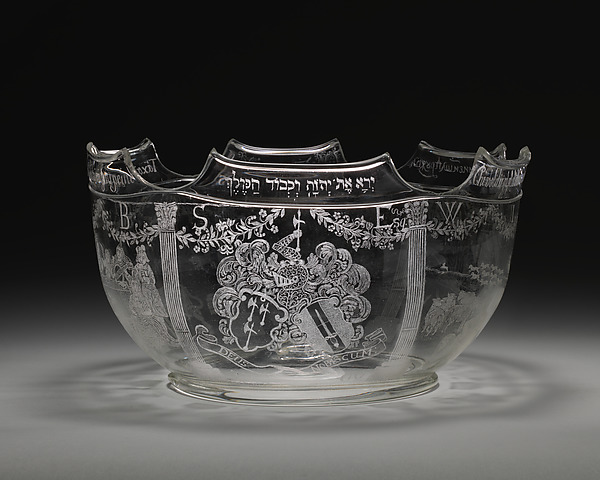
Monteith with the Gibbs and Nelthorpe coats of arms
1700 Artwork
Bequest of Florence Ellsworth Wilson, 1943
Open at The Met -

The Swing
1767 Artwork
Jean-Honoré Fragonard
Fragonard, The Swing.jpg · Wikimedia Commons
Open at Wikidata -

-

The Birth of Venus
1879 Artwork
William-Adolphe Bouguereau
William-Adolphe Bouguereau (1825-1905) - The Birth of Venus (1879).jpg · Wikimedia Commons
Open at Wikidata -
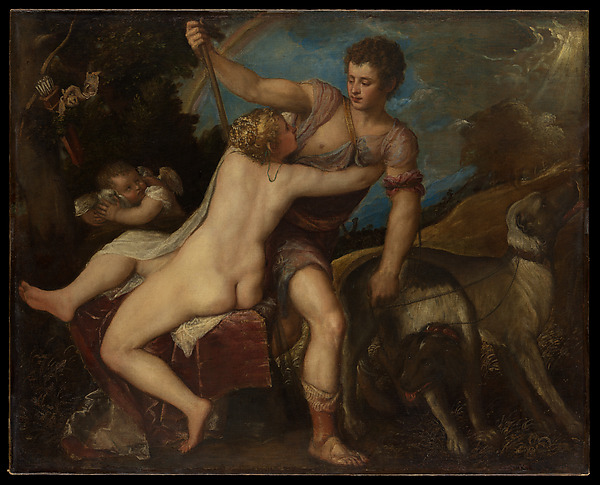
Venus and Adonis
1550s Artwork
Titian (Tiziano Vecellio)
The Jules Bache Collection, 1949
Open at The Met -

Rokeby Venus
1644 Artwork
Diego Velázquez
Diego Velázquez - Rokeby Venus.jpg · Wikimedia Commons
Open at Wikidata -
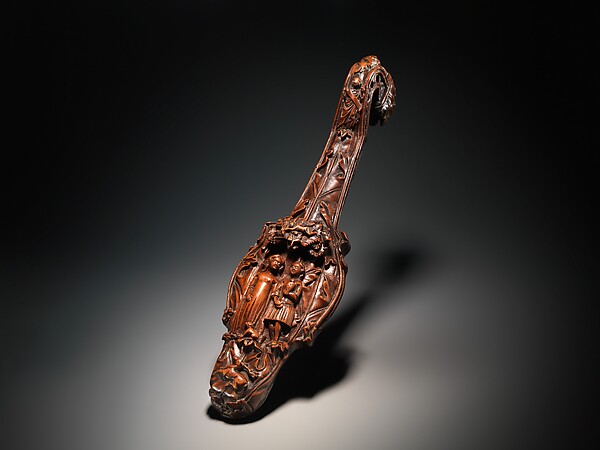
-

Amor Vincit Omnia
1601 Artwork
Caravaggio
Caravaggio - Cupid as Victor - Google Art Project.jpg · Wikimedia Commons
Open at Wikidata -

Girl Reading a Letter at an Open Window
1658 Artwork
Johannes Vermeer
Jan Vermeer van Delft - Brieflezend meisje bij het venster (ca. 1657-59).jpg · Wikimedia Commons
Open at Wikidata -

Sacred and Profane Love
1514 Artwork
Titian
Tiziano - Amor Sacro y Amor Profano (Galería Borghese, Roma, 1514)FXD.jpg · Wikimedia Commons
Open at Wikidata
Held since 17 Sep 2026.
Quotes
2
 Wikiquote, public domain
👑 Public domain
-
“CUPID, n. The so-called god of love. This bastard creation of a barbarous fancy was no doubt inflicted upon mythology for the sins of its deities. Of all unbeautiful and inappropriate conceptions this is the most reasonless and offensive. The notion of symbolizing sexual love by a semisexless babe, and comparing the pains of passion to the wounds of an arrow -- of introducing this pudgy homunculus into art grossly to materialize the subtle spirit and suggestion of the work -- this is eminently worthy of the age that, giving it birth, laid it on the doorstep of prosperity.”
Ambrose BierceThe Devil's Dictionary, 1912
Wikiquote, public domain
Verified
Wikiquote, CC BY-SA 4.0 held locally Evidence
-
“When Adam long ago in Cupid's awful court (For Cupid ruled ere Adam was invented) Sued for Eve's favor, says an ancient law report, He stood and pleaded unhabilimented. "You sue in forma pauperis, I see," Eve cried; "Actions can't here be that way prosecuted." So all poor Adam's motions coldly were denied: He went away -- as he had come -- nonsuited.”
Ambrose BierceThe Devil's Dictionary, 1912
Wikiquote, public domain
Verified
Wikiquote, CC BY-SA 4.0 held locally Evidence
Held since 24 Sep 2026.
GIFs
 GIPHY

Looking for GIFs…
Fetched by your browser on this visit; nothing is stored here.
Search matches, not reviewed interpretations. Hover, focus or press Play to animate.
Matches for “cupid” · About these results
Artworks
Saved catalog · The Met, Wikidata
Catalog matches from The Met, Wikidata, held locally rather than searched for on this visit. None is an accepted interpretation: a contributor connects an exact meaning and reviewers decide the claim. Browse saved artworks
- La Crainte des Traits de l'Amour: Direct depiction of “Cupid” (Q5011) tagged “Cupid”. · not yet reviewed
- Primavera: Direct depiction of “Cupid” (Q5011) tagged “Cupid”. · not yet reviewed
- Monteith with the Gibbs and Nelthorpe coats of arms: Direct depiction of “Cupid” (Q5011) tagged “Cupid”. · not yet reviewed
- The Swing: Direct depiction of “Cupid” (Q5011) tagged “Cupid”. · not yet reviewed
- The Judgment of Paris: Direct depiction of “Cupid” (Q5011) tagged “Cupid”. · not yet reviewed
- The Birth of Venus: Direct depiction of “Cupid” (Q5011) tagged “Cupid”. · not yet reviewed
- Venus and Adonis: Direct depiction of “Cupid” (Q5011) tagged “Cupid”. · not yet reviewed
- Rokeby Venus: Direct depiction of “Cupid” (Q5011) tagged “Cupid”. · not yet reviewed
- Rebecchino: Direct depiction of “Cupid” (Q5011) tagged “Cupid”. · not yet reviewed
- Amor Vincit Omnia: Direct depiction of “Cupid” (Q5011) tagged “Cupid”. · not yet reviewed
- Girl Reading a Letter at an Open Window: Direct depiction of “Cupid” (Q5011) tagged “Cupid”. · not yet reviewed
- Sacred and Profane Love: Direct depiction of “Cupid” (Q5011) tagged “Cupid”. · not yet reviewed
Quotes
Wikiquote, public domain · a verified public-domain selection
Public-domain lines from Wikiquote, public domain, held locally rather than searched for on this visit. Each was found in a Project Gutenberg text its credited author wrote before 1931, so the line and the credit agree with a primary source.
- CUPID, n. The so-called god of love. This bastard creation of a barbarous fancy was no doubt inflicted upon mythology for the sins of its deities. Of all unbeautiful and inappropriate conceptions this is the most reasonless and offensive. The notion of symbolizing sexual love by a semisexless babe, and comparing the pains of passion to the wounds of an arrow -- of introducing this pudgy homunculus into art grossly to materialize the subtle spirit and suggestion of the work -- this is eminently worthy of the age that, giving it birth, laid it on the doorstep of prosperity.: From Wikiquote's page “Cupid”, the page of the concept this meaning refers to (Q5011).
- When Adam long ago in Cupid's awful court (For Cupid ruled ere Adam was invented) Sued for Eve's favor, says an ancient law report, He stood and pleaded unhabilimented. "You sue in forma pauperis, I see," Eve cried; "Actions can't here be that way prosecuted." So all poor Adam's motions coldly were denied: He went away -- as he had come -- nonsuited.: From Wikiquote's page “Cupid”, the page of the concept this meaning refers to (Q5011).
Subjects
1 subject · 0 addressed
Found by name and by the sources. Not reviewed: a shared name is not a shared identity.
Subject
Cupid
Roman deity, counterpart of Eros
Unclassified

Cupid
Roman deity, counterpart of Eros
Wikipedia Q5011 where this came from — the thing this word names — Cupid
In classical mythology, Cupid (Latin: Cupīdō [kʊˈpiːdoː], meaning "passionate desire") is the god of desire, erotic love, attraction and affection. He is often portrayed as the son of the love goddess Venus and the god of war Mars. He is also known as Amor (Latin: Amor, "love"). His Greek counterpart is Eros.
Although Eros is generally portrayed as a slender winged youth in Classical Greek art, during the Hellenistic period, he was increasingly portrayed as a chubby boy.
… 1,428 more Fold this article
During this time, his iconography acquired the bow and arrow that represent his source of power: a person, or even a deity, who is shot by Cupid's arrow is filled with uncontrollable desire. In myths, Cupid is a minor character who serves mostly to set the plot in motion. He is a main character only in the tale of Cupid and Psyche, in which he is wounded by his own weapons and experiences the ordeal of love. Although other extended stories are not told about him, his tradition is rich in poetic themes and visual scenarios, such as "Love conquers all" and the retaliatory punishment or torture of Cupid.
In art, Cupid often appears in multiples as the Amores (in the later terminology of art history, Italian amorini), the equivalent of the Greek Erotes. Cupids are a frequent motif of both Roman art and later Western art of the classical tradition. In the 15th century, the iconography of Cupid starts to become indistinguishable from the putto.
Cupid continued to be a popular figure in the Middle Ages, when under Christian influence he often had a dual nature as Heavenly and Earthly love. In the Renaissance, a renewed interest in classical philosophy endowed him with complex allegorical meanings. In contemporary popular culture, Cupid is shown drawing his bow to inspire romantic love, often as an icon of Valentine's Day. Cupid's powers are similar, though not identical, to Kamadeva, the Hindu god of human love.
 Wikipedia (English)
read this at Wikipedia (English)
where this came from — Wikipedia (English)
a kind of mythical monster
may also refer to
- Cupid — Roman deity, counterpart of Eros
Public linked claims
What the existing sources assert about these meanings. These are source claims, not curated endorsements.
-
cupid lexeme entity candidate Cupid
Wikipedia (English) · assertion revision 1446615
Source, evidence and revision history -
A putto carrying a bow and arrow, representing Cupid or love. refers to Cupid
Wikipedia (English) · assertion revision 4344071
Source, evidence and revision history
Sources
-
Ambrose Bierce, The Devil's Dictionary
Ambrose Bierce
-
Wikiquote, public domain
Wikiquote
-
 The Met
-
 Wikidata
-
Wikipedia (English)
Wikipedia (English)
-
Wiktionary (English) via Kaikki
Wiktionary (English) via Kaikki
-
Open English WordNet 2025
Open English WordNet 2025
-
GIPHY
GIPHY
-
Urban Dictionary
Urban Dictionary
9 sources on this page