All materials · Arabic
Search the dictionaries, texts, images and API records available for this entry. Source matches are not curated endorsements.
Return to the curated articleSource / API coverage for this entry
Counts above cover loaded, permitted materials. Unavailable or not-yet-loaded sources are not evidence of an empty catalogue. Browser-only results remain on your device.
- Bing News · not loaded for this entry
- CineGraph · not loaded for this entry
- Wikimedia Commons · not loaded for this entry
- GIPHY · browser results · inspect complete records for status
- The Guardian · not loaded for this entry
- The Met · not loaded for this entry
- Open Library · not loaded for this entry
- Openverse · not loaded for this entry
- Pexels · not loaded for this entry
- PoetryDB · not loaded for this entry
- Spotify · not loaded for this entry
- Unsplash · not loaded for this entry
- Wikiquote · not loaded for this entry
Inspect complete source records and provider status
Arabic
+6 variants
- /ˈæɹəbɪk/
- /ˈɛɹəbɪk/
- /ˈarəbɪk/ South-Asia
- /ˈaɹəbɪk/ British, Northern-England, Southern, Standard
- /ˈaɾəbɪk/ Scotland, Wales
- /ˈɛɹəbək/ New-Zealand
- /əˈrabɪk/ South-Asia
- /ərəˈbɪk/ South-Asia
- recording US
name
Semitic language and lingua franca of the Arab world Wikidata where this came from — Wikidata
Definitions
1 dictionary
 Wiktionary (English) via Kaikki
2026 ·
name ·
2 senses
A major Semitic language originating from the Arabian peninsula, and now spoken natively (in various spoken dialects, all sharing a single highly conservative standardized literary form) throughout large sections of the Middle East and North Africa.
Wiktionary (English) via Kaikki
2026 · name · 2 senses
A major Semitic language originating from the Arabian peninsula, and now spoken natively (in various spoken dialects, all sharing a single highly conservative standardized literary form) throughout large sections of the Middle East and North Africa.
-
1
A major Semitic language originating from the Arabian peninsula, and now spoken natively (in various spoken dialects, all sharing a single highly conservative standardized literary form) throughout large sections of the Middle East and North Africa.
-
“‘Kinsman’ and ‘avenger’ meet in the same word in Hebrew and in Arabic; nor did Greek tribal custom keep them separate.”
1924, Herbert Weir Smyth, “VII. Orestea. II: The Libation-Bearers”, in Aeschylean Tragedy, pages 180-181
Wiktionary (English) via Kaikki
Plausible
-
“Classical Arabic – the language of the Qur’an – will make you understood everywhere, but colloquial Arabic may be more useful, because once the locals start conversing with each other, you’ll lose the plot.”
2021 April 25, John Malathronas, “Which languages are easiest – and most difficult – for native English speakers to learn?”, in CNN, archived from the original on 22 Mar 2022
Wiktionary (English) via Kaikki
Plausible
1 more quotation for this sense
-
“We’d gone to Arabic school as children and taken lessons in the summer holidays, and I still read the news in Arabic, but it wasn’t like I practised reciting the written language any more, with its complex rhythms and grammatical structures.”
2023, Isabella Hammad, Enter Ghost, Jonathan Cape, page 74
Wiktionary (English) via Kaikki
Plausible
-
-
2
The Aramaic-derived script used to write the Arabic, Persian, Pashto, Urdu, and Uyghur languages, among others.
Read this at Wiktionary (English) via Kaikki where this came from — Wiktionary (English) via Kaikki
 Urban Dictionary
read this at Urban Dictionary
Asking Urban Dictionary…
Crowd-sourced and unreviewed. Fetched by your browser; nothing is stored here.
Out in the world
12 things · every match says why it is here
Artworks
12
Saved catalog
-
-

-

Dragon-Handled Jug with Inscription
early 16th century Artwork
Edward C. Moore Collection, Bequest of Edward C. Moore, 1891
Open at The Met -

Mosque Lamp for the Mausoleum of Amir Aydakin al-'Ala'i al-Bunduqdar
shortly after 1285 Artwork
Gift of J. Pierpont Morgan, 1917
Open at The Met -

Tiraz Textile Fragment
late 9th–early 10th century Artwork
Gift of George D. Pratt, 1929
Open at The Met -
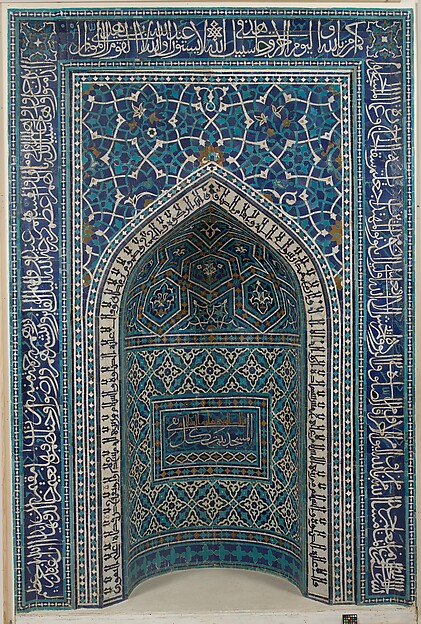
Mihrab (Prayer Niche)
dated 755 AH/1354–55 CE Artwork
Harris Brisbane Dick Fund, 1939
Open at The Met -

Folio from a Qur'an Manuscript
dated 707 AH/1307–8 CE Artwork
Ahmad ibn al-Suhrawardi al-Bakri
Rogers Fund, 1955
Open at The Met -

Turquoise Bowl with Lute Player and Audience
late 12th–early 13th century Artwork
Henry G. Leberthon Collection, Gift of Mr. and Mrs. A. Wallace Chauncey, 1957
Open at The Met -

Bowl Emulating Chinese Stoneware
9th century Artwork
Harris Brisbane Dick Fund, 1963
Open at The Met -
-

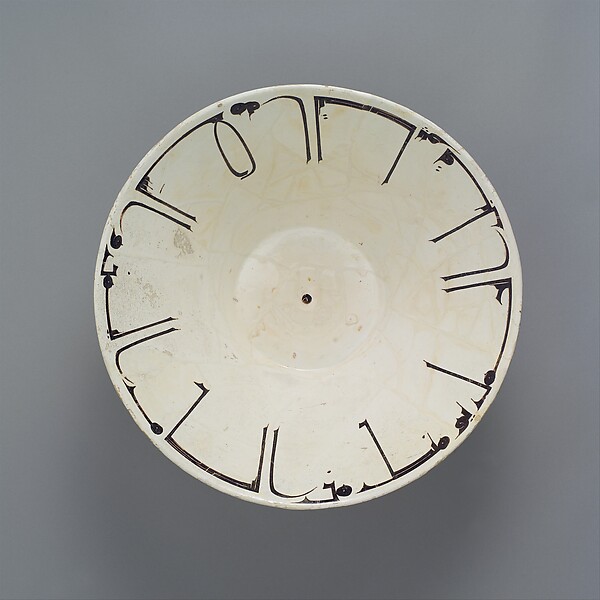
Dedicatory Inscription from a Mosque
dated 905 AH/1500 CE Artwork
Purchase, Gift of Mrs. Nelson Doubleday and Bequest of Charles R. Gerth, by exchange, 1981
Open at The Met -

Held since 17 Sep 2026.
GIFs
 GIPHY

Looking for GIFs…
Fetched by your browser on this visit; nothing is stored here.
Search matches, not reviewed interpretations. Hover, focus or press Play to animate.
Matches for “Arabic” · About these results
Artworks
Saved catalog · The Met
Catalog matches from The Met, held locally rather than searched for on this visit. None is an accepted interpretation: a contributor connects an exact meaning and reviewers decide the claim. Browse saved artworks
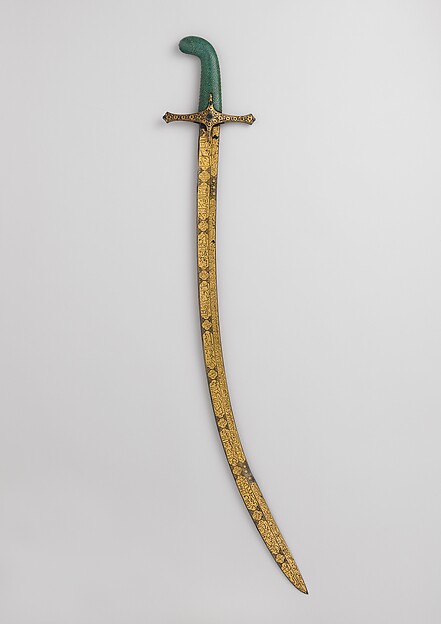
- Saber: Direct depiction of “Arabic” (Q13955) tagged “Arabic”. · not yet reviewed
- Helmet with Aventail: Direct depiction of “Arabic” (Q13955) tagged “Arabic”. · not yet reviewed
- Dragon-Handled Jug with Inscription: Direct depiction of “Arabic” (Q13955) tagged “Arabic”. · not yet reviewed
- Mosque Lamp for the Mausoleum of Amir Aydakin al-'Ala'i al-Bunduqdar: Direct depiction of “Arabic” (Q13955) tagged “Arabic”. · not yet reviewed
- Tiraz Textile Fragment: Direct depiction of “Arabic” (Q13955) tagged “Arabic”. · not yet reviewed
- Mihrab (Prayer Niche): Direct depiction of “Arabic” (Q13955) tagged “Arabic”. · not yet reviewed
- Folio from a Qur'an Manuscript: Direct depiction of “Arabic” (Q13955) tagged “Arabic”. · not yet reviewed
- Turquoise Bowl with Lute Player and Audience: Direct depiction of “Arabic” (Q13955) tagged “Arabic”. · not yet reviewed
- Bowl Emulating Chinese Stoneware: Direct depiction of “Arabic” (Q13955) tagged “Arabic”. · not yet reviewed
- Bowl with Arabic Inscription: Direct depiction of “Arabic” (Q13955) tagged “Arabic”. · not yet reviewed
- Dedicatory Inscription from a Mosque: Direct depiction of “Arabic” (Q13955) tagged “Arabic”. · not yet reviewed
- Calligraphic Plaque: Direct depiction of “Arabic” (Q13955) tagged “Arabic”. · not yet reviewed
Subjects
1 subject · 0 addressed
Found by name and by the sources. Not reviewed: a shared name is not a shared identity.
Subject
Arabic
Semitic language and lingua franca of the Arab world
Unclassified

Arabic
Semitic language and lingua franca of the Arab world
Wikipedia Q13955 where this came from — the thing this word names — Arabic
Arabic is a Central Semitic language of the Afroasiatic language family spoken primarily in the Arab world. The International Organization for Standardization (ISO) assigns language codes to 32 varieties of Arabic, including its standard form of Literary Arabic, known as Modern Standard Arabic, which is derived from Classical Arabic. This distinction is primarily made by Western linguists; Arabic speakers themselves generally do not distinguish between Modern Standard Arabic and Classical Arabic, but rather refer to both as al-ʿarabiyyatu l-fuṣḥā (اَلْعَرَبِيَّةُ ٱلْفُصْحَىٰ "the eloquent Arabic") or simply al-fuṣḥā (اَلْفُصْحَىٰ).
… 2,670 more Fold this article
Arabic is the third–most widespread official language after English and French, one of six official languages of the United Nations, and the liturgical language of Islam. Arabic is widely taught in schools and universities around the world and is used to varying degrees in workplaces, governments and the media. Arabic is spoken by as many as 380 million speakers, both native and non-native, in the Arab world, making it the fifth–most spoken language in the world and the fourth–most used language on the Internet in terms of users. It also serves as the liturgical language of around two billion Muslims. In 2011, Bloomberg Businessweek ranked Arabic the fourth–most useful language for business, after English, Mandarin Chinese, and French. Arabic is written with the Arabic alphabet, an abjad script that is written from right to left.
During the Middle Ages, Arabic was a major vehicle of culture and learning, especially in science, mathematics and philosophy. As a result, many European languages have borrowed words from it. Arabic influence, mainly in vocabulary, is seen in European languages (mainly Spanish and to a lesser extent Portuguese, Catalan, and Sicilian) owing to the proximity of Europe and the long-lasting Arabic cultural and linguistic presence, mainly in Southern Iberia, during the Al-Andalus era. Maltese is a Semitic language developed from a dialect of Arabic and written in the Latin alphabet. The Balkan languages, including Albanian, Greek, Serbo-Croatian, and Bulgarian, have also acquired many words of Arabic origin, mainly through direct contact with Ottoman Turkish. Arabic has also influenced other languages across the globe throughout its history, especially languages where Islam had a historic presence. The most markedly influenced languages are Persian, Turkish, Hindustani (Hindi and Urdu), Kashmiri, Kurdish, Bosnian, Kazakh, Bengali, Malay (Indonesian and Malaysian), Maldivian, Pashto, Punjabi, Armenian, Azerbaijani, Sicilian, Tagalog, Sindhi, Odia, Hebrew and African languages such as Hausa, Bambara, Amharic, Tigrinya, Somali, Tamazight, and Swahili. Conversely, Arabic has borrowed some words (mostly nouns) from other languages, including its sister-language Aramaic, Persian, Greek, and Latin and to a lesser extent and more recently from Turkish, English, French, and Italian.
Classical Arabic (and Modern Standard Arabic) is considered a conservative language among Semitic languages; it preserved the complete Proto-Semitic three grammatical cases and declension (ʾiʿrāb), and it was used in the reconstruction of Proto-Semitic since it preserves as contrastive 28 out of the evident 29 consonantal phonemes.
 Wikipedia (English)
read this at Wikipedia (English)
where this came from — Wikipedia (English)
Public linked claims
What the existing sources assert about these meanings. These are source claims, not curated endorsements.
-
A major Semitic language originating from the Arabian peninsula, and now spoken natively (in various spoken dialects, all sharing a single highly conservative standardized literary form) throughout large sections of the Middle East and North Africa. refers to Arabic
Wiktionary (English) via Kaikki · assertion revision 3914609
Source, evidence and revision history
Sources
-
 The Met
-
 Wikidata
-
Wikipedia (English)
Wikipedia (English)
-
Wiktionary (English) via Kaikki
Wiktionary (English) via Kaikki
-
GIPHY
GIPHY
-
Urban Dictionary
Urban Dictionary
6 sources on this page