All materials · bishop
Search the dictionaries, texts, images and API records available for this entry. Source matches are not curated endorsements.
Return to the curated articleSource / API coverage for this entry
Counts above cover loaded, permitted materials. Unavailable or not-yet-loaded sources are not evidence of an empty catalogue. Browser-only results remain on your device.
- Bing News · not loaded for this entry
- CineGraph · not loaded for this entry
- Wikimedia Commons · not loaded for this entry
- GIPHY · browser results · inspect complete records for status
- The Guardian · not loaded for this entry
- The Met · not loaded for this entry
- Open Library · not loaded for this entry
- Openverse · not loaded for this entry
- Pexels · not loaded for this entry
- PoetryDB · not loaded for this entry
- Spotify · not loaded for this entry
- Unsplash · not loaded for this entry
- Wikiquote · not loaded for this entry
Inspect complete source records and provider status
bishop
noun
ordained or consecrated member of the Christian clergy Wikidata where this came from — Wikidata
Definitions
3 dictionaries
 Samuel Johnson
18th century ·
1755 ·
noun ·
1,032 characters
A cant word for a mixture of wine, oranges, and sugar. Fine oranges, Well roasted, with sugar and wine in a cup, They'll make a sweet bishop, when gentle folks sup. Swift.
Samuel Johnson
18th century · 1755 · noun · 1,032 characters
A cant word for a mixture of wine, oranges, and sugar. Fine oranges, Well roasted, with sugar and wine in a cup, They'll make a sweet bishop, when gentle folks sup. Swift.
A cant word for a mixture of wine, oranges, and sugar.
Fine oranges,
Well roasted, with sugar and wine in a cup,
They'll make a sweet bishop, when gentle folks sup. Swift.
One of the head order of the clergy.
A bishop is an overseer, or superintendant, of religious matters in the christian church. Ayliffe's Parergon.
You shall find him well accompany'd
With reverend fathers, and well learned bishops.
Shakesp. Richard III.
Their zealous superstition thinks, or pretends, they cannot
do God a greater service, than to destroy the primitive, apostolical, and anciently universal government of the church by bishops. K. Charles.
Read the rest of this entry · 403 characters Fold this entry
In case a bishop should commit reason and felony, and forfeit
his estate, with his life, the lands of his bishoprick remain still
in the church. South.
On the word bishop, in French evêque, I would observe, that
there is no natural connexion between the sacred office and the
letters or sound; for evêque, and bishop, signify the same office,
though there is not one letter alike in them. Watts's Logick.
Read this at Samuel Johnson where this came from — Samuel Johnson, A Dictionary of the English Language
 Open English WordNet 2025
2025 ·
noun ·
3 senses
(chess) a piece that can be moved diagonally over unoccupied squares of the same color
Open English WordNet 2025
2025 · noun · 3 senses
(chess) a piece that can be moved diagonally over unoccupied squares of the same color
-
●
(chess) a piece that can be moved diagonally over unoccupied squares of the same color
broader chessman man game equipment equipment instrumentality artifact whole object
-
●
port wine mulled with oranges and cloves
broader mulled wine wine alcohol drug of abuse drug agent causal agent physical entity
-
●
a senior member of the Christian clergy having spiritual and administrative authority; appointed in Christian churches to oversee priests or ministers; considered in some churches to be successors of the twelve Apostles of Christ
broader priest reverend spiritual leader leader actor causal agent physical entity entity
Read this at Open English WordNet 2025 where this came from — Open English WordNet 2025
 Wiktionary (English) via Kaikki
2026 ·
noun ·
12 senses
An overseer of congregations: either any such overseer, generally speaking, or (in Eastern Orthodoxy, Catholicism, Anglicanism, etc.) an official in the church hierarchy (actively or nominally) governing a diocese, supervising the church's priests, deacons, and property in its territory.
Wiktionary (English) via Kaikki
2026 · noun · 12 senses
An overseer of congregations: either any such overseer, generally speaking, or (in Eastern Orthodoxy, Catholicism, Anglicanism, etc.) an official in the church hierarchy (actively or nominally) governing a diocese, supervising the church's priests, deacons, and property in its territory.
-
1
An overseer of congregations: either any such overseer, generally speaking, or (in Eastern Orthodoxy, Catholicism, Anglicanism, etc.) an official in the church hierarchy (actively or nominally) governing a diocese, supervising the church's priests, deacons, and property in its territory.
-
“King James of blessed memory said, no Bishop, no King: it was not he, but others that added, No Ceremony, no Bishop.”
1641, “Smectymnuus”, in Vindic. Answer Hvmble Remonstr., §16. 208
Wiktionary (English) via Kaikki
Plausible
-
“St. Ignatius... In his 'Epiſtle to the Magneſians,' he exhorts them to do all things in the love of God, telling them, the Biſhop preſides in the place of God...”
1715, William Hendley, A Defence of the Church of England, section 16
Wiktionary (English) via Kaikki
Plausible
3 more quotations for this sense
-
“These ministers were at first confined to the three orders of bishops, priests, and deacons.”
1845, J. Lingard, Hist. & Antiq. Anglo-Saxon Church, 3rd edition, I. iv. 146
Wiktionary (English) via Kaikki
Plausible
-
“It is a fact now generally recognized by theologians of all shades of opinion, that in the language of the New Testament the same officer in the Church is called indifferently ‘bishop’ ἐπίσκοπος and ‘elder’ or ‘presbyter’ πρεσβύτερος.”
1868, Joseph Barber Lightfoot, St. Paul's epistle to the Philippians, section 93
Wiktionary (English) via Kaikki
Plausible
-
“The Jubilee Mass had a special solemnity due to the presence of two exiled Chinese bishops—Thomas Cardinal Tien, Archbishop of Peking, and Bishop Joseph Yuen, of Chu-ma-tien, Honan—as well as the recently named bishop of Taichung, Formosa, Most Rev. William Kupfer, MM, who was in the United States to attend the Maryknoll General Chapter.”
2013, Maureen Abbott, New Lights from Old Truths: Living the Signs of the Times, volume IV, Saint Mary-of-the-Woods, Indiana, →ISBN, →OCLC, page 375
Wiktionary (English) via Kaikki
Plausible
broader cleric -
-
2
A similar official or chief priest in another religion. (nonstandard)
-
“The Caliphaes of the Sarasins were kings and chiefe bishops in their religion.”
1586, Pierre de la Primaudaye, translated by Thomas Bowes, The French Academie, I. 633
Wiktionary (English) via Kaikki
Plausible
-
“[…] which explains the beheading of the Muslim Bishop of Lisbon, soon after the Reconquista.”
2001, José Carlos Valle Pérez, Jorge Rodrigues, El arte románico en Galicia y Portugal, page 254
Wiktionary (English) via Kaikki
Plausible
1 more quotation for this sense
-
“The [holder of the office of] Imam [of Monrovia] is commonly referred to, both in conversation and in the press, as ‘the Muslim Bishop’.”
2018, Merran Fraenkel, Tribe and Class in Monrovia, page 139
Wiktionary (English) via Kaikki
Plausible
broader cleric -
-
3
The holder of the Greek or Roman position of episcopus, supervisor over the public dole of grain, etc. (obsolete)
-
“They gave away corn, not cash; and Cicero was made bishop, or overseer, of this public victualling.”
1808, The Monthly Magazine and British Register, 26 109
Wiktionary (English) via Kaikki
Plausible
-
show 9 more
-
4
Any watchman, inspector, or overlooker. (obsolete)
-
“There is no place we see privileged from temptations, no desert so solitary but the devil will seek it out; no pinnacle so high but the devil is a bishop over it, to visit and overlook it.”
a. 1627 (date written), Lancelot Andrewes, “Seven Sermons upon the Temptation of Christ in the Wilderness. Sermon IV.”, in J[ohn] P[osthumous] W[ilson], editor, Ninety-six Sermons […], volume V, Oxford, Oxfordshire: John Henry Parker, published 1843, →OCLC, page 516
Wiktionary (English) via Kaikki
Plausible
-
-
5
A chief of the Festival of Fools or St. Nicholas Day.
-
6
The chess piece denoted ♗ or ♝ which moves along diagonal lines and developed from the shatranj alfil ("elephant") and was originally known as the aufil or archer in English.
-
“A Bishop or Archer, who is commonly figured with his head cloven.”
1656, Gioachino Greco, “The royall game of chesse-play, being the study of Biochimo”, in Francis Beale, transl., (Please provide the book title or journal name)
Wiktionary (English) via Kaikki
Plausible
-
-
7
Any of various African birds of the genus Euplectes; a kind of weaverbird closely related to the widowbirds.
-
8
A ladybug or ladybird, beetles of the family Coccinellidae. (dialectal)
-
“‘Bishop, Bishop-Barnabee, Tell me when my wedding shall be; If it be to-morrow day, Ope your wings and fly away.”
1875, William Douglas Parish, A Dictionary of the Sussex Dialect
Wiktionary (English) via Kaikki
Plausible
-
-
9
A flowering plant of the genus Bifora.
-
10
A sweet drink made from wine, usually with oranges, lemons, and sugar; mulled and spiced port.
-
“Spicy bishop, drink divine.”
1801, Samuel Taylor Coleridge, Poems, II. 169
Wiktionary (English) via Kaikki
Plausible
-
-
11
A bustle. (US, archaic)
-
“If, by her bishop, or her 'grace' alone, A genuine lady, or a church, is known.”
c. 1860, John Saxe, Progress
Wiktionary (English) via Kaikki
Plausible
-
-
12
A children's smock or pinafore. (UK, archaic, dialectal)
Read this at Wiktionary (English) via Kaikki where this came from — Wiktionary (English) via Kaikki
Examples
7 named by the record
- Bishop Berkeley
- Bishop Ulfilas
- Eusebius of Caesarea
- Ignatius of Antioch
- Martin of Tours
- Saint Ambrose
- Saint Nicholas
-
7
named under a sense of bishop by
Open English WordNet 2025
 Urban Dictionary
read this at Urban Dictionary
Asking Urban Dictionary…
Crowd-sourced and unreviewed. Fetched by your browser; nothing is stored here.
Out in the world
3 things · every match says why it is here
Artworks
3
Saved catalog
-
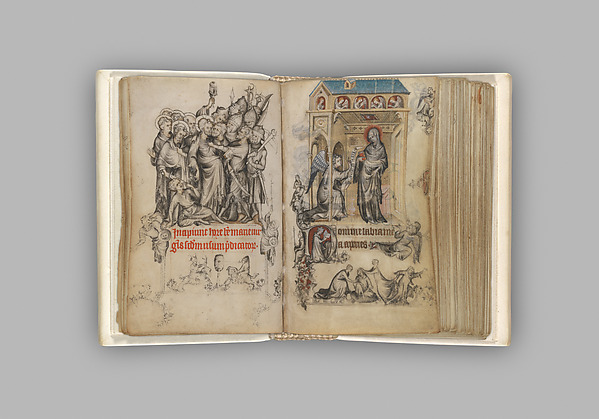
The Hours of Jeanne d'Evreux, Queen of France
ca. 1324–28 Artwork
Jean Pucelle
The Cloisters Collection, 1954
Open at The Met -

The Seven Sacraments
1453 Artwork
Rogier van der Weyden
Rogier van der Weyden - De Zeven Sacramenten - 393-395 - Royal Museum of Fine Arts Antwerp.jpg · Wikimedia Commons
Open at Wikidata -
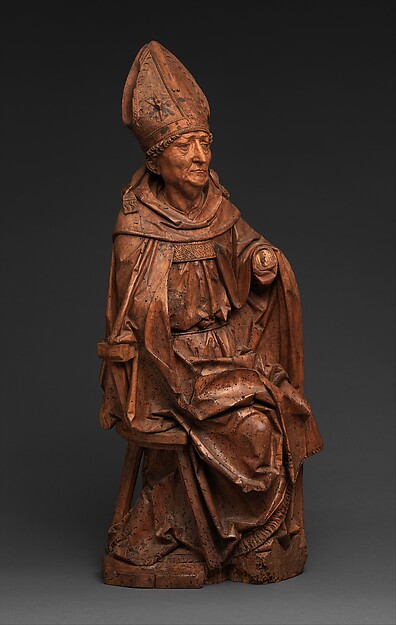
Seated Bishop
ca. 1495 Artwork
Tilman Riemenschneider
The Cloisters Collection, 1970
Open at The Met
Held since 17 Sep 2026.
GIFs
 GIPHY

Looking for GIFs…
Fetched by your browser on this visit; nothing is stored here.
Search matches, not reviewed interpretations. Hover, focus or press Play to animate.
Matches for “bishop” · About these results
Artworks
Saved catalog · The Met, Wikidata
Catalog matches from The Met, Wikidata, held locally rather than searched for on this visit. None is an accepted interpretation: a contributor connects an exact meaning and reviewers decide the claim. Browse saved artworks
- The Hours of Jeanne d'Evreux, Queen of France: Direct depiction of “bishop” (Q29182) tagged “Bishops”. · not yet reviewed
- The Seven Sacraments: Direct depiction of “bishop” (Q29182) tagged “bishop”. · not yet reviewed
- Seated Bishop: Direct depiction of “bishop” (Q29182) tagged “Bishops”. · not yet reviewed
Subjects
2 subjects · 0 addressed
the sources name more than one thing
- bishop — ordained or consecrated member of the Christian clergy (Q29182 · wordnet_wikidata · 0.9)
- bishop — chess piece (Q134 · wiktionary_qid · 0.95)

bishop
ordained or consecrated member of the Christian clergy
Wikipedia Q29182 where this came from — the thing this word names — bishop
In Christianity, a bishop is an ordained member of the clergy who is entrusted with a position of authority and oversight in a religious institution. Bishops are normally responsible for the governance and administration of dioceses, although some function in the various Christian denominations and traditions as auxiliaries, apostolic administrators, and as titular bishops.
… 1,449 more Fold this article
The role or office of the bishop is called episcopacy or the episcopate. Organisationally, several Christian denominations utilise ecclesiastical structures that call for the position of bishops, while other denominations have dispensed with this office, seeing it as a symbol of power. Bishops have also exercised political authority within their dioceses. Historically, Manichaeism also employed a similar office within their church, having a fixed number of 72 bishops.
Traditionally, bishops claim to be within apostolic succession and the historic episcopacy, a direct historical lineage dating back to the original Twelve Apostles, Saint Paul, or one of the Seventy. The bishops are by doctrine understood as those who possess the full priesthood given by Jesus Christ, and therefore may ordain other clergy, including other bishops. A person ordained as a deacon, priest (i.e. presbyter), and then bishop is understood to hold the fullness of the ministerial priesthood, given responsibility by Christ to govern, teach and sanctify the Body of Christ (the Christian Church). Priests, deacons and lay ministers co-operate and assist their bishops in pastoral ministry.
Some Pentecostal and other Protestant denominations have bishops who oversee congregations, though they do not necessarily claim apostolic succession, with exception to those Pentecostals and Charismatics affiliated to churches founded by J. Delano Ellis and Paul S. Morton.
 Wikipedia (English)
read this at Wikipedia (English)
where this came from — Wikipedia (English)
may also refer to
- bishop — ordained or consecrated member of the Christian clergy
Public linked claims
What the existing sources assert about these meanings. These are source claims, not curated endorsements.
-
French bishop who is a patron saint of France (died in 397) instance of a senior member of the Christian clergy having spiritual and administrative authority; appointed in Christian churches to oversee priests or ministers; considered in some churches to be successors of the twelve Apostles of Christ
Open English WordNet 2025 · assertion revision 3932790
Source, evidence and revision history -
French bishop who is a patron saint of France (died in 397) instance of a senior member of the Christian clergy having spiritual and administrative authority; appointed in Christian churches to oversee priests or ministers; considered in some churches to be successors of the twelve Apostles of Christ
Open English WordNet 2025 · assertion revision 3932791
Source, evidence and revision history -
French bishop who is a patron saint of France (died in 397) instance of a senior member of the Christian clergy having spiritual and administrative authority; appointed in Christian churches to oversee priests or ministers; considered in some churches to be successors of the twelve Apostles of Christ
Open English WordNet 2025 · assertion revision 3932792
Source, evidence and revision history -
bishop of Antioch who was martyred under the Roman Emperor Trajan (died 110) instance of a senior member of the Christian clergy having spiritual and administrative authority; appointed in Christian churches to oversee priests or ministers; considered in some churches to be successors of the twelve Apostles of Christ
Open English WordNet 2025 · assertion revision 3938212
Source, evidence and revision history -
bishop of Antioch who was martyred under the Roman Emperor Trajan (died 110) instance of a senior member of the Christian clergy having spiritual and administrative authority; appointed in Christian churches to oversee priests or ministers; considered in some churches to be successors of the twelve Apostles of Christ
Open English WordNet 2025 · assertion revision 3938213
Source, evidence and revision history -
bishop of Antioch who was martyred under the Roman Emperor Trajan (died 110) instance of a senior member of the Christian clergy having spiritual and administrative authority; appointed in Christian churches to oversee priests or ministers; considered in some churches to be successors of the twelve Apostles of Christ
Open English WordNet 2025 · assertion revision 3938214
Source, evidence and revision history -
bishop of Antioch who was martyred under the Roman Emperor Trajan (died 110) instance of a senior member of the Christian clergy having spiritual and administrative authority; appointed in Christian churches to oversee priests or ministers; considered in some churches to be successors of the twelve Apostles of Christ
Open English WordNet 2025 · assertion revision 3938215
Source, evidence and revision history -
(Roman Catholic Church) Roman priest who became bishop of Milan; the first Church Father born and raised in the Christian faith; composer of hymns; imposed orthodoxy on the early Christian church and built up its secular power; a saint and Doctor of the Church (340?-397) instance of a senior member of the Christian clergy having spiritual and administrative authority; appointed in Christian churches to oversee priests or ministers; considered in some churches to be successors of the twelve Apostles of Christ
Open English WordNet 2025 · assertion revision 3944682
Source, evidence and revision history -
(Roman Catholic Church) Roman priest who became bishop of Milan; the first Church Father born and raised in the Christian faith; composer of hymns; imposed orthodoxy on the early Christian church and built up its secular power; a saint and Doctor of the Church (340?-397) instance of a senior member of the Christian clergy having spiritual and administrative authority; appointed in Christian churches to oversee priests or ministers; considered in some churches to be successors of the twelve Apostles of Christ
Open English WordNet 2025 · assertion revision 3944683
Source, evidence and revision history -
(Roman Catholic Church) Roman priest who became bishop of Milan; the first Church Father born and raised in the Christian faith; composer of hymns; imposed orthodoxy on the early Christian church and built up its secular power; a saint and Doctor of the Church (340?-397) instance of a senior member of the Christian clergy having spiritual and administrative authority; appointed in Christian churches to oversee priests or ministers; considered in some churches to be successors of the twelve Apostles of Christ
Open English WordNet 2025 · assertion revision 3944684
Source, evidence and revision history -
Irish philosopher and Anglican bishop who opposed the materialism of Thomas Hobbes (1685-1753) instance of a senior member of the Christian clergy having spiritual and administrative authority; appointed in Christian churches to oversee priests or ministers; considered in some churches to be successors of the twelve Apostles of Christ
Open English WordNet 2025 · assertion revision 3960027
Source, evidence and revision history -
Irish philosopher and Anglican bishop who opposed the materialism of Thomas Hobbes (1685-1753) instance of a senior member of the Christian clergy having spiritual and administrative authority; appointed in Christian churches to oversee priests or ministers; considered in some churches to be successors of the twelve Apostles of Christ
Open English WordNet 2025 · assertion revision 3960028
Source, evidence and revision history -
Irish philosopher and Anglican bishop who opposed the materialism of Thomas Hobbes (1685-1753) instance of a senior member of the Christian clergy having spiritual and administrative authority; appointed in Christian churches to oversee priests or ministers; considered in some churches to be successors of the twelve Apostles of Christ
Open English WordNet 2025 · assertion revision 3960029
Source, evidence and revision history -
Christian bishop of Caesarea in Palestine; a church historian and a leading early Christian exegete (circa 270-340) instance of a senior member of the Christian clergy having spiritual and administrative authority; appointed in Christian churches to oversee priests or ministers; considered in some churches to be successors of the twelve Apostles of Christ
Open English WordNet 2025 · assertion revision 4176894
Source, evidence and revision history -
Christian bishop of Caesarea in Palestine; a church historian and a leading early Christian exegete (circa 270-340) instance of a senior member of the Christian clergy having spiritual and administrative authority; appointed in Christian churches to oversee priests or ministers; considered in some churches to be successors of the twelve Apostles of Christ
Open English WordNet 2025 · assertion revision 4176895
Source, evidence and revision history -
a Christian believed to be of Cappadocian descent who became bishop of the Visigoths in 341 and translated the Bible from Greek into Gothic; traditionally held to have invented the Gothic alphabet (311-383) instance of a senior member of the Christian clergy having spiritual and administrative authority; appointed in Christian churches to oversee priests or ministers; considered in some churches to be successors of the twelve Apostles of Christ
Open English WordNet 2025 · assertion revision 4272757
Source, evidence and revision history -
a Christian believed to be of Cappadocian descent who became bishop of the Visigoths in 341 and translated the Bible from Greek into Gothic; traditionally held to have invented the Gothic alphabet (311-383) instance of a senior member of the Christian clergy having spiritual and administrative authority; appointed in Christian churches to oversee priests or ministers; considered in some churches to be successors of the twelve Apostles of Christ
Open English WordNet 2025 · assertion revision 4272758
Source, evidence and revision history -
a Christian believed to be of Cappadocian descent who became bishop of the Visigoths in 341 and translated the Bible from Greek into Gothic; traditionally held to have invented the Gothic alphabet (311-383) instance of a senior member of the Christian clergy having spiritual and administrative authority; appointed in Christian churches to oversee priests or ministers; considered in some churches to be successors of the twelve Apostles of Christ
Open English WordNet 2025 · assertion revision 4272759
Source, evidence and revision history -
a Christian believed to be of Cappadocian descent who became bishop of the Visigoths in 341 and translated the Bible from Greek into Gothic; traditionally held to have invented the Gothic alphabet (311-383) instance of a senior member of the Christian clergy having spiritual and administrative authority; appointed in Christian churches to oversee priests or ministers; considered in some churches to be successors of the twelve Apostles of Christ
Open English WordNet 2025 · assertion revision 4272760
Source, evidence and revision history -
a Christian believed to be of Cappadocian descent who became bishop of the Visigoths in 341 and translated the Bible from Greek into Gothic; traditionally held to have invented the Gothic alphabet (311-383) instance of a senior member of the Christian clergy having spiritual and administrative authority; appointed in Christian churches to oversee priests or ministers; considered in some churches to be successors of the twelve Apostles of Christ
Open English WordNet 2025 · assertion revision 4272761
Source, evidence and revision history -
a Christian believed to be of Cappadocian descent who became bishop of the Visigoths in 341 and translated the Bible from Greek into Gothic; traditionally held to have invented the Gothic alphabet (311-383) instance of a senior member of the Christian clergy having spiritual and administrative authority; appointed in Christian churches to oversee priests or ministers; considered in some churches to be successors of the twelve Apostles of Christ
Open English WordNet 2025 · assertion revision 4272762
Source, evidence and revision history -
a bishop in Asia Minor who is associated with Santa Claus (4th century) instance of a senior member of the Christian clergy having spiritual and administrative authority; appointed in Christian churches to oversee priests or ministers; considered in some churches to be successors of the twelve Apostles of Christ
Open English WordNet 2025 · assertion revision 4284529
Source, evidence and revision history -
a bishop in Asia Minor who is associated with Santa Claus (4th century) instance of a senior member of the Christian clergy having spiritual and administrative authority; appointed in Christian churches to oversee priests or ministers; considered in some churches to be successors of the twelve Apostles of Christ
Open English WordNet 2025 · assertion revision 4284530
Source, evidence and revision history -
a bishop in Asia Minor who is associated with Santa Claus (4th century) instance of a senior member of the Christian clergy having spiritual and administrative authority; appointed in Christian churches to oversee priests or ministers; considered in some churches to be successors of the twelve Apostles of Christ
Open English WordNet 2025 · assertion revision 4284531
Source, evidence and revision history -
A similar official or chief priest in another religion. refers to bishop
Wiktionary (English) via Kaikki · assertion revision 3860608
Source, evidence and revision history -
The chess piece denoted ♗ or ♝ which moves along diagonal lines and developed from the shatranj alfil ("elephant") and was originally known as the aufil or archer in English. refers to bishop
Wiktionary (English) via Kaikki · assertion revision 3860631
Source, evidence and revision history -
An overseer of congregations: either any such overseer, generally speaking, or (in Eastern Orthodoxy, Catholicism, Anglicanism, etc.) an official in the church hierarchy (actively or nominally) governing a diocese, supervising the church's priests, deacons, and property in its territory. refers to bishop
Wiktionary (English) via Kaikki · assertion revision 3860634
Source, evidence and revision history -
bishop lexeme entity candidate bishop
Wikipedia (English) · assertion revision 1450442
Source, evidence and revision history -
a senior member of the Christian clergy having spiritual and administrative authority; appointed in Christian churches to oversee priests or ministers; considered in some churches to be successors of the twelve Apostles of Christ refers to bishop
Open English WordNet 2025 · assertion revision 4351677
Source, evidence and revision history
Sources
-
Samuel Johnson, A Dictionary of the English Language
Samuel Johnson
-
 The Met
-
 Wikidata
-
Wikipedia (English)
Wikipedia (English)
-
Wiktionary (English) via Kaikki
Wiktionary (English) via Kaikki
-
Open English WordNet 2025
Open English WordNet 2025
-
GIPHY
GIPHY
-
Urban Dictionary
Urban Dictionary
8 sources on this page