All materials · salamanders
Search the dictionaries, texts, images and API records available for this entry. Source matches are not curated endorsements.
Return to the curated articleSource / API coverage for this entry
Counts above cover loaded, permitted materials. Unavailable or not-yet-loaded sources are not evidence of an empty catalogue. Browser-only results remain on your device.
- Bing News · not loaded for this entry
- CineGraph · not loaded for this entry
- Wikimedia Commons · not loaded for this entry
- GIPHY · browser results · inspect complete records for status
- The Guardian · not loaded for this entry
- The Met · not loaded for this entry
- Open Library · not loaded for this entry
- Openverse · not loaded for this entry
- Pexels · not loaded for this entry
- PoetryDB · not loaded for this entry
- Spotify · not loaded for this entry
- Unsplash · not loaded for this entry
- Wikiquote · not loaded for this entry
Inspect complete source records and provider status
Definitions
1 dictionary
 Wiktionary (English) via Kaikki
2026 ·
noun ·
1 sense
plural of salamander
Wiktionary (English) via Kaikki
2026 · noun · 1 sense
plural of salamander
-
1
plural of salamander (form-of, plural)variants salamander
Read this at Wiktionary (English) via Kaikki where this came from — Wiktionary (English) via Kaikki
 Urban Dictionary
read this at Urban Dictionary
Asking Urban Dictionary…
Crowd-sourced and unreviewed. Fetched by your browser; nothing is stored here.
Out in the world
1 things · every match says why it is here
Artworks
1
Saved catalog
For the word “salamanders”, not a particular sense.
-
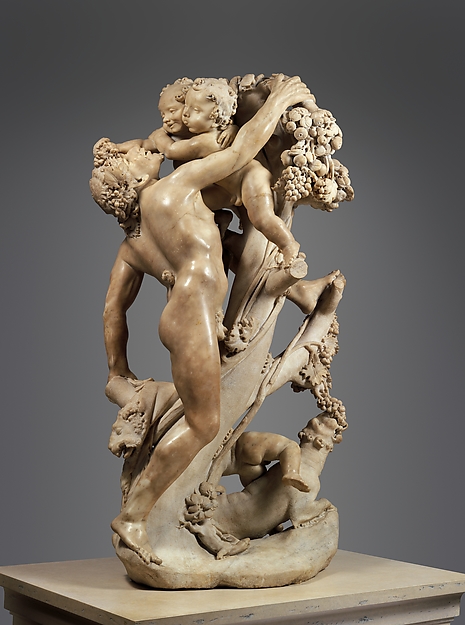
Bacchanal: A Faun Teased by Children
ca. 1616–17 Artwork
Gian Lorenzo Bernini
Purchase, The Annenberg Fund Inc. Gift, Fletcher, Rogers, and Louis V. Bell Funds, and Gift of J. Pierpont Morgan, by exchange, 1976
Open at The Met
Held since 17 Sep 2026.
GIFs
 GIPHY

Looking for GIFs…
Fetched by your browser on this visit; nothing is stored here.
Search matches, not reviewed interpretations. Hover, focus or press Play to animate.
Matches for “salamanders” · About these results
Artworks
Saved catalog · The Met
Catalog matches from The Met, held locally rather than searched for on this visit. None is an accepted interpretation: a contributor connects an exact meaning and reviewers decide the claim. Browse saved artworks
- Bacchanal: A Faun Teased by Children: Related depiction of “Caudata” (Q53663) tagged “Salamanders”. For the word “salamanders”, not a particular sense. · not yet reviewed
Subjects
1 subject · 0 addressed
Found by name and by the sources. Not reviewed: a shared name is not a shared identity.
Subject
Caudata
order of amphibians
Unclassified
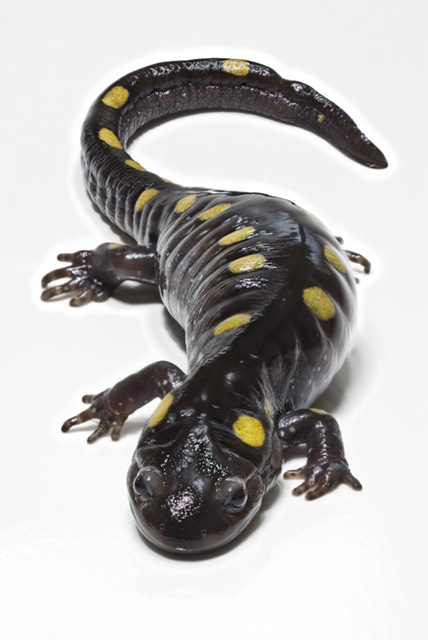
Caudata
order of amphibians
Caudata
Wikipedia Q53663 where this came from — the thing this word names — Caudata
Salamanders are a group of amphibians typically characterized by their lizard-like appearance, with slender bodies, blunt snouts, short limbs projecting at right angles to the body, and the presence of a tail in both larvae and adults. All ten extant salamander families are grouped together under the order Urodela, the sole surviving order from the group Caudata.
… 2,068 more Fold this article
Urodela is a scientific Latin term based on the Ancient Greek οὐρά δήλη: ourà dēlē "conspicuous tail". Caudata is the Latin for "tailed ones", from cauda: "tail".
Salamander diversity is highest in eastern North America, especially in the Appalachian Mountains; most species are found in the Holarctic realm, with some species present in the Neotropical realm. Salamanders never have more than four toes on their front legs and five on their rear legs, but some species have fewer digits and others lack hind limbs. Their permeable skin usually makes them reliant on habitats in or near water or other cool, damp places. Some salamander species are fully aquatic throughout their lives, some take to the water intermittently, and others are entirely terrestrial as adults.
This group of amphibians is capable of regenerating lost limbs as well as other damaged parts of their bodies. Researchers seek to reverse engineer the regenerative processes for potential human medical applications, such as brain and spinal cord injury treatment or preventing harmful scarring during heart surgery recovery. The salamander's ability to regenerate is not limited to limbs but extends to vital organs such as the heart, jaw, and parts of the spinal cord, contrasting most other vertebrates. This ability is special in that it occurs without any type of scarring. This has made salamanders a widespread model organism in scientific research aimed at understanding and achieving regenerative processes for medical advancements in human and animal biology.
Members of the family Salamandridae are mostly known as newts and lack the costal grooves along the sides of their bodies typical of other groups. The skin of some species contains the powerful poison tetrodotoxin; these salamanders tend to be slow-moving and have bright warning coloration to advertise their toxicity. Salamanders typically lay eggs in water and have aquatic larvae, but great variation occurs in their lifecycles. Some species in harsh environments reproduce while still in the Salamander larval state.
 Wikipedia (English)
read this at Wikipedia (English)
where this came from — Wikipedia (English)
a kind of amphibian batrachomorph Tetrapoda Stegocephalia fishapod eotetrapodiform tetrapodomorph Dipnotetrapodomorpha
may also refer to
- Caudata — order of amphibians
Public linked claims
What the existing sources assert about these meanings. These are source claims, not curated endorsements.
-
salamanders lexeme entity candidate Caudata
Wikipedia (English) · assertion revision 1480898
Source, evidence and revision history
Sources
-
 The Met
-
 Wikidata
-
Wikipedia (English)
Wikipedia (English)
-
Wiktionary (English) via Kaikki
Wiktionary (English) via Kaikki
-
GIPHY
GIPHY
-
Urban Dictionary
Urban Dictionary
6 sources on this page