All materials · mouse
Search the dictionaries, texts, images and API records available for this entry. Source matches are not curated endorsements.
Return to the curated articleSource / API coverage for this entry
Counts above cover loaded, permitted materials. Unavailable or not-yet-loaded sources are not evidence of an empty catalogue. Browser-only results remain on your device.
- Bing News · not loaded for this entry
- CineGraph · not loaded for this entry
- Wikimedia Commons · not loaded for this entry
- GIPHY · browser results · inspect complete records for status
- The Guardian · not loaded for this entry
- The Met · not loaded for this entry
- Open Library · not loaded for this entry
- Openverse · not loaded for this entry
- Pexels · not loaded for this entry
- PoetryDB · not loaded for this entry
- Spotify · not loaded for this entry
- Unsplash · not loaded for this entry
- Wikiquote · not loaded for this entry
Inspect complete source records and provider status
mouse
+2 variants
- /maʊs/ General-American, Received-Pronunciation
- /mʌʊs/ Canada
- recording UK
- recording US
noun
small long tailed rodent Wikidata where this came from — Wikidata
Definitions
4 dictionaries
 Samuel Johnson
18th century ·
1755 ·
noun ·
543 characters
The smallest of all beasts; a little animal haunting houses and corn fields, destroyed by cats. The eagle England being in prey, To her unguarded nest the weazel Scot Comes sneaking, and so sucks her princely eggs; Playi
Samuel Johnson
18th century · 1755 · noun · 543 characters
The smallest of all beasts; a little animal haunting houses and corn fields, destroyed by cats. The eagle England being in prey, To her unguarded nest the weazel Scot Comes sneaking, and so sucks her princely eggs; Playi
The smallest of all beasts; a little animal haunting houses and corn fields, destroyed by cats.
The eagle England being in prey,
To her unguarded nest the weazel Scot
Comes sneaking, and so sucks her princely eggs;
Playing the mouse in absence of the cat. Shakespeare.
These shall be unclean; the weasle, the mouse, and the
tortoise. Lev. xi. 29.
Where mice and rats devour'd poetick bread,
And with heroick verse luxuriously were fed. Dryden.
This structure of hair I have observed in the hair of cats,
rats, and mice. Derham's Physico-Theol.
Read this at Samuel Johnson where this came from — Samuel Johnson, A Dictionary of the English Language
 Ambrose Bierce
20th century ·
1911 ·
noun ·
913 characters
An animal which strews its path with fainting women. As in Rome Christians were thrown to the lions, so centuries earlier in Otumwee, the most ancient and famous city of the world, female heretics were thrown to the mice
Ambrose Bierce
20th century · 1911 · noun · 913 characters
An animal which strews its path with fainting women. As in Rome Christians were thrown to the lions, so centuries earlier in Otumwee, the most ancient and famous city of the world, female heretics were thrown to the mice
An animal which strews its path with fainting women. As in Rome Christians were thrown to the lions, so centuries earlier in Otumwee, the most ancient and famous city of the world, female heretics were thrown to the mice. Jakak-Zotp, the historian, the only Otumwump whose writings have descended to us, says that these martyrs met their death with little dignity and much exertion.
Read the rest of this entry · 530 characters Fold this entry
He even attempts to exculpate the mice (such is the malice of bigotry) by declaring that the unfortunate women perished, some from exhaustion, some of broken necks from falling over their own feet, and some from lack of restoratives. The mice, he avers, enjoyed the pleasures of the chase with composure. But if "Roman history is nine-tenths lying," we can hardly expect a smaller proportion of that rhetorical figure in the annals of a people capable of so incredible cruelty to lovely women; for a hard heart has a false tongue.
Read this at Ambrose Bierce where this came from — Ambrose Bierce, The Devil's Dictionary
 Open English WordNet 2025
2025 ·
noun ·
4 senses
any of numerous small rodents typically resembling diminutive rats having pointed snouts and small ears on elongated bodies with slender usually hairless tails
Open English WordNet 2025
2025 · noun · 4 senses
any of numerous small rodents typically resembling diminutive rats having pointed snouts and small ears on elongated bodies with slender usually hairless tails
-
●
any of numerous small rodents typically resembling diminutive rats having pointed snouts and small ears on elongated bodies with slender usually hairless tails
broader rodent placental mammal vertebrate chordate animal organism living thing
-
●
a hand-operated electronic device that controls the coordinates of a cursor on your computer screen as you move it around on a pad; on the bottom of the device is a ball that rolls on the surface of the padnarrower pen mouseparts mouse button
broader electronic device device instrumentality artifact whole object physical entity entity
-
●
person who is quiet or timid
broader person organism living thing whole object physical entity entity
1 more from this source · 1 senses
-
●
a swollen bruise caused by a blow to the eye
broader bruise injury ill health pathological state physical condition condition state attribute
Read this at Open English WordNet 2025 where this came from — Open English WordNet 2025
 Wiktionary (English) via Kaikki
2026 ·
noun ·
12 senses
Any mammal of the many rodent families (especially Muridae) that have a small body and a long tail.
Wiktionary (English) via Kaikki
2026 · noun · 12 senses
Any mammal of the many rodent families (especially Muridae) that have a small body and a long tail.
- 1
-
2
Such a rodent that is of the genus Mus. (broadly)
-
“At twilight in the summer there is never anybody to fear—man, woman, or cat—in the chambers and at that hour the mice come out. They do not eat parchment or foolscap or red tape, but they eat the luncheon crumbs.”
1892, Walter Besant, chapter II, in The Ivory Gate […], New York, N.Y.: Harper & Brothers, […], →OCLC
Wiktionary (English) via Kaikki
Plausible
-
“A person smeared with the excrement of a mouse was rendered impotent, according to Pliny the Elder.”
1961, Harry E. Wedeck, Dictionary of Aphrodisiacs, New York: The Citadel Press, page 158
Wiktionary (English) via Kaikki
Plausible
1 more quotation for this sense
-
“In molecular biologist David Sinclair’s lab at Harvard Medical School, old mice are growing young again. […] After injecting the virus into the eye, the pluripotent genes were then switched on by feeding the mouse an antibiotic.”
2022 June 2, Sandee LaMotte, “The ‘Benjamin Button’ effect: Scientists can reverse aging in mice. The goal is to do the same for humans”, in CNN
Wiktionary (English) via Kaikki
Plausible
-
- 3
show 9 more
-
4
A familiar term of endearment. (broadly, figuratively, obsolete)
-
“Let the bloat King tempt you again to bed, / Pinch wanton on your cheek, call you his mouse”
c. 1599–1602, William Shakespeare, Hamlet, act 3, scene 4
Wiktionary (English) via Kaikki
Plausible
-
-
5
An input device that is moved over a pad or other flat surface to produce a corresponding movement of a pointer on a graphical display.
-
6
An on-screen pointer controlled by a mouse device. (broadly)
-
7
A facial hematoma or black eye.
-
8
A turn or lashing of spun yarn or small stuff, or a metallic clasp or fastening, uniting the point and shank of a hook to prevent its unhooking or straightening out.
-
9
A match used in firing guns or blasting.
-
10
A small model of (a fragment of) Zermelo-Fraenkel set theory with desirable properties (depending on the context).
-
11
A small cushion for a woman's hair. (historical)
-
12
Part of a hind leg of beef, next to the round.similar mouse buttock
Read this at Wiktionary (English) via Kaikki where this came from — Wiktionary (English) via Kaikki
 Urban Dictionary
read this at Urban Dictionary
Asking Urban Dictionary…
Crowd-sourced and unreviewed. Fetched by your browser; nothing is stored here.
Out in the world
every match says why it is here
GIFs
 GIPHY

Looking for GIFs…
Fetched by your browser on this visit; nothing is stored here.
Search matches, not reviewed interpretations. Hover, focus or press Play to animate.
Subjects
1 subject · 0 addressed
Found by name and by the sources. Not reviewed: a shared name is not a shared identity.
Subject
mouse
small long tailed rodent
Unclassified
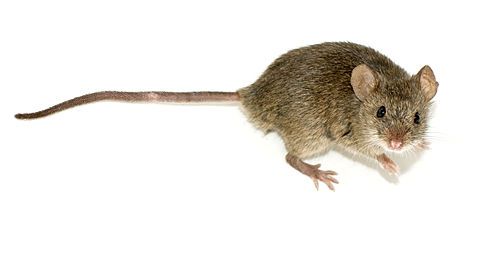
mouse
small long tailed rodent
Wikipedia Q2751034 where this came from — the thing this word names — mouse
A mouse (pl. mice) is a small rodent, characteristically known to have a pointed snout, small rounded ears, a body-length scaly tail, and a high breeding rate. The best known mouse species is the common house mouse (Mus musculus). Mice are widely available as pets, but not as popular as some other rodents. In some places, certain kinds of field mice are locally common.
… 1,890 more Fold this article
They are known to invade homes for food and shelter.
Mice are typically distinguished from rats by their size. Generally, when a muroid rodent is discovered, its common name includes the term mouse if it is smaller, or rat if it is larger. The common terms rat and mouse are not taxonomically specific. Typical mice are classified in the genus Mus, but the term mouse is not confined to members of Mus and can also apply to species from other genera such as the deer mouse (Peromyscus).
Domestic mice sold as pets often differ substantially in size from the common house mouse. This is attributable to breeding and different conditions in the wild. The best-known strain of mouse is the white lab mouse. It has more uniform traits, which makes these mice more useful in research.
Cats, wild dogs, foxes, birds of prey, snakes, some large lizards, and certain kinds of arthropods have been known to prey upon mice. Despite this, mice populations remain plentiful. Due to its remarkable adaptability to almost any environment, the mouse is one of the most successful mammalian genera living on Earth today.
In certain contexts, mice can be considered vermin. Vermin are a major source of crops damage, as they are known to cause structural damage and spread disease. Mice spread disease through their feces and are often carriers of parasites. In North America, breathing dust that has come in contact with mouse excrement has been linked to hantavirus, which may lead to hantavirus pulmonary syndrome (HPS).
As primarily nocturnal animals, mice compensate for their poor eyesight with a keen sense of hearing. They depend on their sense of smell to locate food and avoid predators.
In the wild, mice are known to build intricate burrows. These burrows have long entrances and are equipped with escape tunnels. In at least one species, the architectural design of a burrow is a genetic trait.
 Wikipedia (English)
read this at Wikipedia (English)
where this came from — Wikipedia (English)
a kind of animal Apoikozoa Filozoa Holozoa Opisthokonta Amorphea eukaryote Cytota
may also refer to
- mouse — small long tailed rodent
Public linked claims
What the existing sources assert about these meanings. These are source claims, not curated endorsements.
-
mouse lexeme entity candidate mouse
Wikipedia (English) · assertion revision 1443957
Source, evidence and revision history
Sources
-
Ambrose Bierce, The Devil's Dictionary
Ambrose Bierce
-
Samuel Johnson, A Dictionary of the English Language
Samuel Johnson
-
 Wikidata
-
Wikipedia (English)
Wikipedia (English)
-
Wiktionary (English) via Kaikki
Wiktionary (English) via Kaikki
-
Open English WordNet 2025
Open English WordNet 2025
-
GIPHY
GIPHY
-
Urban Dictionary
Urban Dictionary
8 sources on this page