All materials · bear
Search the dictionaries, texts, images and API records available for this entry. Source matches are not curated endorsements.
Return to the curated articleSource / API coverage for this entry
Counts above cover loaded, permitted materials. Unavailable or not-yet-loaded sources are not evidence of an empty catalogue. Browser-only results remain on your device.
- Bing News · not loaded for this entry
- CineGraph · not loaded for this entry
- Wikimedia Commons · not loaded for this entry
- GIPHY · browser results · inspect complete records for status
- The Guardian · not loaded for this entry
- The Met · not loaded for this entry
- Open Library · not loaded for this entry
- Openverse · not loaded for this entry
- Pexels · not loaded for this entry
- PoetryDB · not loaded for this entry
- Spotify · not loaded for this entry
- Unsplash · not loaded for this entry
- Wikiquote · not loaded for this entry
Inspect complete source records and provider status
bear
+13 variants
- /be̝ə/
- /bɜː(ɹ)/
- /biə/
- [beː~bɛ̝ː] Australia
- /ˈbɛɹ/ Canada, General-American
- /ˈbiːə(r)/ India
- /bɑɹ/ Southern-US, colloquial
- /beː/ Australia
- /beɾ/ Scotland
- /bɛː(r)/ India
- /bɛː/ Received-Pronunciation
- /bɛə/ Received-Pronunciation
- /bɛɚ/ Canada, General-American
- /bɪə/ Received-Pronunciation
- /bɪɚ/ General-American
- recording General-American
noun
family of mammals Wikidata where this came from — Wikidata
Definitions
3 dictionaries
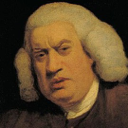 Samuel Johnson
18th century ·
1755 ·
noun ·
1,749 characters
1. A rough savage animal. Every part of the body of these animals is covered with thick shaggy hair, of a dark brown colour, and their claws are hooked, which they use in climbing trees. They feed upon fruits, honey, bee
Samuel Johnson
18th century · 1755 · noun · 1,749 characters
1. A rough savage animal. Every part of the body of these animals is covered with thick shaggy hair, of a dark brown colour, and their claws are hooked, which they use in climbing trees. They feed upon fruits, honey, bee
1. A rough savage animal.
Every part of the body of these animals is covered with
thick shaggy hair, of a dark brown colour, and their claws
are hooked, which they use in climbing trees. They feed upon
fruits, honey, bees, and flesh. Some have falsely reported, that
bears bring their young into the world shapeless, and that their
dams lick them into form. The dams go no longer than thirty
days, and generally produce five young ones. In the winter,
they lie hid and asleep, the male forty days, and the female four
months; and so soundly for the first fourteen days, that blows
will not wake them. In the sleepy season, they are said to
have no nourishment but from licking their feet; for it is certain they eat nothing, and, at the end of it, the males are very
fat. This animal has naturally an hideous look, but when enraged it is terrible; and, as rough and stupid as it seems to be,
it is capable of discipline; it leaps, dances, and plays a thousand little tricks at the sound of a trumpet. The flesh of bears
was much esteemed by the ancients. They abound in Poland,
Muscovy, Lithuania, and the great forests in Germany; and
also in the remote northern countries, where the species is white.
Calmet.
Read the rest of this entry · 535 characters Fold this entry
Call hither to the stake my two brave bears,
Bid Salisbury and Warwick come to me.—
—Are these thy bears? we'll bait thy bears to death,
And manacle the bearward in their chains. Shak. Henry VI.
Thou'dst shun a bear;
But if thy flight lay tow'rd the roaring sea,
Thou'dst meet the bear i' th' mouth. Shakesp. King Lear.
2. The name of two constellations, called the greater and lesser bear; in the tail of the lesser bear, is the pole star.
E'en then when Troy was by the Greeks o'erthrown,
The bear oppos'd to bright Orion shone. Creech.
Read this at Samuel Johnson where this came from — Samuel Johnson, A Dictionary of the English Language
 Open English WordNet 2025
2025 ·
noun ·
2 senses
massive plantigrade carnivorous or omnivorous mammals with long shaggy coats and strong claws
Open English WordNet 2025
2025 · noun · 2 senses
massive plantigrade carnivorous or omnivorous mammals with long shaggy coats and strong claws
-
●
massive plantigrade carnivorous or omnivorous mammals with long shaggy coats and strong clawsnarrower American black bear Arcticonus thibetanus Melursus ursinus Thalarctos maritimus Ursus arctos bear cub bruinpart of Ursidae
broader carnivore placental mammal vertebrate chordate animal organism living thing
-
●
an investor with a pessimistic market outlook; an investor who expects prices to fall and so sells now in order to buy later at a lower price
broader investor capitalist actor causal agent physical entity entity
Read this at Open English WordNet 2025 where this came from — Open English WordNet 2025
 Wiktionary (English) via Kaikki
2026 ·
noun ·
13 senses
A large, generally omnivorous mammal (a few species are purely carnivorous or herbivorous) of the family Ursidae; having shaggy fur, a very small tail, and flat feet.
Wiktionary (English) via Kaikki
2026 · noun · 13 senses
A large, generally omnivorous mammal (a few species are purely carnivorous or herbivorous) of the family Ursidae; having shaggy fur, a very small tail, and flat feet.
-
1
A large, generally omnivorous mammal (a few species are purely carnivorous or herbivorous) of the family Ursidae; having shaggy fur, a very small tail, and flat feet. (countable, uncountable)
-
2
Alternative spelling of bere (“barley”). (alt-of, alternative, uncountable)
-
“Bigg or bear, with four grains on the ear, was the kind of barley.”
1818, Reports Agric., Marshall, I. 191
Wiktionary (English) via Kaikki
Plausible
-
“Two stacks of beare, of xx boules,”
1895, Whittingham Vale, Dixon, section 130
Wiktionary (English) via Kaikki
Plausible
1 more quotation for this sense
-
“[…] one wheat stack, one half-stack of corn, and a little hay, all standing in the barnyard; four stacks of bear in the barn, about three bolls of bear lying on the barn floor, two stacks of corn in the barn, […]”
1908, Burns Chronicle and Club Directory, page 151
Wiktionary (English) via Kaikki
Plausible
variants bere -
-
3
Alternative spelling of bere (“pillowcase”). (alt-of, alternative, uncountable)
-
“And, according to this, one of my Neighbours made a Bag, like a Pillow-bear, of the ordinary six-penny yard Cloth, and boiled his Hops in it half an Hour; then he took them out, and put in another Bag of the like Quantity of fresh Hops, […]”
1742, William Ellis, The London and Country Brewer … Fourth Edition, page 36
Wiktionary (English) via Kaikki
Plausible
-
“ij payer of schete, ij pelows wt the berys,”
1850, Samuel Tymms, Wills and Inventories from the Registers of the Commissary of Bury St. Edmunds and the Archdeacon of Sudbury, page 116
Wiktionary (English) via Kaikki
Plausible
2 more quotations for this sense
-
“1641.—14 yards of femble cloth, 12s. ; 8 yards of linen, 6s. 8d. ; 20 yards of harden, 10s. ; 5 linen sheets, 1l. ; 7 linen pillow bears, 8s. ; 2 femble sheets and a line hard sheet, 10s. ; 3 linen towels, 4s. ; 6 lin curtains and a vallance, 12s. ; […]”
1858, Journal of the Statistical Society of London, page 409
Wiktionary (English) via Kaikki
Plausible
-
“[…] a man's eyes played him false, sitting him before tables proper with damask and pewter, leading him to fall into beds gracious with small and large feather beds for softness and pillowed luxuriously under pretty checked linen pillow bears.”
1941, Minnie Hite Moody, Long Meadows, page 71
Wiktionary (English) via Kaikki
Plausible
variants bere -
show 10 more
-
4
The meat of this animal. (uncountable)
-
5
A rough, unmannerly, uncouth person. (countable, figuratively, uncountable)
-
“One evening about this time, when his Lordship did me the honour to sup at my lodgings with Dr. Robertson and several other men of literary distinction, he regretted that Johnson had not been educated with more refinement, and lived more in polished society. 'No, no, my Lord, (said Signor Baretti,) do with him what you would, he would always have been a bear.'”
1791, James Boswell, Life of Johnson
Wiktionary (English) via Kaikki
Plausible
-
-
6
An investor who sells commodities, securities, or futures in anticipation of a fall in prices. (countable, uncountable)
-
“This accompt has been made to appear a bull accompt, i.e. that the bulls cannot take their stock. The fact is the reverse; it is a bear accompt, but the bears, unable to deliver their stock, have conjointly banged the market, and pocketed the tickets, to defeat the rise and loss that would have ensued to them by their buying on a rising price on the accompt day […]”
1821, Bank of England, The Bank - The Stock Exchange - The Bankers ..., page 64
Wiktionary (English) via Kaikki
Plausible
opposite bull -
-
7
A state policeman (short for Smokey Bear). (US, countable, slang, uncountable)
-
“By the time we got into Tulsa Town We had eighty-five trucks in all But there's a roadblock up on the cloverleaf And them bears was wall-to-wall. Yeah, them smokies is thick as bugs on a bumper They even had a bear in the air. I says, "Callin' all trucks, this here's the Duck. We about to go a-huntin' bear."”
1975, “Convoy”, in C.W. McCall, Chip Davis (lyrics), Black Bear Road, performed by C. W. McCall
Wiktionary (English) via Kaikki
Plausible
-
“'The bear's pulling somebody off there at 74,' reported someone else.”
1976 June, CB Magazine, Oklahoma City: Communications Publication Corporation, June 40/3
Wiktionary (English) via Kaikki
Plausible
1 more quotation for this sense
-
“He was listening for reports of Kojaks with Kodaks, or bear sightings (cop alerts) at his front door (ahead of him), especially plain wrappers (unmarked police cars) parked at specific yardsticks (mile-markers) taking pictures […]”
2015, Matt Cashion, Last Words of the Holy Ghost, page 85
Wiktionary (English) via Kaikki
Plausible
-
-
8
A large, hairy man, especially one who is homosexual. (countable, slang, uncountable)
-
“Bears are usually hunky, chunky types reminiscent of railroad engineers and former football greats.”
[1979 July 26, George Mazzei, “Who's Who in the Zoo?: A Glossary of Gay Animals”, in Robert I. McQueen, editor, The Advocate, number 272, Liberation Publications, →ISSN, archived from the original on 18 Apr 2014, page 42
Wiktionary (English) via Kaikki
Plausible
-
“Bear sought by masculine white male, 30, 5'8", 165 lbs, for weekly safe encounter. I'm in a long-term relationship and seek outside fun. You: tall, masculine, over 200 lbs, discreet, moustache.”
1990 December 9, “Personal advertisement”, in Gay Community News, volume 18, number 21, page 12
Wiktionary (English) via Kaikki
Plausible
2 more quotations for this sense
-
“I have everything it takes to be a bear: broad shoulders, full beard, semibald pate, and lots of body hair. But I don't want to be a fetish.”
2004 April 27, Richard Goldstein, “Why I'm Not a Bear”, in The Advocate, number 913, page 72
Wiktionary (English) via Kaikki
Plausible
-
“There are numerous social organizations for bears in most parts of the United States. Lesbians don't have such prominent sexual subcultures as gay men, although, as just mentioned, some lesbians are into BDSM practices.”
2006, Simon LeVay, Sharon McBride Valente, Human sexuality
Wiktionary (English) via Kaikki
Plausible
opposite twink -
-
9
A koala (bear). (Australia, countable, uncountable)
-
“Bunyip Bluegum was a tidy bear, he objected to whisker soup[.]”
1918, Norman Lindsay, The Magic Pudding, page 8
Wiktionary (English) via Kaikki
Plausible
-
-
10
A portable punching machine. (countable, uncountable)
-
11
A block covered with coarse matting, used to scour the deck. (countable, uncountable)
-
12
The fifteenth Lenormand card. (countable, uncountable)
-
13
Something difficult or tiresome; a burden or chore. (US, colloquial, countable, uncountable)
-
“"This was a real bear to refinish. You can't believe how hard it was right here to get a thousand years of crud out of this carving."”
2014, Joe Buda, Pilgrims' Passage: Into a New Millennium; Rebuilding the Past
Wiktionary (English) via Kaikki
Plausible
-
Read this at Wiktionary (English) via Kaikki where this came from — Wiktionary (English) via Kaikki
 Urban Dictionary
read this at Urban Dictionary
Asking Urban Dictionary…
Crowd-sourced and unreviewed. Fetched by your browser; nothing is stored here.
Out in the world
every match says why it is here
GIFs
 GIPHY

Looking for GIFs…
Fetched by your browser on this visit; nothing is stored here.
Search matches, not reviewed interpretations. Hover, focus or press Play to animate.
Subjects
2 subjects · 0 addressed

Ursidae
family of mammals
Ursidae
Wikipedia Q11788 where this came from — the thing this word names — Ursidae
Bears are carnivoran mammals of the family Ursidae (). They are classified as caniforms within the suborder Caniformia. Although only eight species of bears are extant, they are widespread, appearing in a wide variety of habitats throughout most of the Northern Hemisphere and partially in the Southern Hemisphere. Bears are found on the continents of North America, South America, and Eurasia.
… 1,528 more Fold this article
Common characteristics of modern bears include large bodies with stocky legs, long snouts, small rounded ears, shaggy hair, plantigrade paws with five nonretractile claws, and short tails.
While the polar bear is mostly carnivorous, and the giant panda is mostly herbivorous, the remaining six species are omnivorous with varying diets. With the exception of courting individuals and mothers with their young, bears are typically solitary animals. They may be diurnal or nocturnal, and they have an excellent sense of smell. Despite their heavy build and awkward gait, they are adept runners, climbers, and swimmers. Bears use shelters, such as caves and logs, as their dens; most species occupy their dens during the winter for a long period of hibernation, up to 100 days.
Bears have been hunted since prehistoric times for their meat and fur. They have also been used for bear-baiting and other forms of entertainment, such as being made to dance. With their powerful physical presence, they play a prominent role in the arts, mythology, and other cultural aspects of various human societies. In modern times, bears have come under pressure through encroachment on their habitats and illegal trade in bear parts, including the Asian bile bear market. The IUCN lists six bear species as vulnerable or endangered, and even least concern species, such as the brown bear, are at risk of extirpation in certain countries. The poaching and international trade of these most threatened populations are prohibited, but still ongoing.
 Wikipedia (English)
read this at Wikipedia (English)
where this came from — Wikipedia (English)
a kind of Ursoidea Ursida Arctoidea caniform order Carnivora Carnivoraformes Carnivoramorpha Pan-Carnivora
may also refer to
- Ursidae — family of mammals
Public linked claims
What the existing sources assert about these meanings. These are source claims, not curated endorsements.
-
bear lexeme entity candidate Ursidae
Wikipedia (English) · assertion revision 1443981
Source, evidence and revision history -
A large, generally omnivorous mammal (a few species are purely carnivorous or herbivorous) of the family Ursidae; having shaggy fur, a very small tail, and flat feet. refers to Ursidae
Wikipedia (English) · assertion revision 4343178
Source, evidence and revision history
Sources
-
Samuel Johnson, A Dictionary of the English Language
Samuel Johnson
-
 Wikidata
-
Wikipedia (English)
Wikipedia (English)
-
Wiktionary (English) via Kaikki
Wiktionary (English) via Kaikki
-
Open English WordNet 2025
Open English WordNet 2025
-
GIPHY
GIPHY
-
Urban Dictionary
Urban Dictionary
7 sources on this page