All materials · monkey
Search the dictionaries, texts, images and API records available for this entry. Source matches are not curated endorsements.
Return to the curated articleSource / API coverage for this entry
Counts above cover loaded, permitted materials. Unavailable or not-yet-loaded sources are not evidence of an empty catalogue. Browser-only results remain on your device.
- Bing News · idle · 0 loaded
- CineGraph · idle · 0 loaded
- Wikimedia Commons · idle · 0 loaded
- GIPHY · browser results · inspect complete records for status
- The Guardian · idle · 0 loaded
- The Met · idle · 0 loaded
- Open Library · idle · 0 loaded
- Openverse · idle · 0 loaded
- Pexels · idle · 0 loaded
- PoetryDB · idle · 0 loaded
- Spotify · idle · 0 loaded
- Unsplash · idle · 0 loaded
- Wikiquote · idle · 0 loaded
Inspect complete source records and provider status
monkey
noun
common idea of an animal of the "higher primates" (the simians in English excluding apes) Wikidata where this came from — Wikidata
Definitions
4 dictionaries
 Samuel Johnson
18th century ·
1755 ·
noun ·
741 characters
1. An ape; a baboon; a jackanapes. An animal bearing some resemblance of man. One of them shewed me a ring that he had of your daughter for a monkey: Tubal, it was my turquoise; I would not have given it for a wilderness
Samuel Johnson
18th century · 1755 · noun · 741 characters
1. An ape; a baboon; a jackanapes. An animal bearing some resemblance of man. One of them shewed me a ring that he had of your daughter for a monkey: Tubal, it was my turquoise; I would not have given it for a wilderness
1. An ape; a baboon; a jackanapes. An animal bearing some resemblance of man.
One of them shewed me a ring that he had of your daughter for a monkey: Tubal, it was my turquoise; I would not
have given it for a wilderness of monkeys. Shakespeare.
More new-fangled than an ape; more giddy in my desires
than a monkey. Shakesp. As you like it.
Other creatures, as well as monkeys, destroy their young
ones by senseless fondness. Locke on Education.
Read the rest of this entry · 292 characters Fold this entry
With glittering gold and sparkling gems they shine,
But apes and monkeys are the gods within. Granville.
2. A word of contempt, or slight kindness.
This is the monkey's own giving out; she is persuaded I
will marry her. Shakespeare's Othello.
Poor monkey! how wilt thou do for a father? Shakesp.
Read this at Samuel Johnson where this came from — Samuel Johnson, A Dictionary of the English Language
 Ambrose Bierce
20th century ·
1911 ·
noun ·
68 characters
An arboreal animal which makes itself at home in genealogical trees.
Ambrose Bierce
20th century · 1911 · noun · 68 characters
An arboreal animal which makes itself at home in genealogical trees.
An arboreal animal which makes itself at home in genealogical trees.
Read this at Ambrose Bierce where this came from — Ambrose Bierce, The Devil's Dictionary
 Open English WordNet 2025
2025 ·
noun ·
2 senses
any of various long-tailed primates (excluding the prosimians)
Open English WordNet 2025
2025 · noun · 2 senses
any of various long-tailed primates (excluding the prosimians)
-
●
any of various long-tailed primates (excluding the prosimians)
broader primate placental mammal vertebrate chordate animal organism living thing
-
●
one who is playfully mischievousnarrower brat
broader child juvenile person organism living thing whole object physical entity
Read this at Open English WordNet 2025 where this came from — Open English WordNet 2025
 Wiktionary (English) via Kaikki
2026 ·
noun ·
20 senses
A member of the clade Simiiformes other than those in the clade Hominoidea containing apes, generally (but not universally) distinguished by small size, tails, and cheek pouches.
Wiktionary (English) via Kaikki
2026 · noun · 20 senses
A member of the clade Simiiformes other than those in the clade Hominoidea containing apes, generally (but not universally) distinguished by small size, tails, and cheek pouches.
-
1
A member of the clade Simiiformes other than those in the clade Hominoidea containing apes, generally (but not universally) distinguished by small size, tails, and cheek pouches.
-
“They thought of, I don’t know, monkeys and caipirinhas and samba.””
2007 September 20, Eric Wilson, “Blame It on Rio and Gisele”, in The New York Times, archived from the original on 18 Sep 2020
Wiktionary (English) via Kaikki
Plausible
-
“Following monkeys, apes, and other creatures in their habitats, these scientists turned their notes and observations into voluminous, quantitative data. […] Other examples of nonhuman self-domestication in the wild exist—for instance, the Zanzibar red colobus monkey diverged from the mainland African red colobus in similar ways during its island isolation—but bonobos are the closest and most relevant to us.”
2019 January 29, Melvin Konner, “A Bold New Theory Proposes That Humans Tamed Themselves”, in The Atlantic, →ISSN, archived from the original on 09 Jul 2019
Wiktionary (English) via Kaikki
Plausible
-
-
2
Any simian, including humans.
-
3
Any simian primate other than hominids; any monkey or ape. (broadly, proscribed, sometimes)
show 17 more
-
4
A naughty or mischievous person, especially a child. (figuratively, informal, offensive, sometimes)
-
“"Yes. He gets to Paris at seven in the morning. He promised to telephone the first thing." "You expensive little monkey!" "Why?" "It's ten shillings for three minutes, or something like that, and you have to go to the G.P.O. or the Mansion House or some such place, I believe."”
1909, Algernon Blackwood, You May Telephone From Here
Wiktionary (English) via Kaikki
Plausible
-
-
5
The person in the motorcycle sidecar in sidecar racing. (figuratively, slang)
-
6
Synonym of idiot: a person of minimal intelligence. (derogatory, figuratively)similar idiot
-
7
Synonym of uggo: an unattractive person, especially one whose face supposedly resembles a monkey's. (derogatory, figuratively)similar uggo
-
8
Synonym of puppet: a person dancing to another's tune, a person controlled or directed by another. (derogatory, figuratively, slang)similar puppet
-
9
A menial employee who does a repetitive job supposedly requiring minimal intelligence. (derogatory, figuratively, slang, usually)
-
10
A black person. (ethnic, figuratively, offensive, slang, slur)
-
“Animalistic dehumanisation, 'simianisation' and the animalising of black bodies through metaphorically likening these individuals to 'baboons,' 'monkeys' or 'apes' reveals racialised animality discourse in South Africa.”
2022 October, René Cornish, Kieran Tranter, “Dismissals for Social Media Hate Speech in South Africa: Animalistic Dehumanisation and the Circulation of Racist Words and Images”, in Springer Nature Link
Wiktionary (English) via Kaikki
Plausible
-
-
11
A penis. (slang, uncommon, vulgar)
-
12
A small trading vessel of the sixteenth century. (historical)
-
13
The vessel in which a mess receives its full allowance of grog. (slang)
-
14
The weight of a pile driver or drop hammer.
-
“Someone handed me a monkey of grog. I forced myself to sip it, not down it.”
2007, Broos Campbell, No Quarter, page 111
Wiktionary (English) via Kaikki
Plausible
-
-
15
A fluid consisting of hydrochloric acid and zinc, used in the process of soldering.
-
16
Synonym of five hundred, especially (UK) 500 pounds sterling or (US, dated) 500 dollars. (slang)
-
“[I] gave her a monkey — just half my last thou — and started to earn some more.”
1918, Aleister Crowley, Robbing Miss Horniman
Wiktionary (English) via Kaikki
Plausible
-
“A thousandth of a million squid or two monkeys Or a whole fifty scores”
2004, The Streets, “It Was Supposed to Be So Easy”, in A Grand Don’t Come for Free
Wiktionary (English) via Kaikki
Plausible
-
-
17
Synonym of face card.similar face card
-
18
A person's temper, said to be "up" when they are angry. (slang)
-
“I was out rather late one night, when the foreman of my department, who owed me a grudge, abused me like a dog, and told me I might consider myself dismissed, and that I should be paid my wages in the morning. I don't know how I kept my hands off him, for my monkey was up; […]”
1864, Eneas Sweetland Dallas, Once a Week, volume 11, page 267
Wiktionary (English) via Kaikki
Plausible
-
“Reminded me of running up that hill by the Marne – or was it the Morin? – in 1914 when Kearey had got his face ripped open by a bullet and Hedley had got his monkey up [Lost his temper, Ed.] over the Huns killing 8 of my platoon.”
2019, John Hughes-Wilson, 1918 - Defeat into Victory: A Tommy Gunn Adventure, page 98
Wiktionary (English) via Kaikki
Plausible
-
-
19
A drug habit; an addiction; a compulsion. (slang)
-
“"Man, I wasn't hooked, I was crucified. The monkey got so big he was carryin' me. […] When I hear a junkie tell me he wants to kick the habit but he just can't I know he lies even if he don't know he does. He wants to carry the monkey, he's punishin' hisself for somethin' 'n don't even know it. […] Then I got forty grains 'n went up to the room 'n went from monkey to nothin' in twenny-eight days 'n that's nine-ten years ago 'n the monkey's dead." "The monkey's never dead, Fixer," Frankie told him knowingly.”
1949, Nelson Algren, The Man with The Golden Arm
Wiktionary (English) via Kaikki
Plausible
-
“I thought I would like to learn about the dope scene anyway, and the boy must have some character, you know, if he got the monkey off his back (as they used to say in our time) without outside help.”
1976 September, Saul Bellow, Humboldt’s Gift, New York, N.Y.: Avon Books, →ISBN, page 431
Wiktionary (English) via Kaikki
Plausible
-
-
20
A dance popularized by Major Lance in 1963, now usually only its upper-body dance move involving exaggerated drumming motions.
-
“C'mon everybody! C'mon in! Bobby's goin' to show you how to do the swim. Kinda like the monkey, kinda like the twist Pretend you're in the water and you go like this.”
1964, “C'mon and Swim”, Thomas Coman and Sylvester Stewart (Sly Stone) (lyrics), performed by Bobby Freeman
Wiktionary (English) via Kaikki
Plausible
-
“Do the monkey, do the pony / Do the slop, do the boogaloo twist.”
1971, “Suicide Song”, in Loudon Wainwright III (lyrics), Album II, performed by Loudon Wainwright III
Wiktionary (English) via Kaikki
Plausible
1 more quotation for this sense
-
“...Used to the do the monkey But now it's not cool...”
1989, Gary Holt, The Toxic Waltz
Wiktionary (English) via Kaikki
Plausible
-
Read this at Wiktionary (English) via Kaikki where this came from — Wiktionary (English) via Kaikki
 Urban Dictionary
read this at Urban Dictionary
Asking Urban Dictionary…
Crowd-sourced and unreviewed. Fetched by your browser; nothing is stored here.
Out in the world
11 things · every match says why it is here
In film
Looking for matching film…
Artworks
11
Saved catalog
-
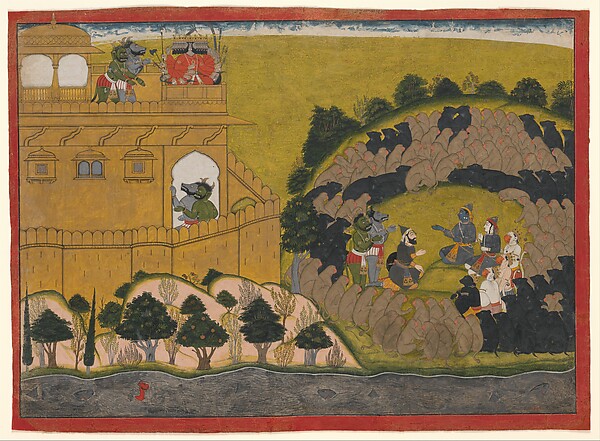
Rama Releases the Demon Spies Shuka and Sarana: Folio from the Siege of Lanka series
ca. 1725 Artwork
Manaku
Rogers Fund, 1919
Open at The Met -

Three Musicians
1618 Artwork
Diego Velázquez
Diego Rodríguez de Silva y Velázquez (1599 - 1660) - The Three Musicians - 413F - Gemäldegalerie.jpg · Wikimedia Commons
Open at Wikidata -

Krishna Revels with the Gopis: Page from a Dispersed Gita Govinda (Song of the Cowherds)
ca. 1630–40 Artwork
Cynthia Hazen Polsky and Leon B. Polsky Fund, 2003
Open at The Met -

-

Figure of a man with an oryx, a monkey, and a leopard skin
ca. 8th century BCE Artwork
Rogers Fund, 1960
Open at The Met -

Concert in the Egg
1560 Artwork
Hieronymus Bosch
Concert in the Egg.jpg · Wikimedia Commons
Open at Wikidata -

Study for "A Sunday on La Grande Jatte"
1884 Artwork
Georges Seurat
Bequest of Sam A. Lewisohn, 1951
Open at The Met -

-

-
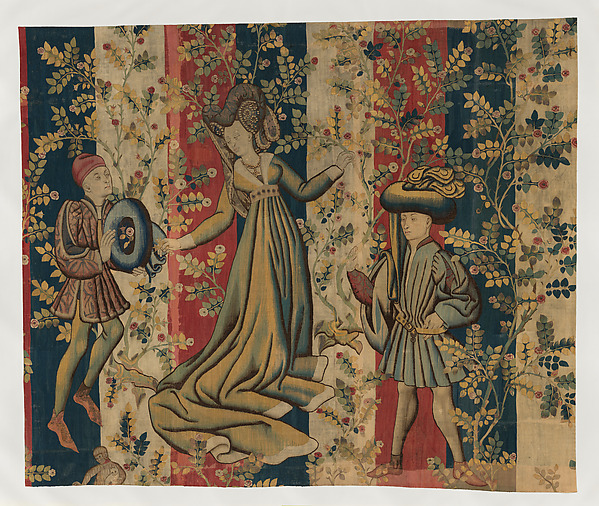
Courtiers in a Rose Garden: A Lady and Two Gentlemen
ca. 1440–50 Artwork
Rogers Fund, 1909
Open at The Met -

Ghanti (bell)
last half 19th century Artwork
The Crosby Brown Collection of Musical Instruments, 1889
Open at The Met
Held since 17 Sep 2026.
Still looking at The Met…
In images
Looking for matching images…
Looking for matching images…
Looking for matching images…
Looking for matching images…
In text
Looking for matching text…
Looking for matching text…
In quotes
Looking for matching quotes…
In news
Looking for matching news…
Looking for matching news…
In music
Looking for matching music…
GIFs
 GIPHY

Looking for GIFs…
Fetched by your browser on this visit; nothing is stored here.
Search matches, not reviewed interpretations. Hover, focus or press Play to animate.
Matches for “monkey” · About these results
Artworks
Saved catalog · The Met, Wikidata
Catalog matches from The Met, Wikidata, held locally rather than searched for on this visit. None is an accepted interpretation: a contributor connects an exact meaning and reviewers decide the claim. Browse saved artworks
- Rama Releases the Demon Spies Shuka and Sarana: Folio from the Siege of Lanka series: Direct depiction of “monkey” (Q1367) tagged “Monkeys”. · not yet reviewed
- Three Musicians: Direct depiction of “monkey” (Q1367) tagged “monkey”. · not yet reviewed
- Krishna Revels with the Gopis: Page from a Dispersed Gita Govinda (Song of the Cowherds): Direct depiction of “monkey” (Q1367) tagged “Monkeys”. · not yet reviewed
- The Dream: Direct depiction of “monkey” (Q1367) tagged “monkey”. · not yet reviewed
- Figure of a man with an oryx, a monkey, and a leopard skin: Direct depiction of “monkey” (Q1367) tagged “Monkeys”. · not yet reviewed
- Concert in the Egg: Direct depiction of “monkey” (Q1367) tagged “monkey”. · not yet reviewed
- Study for "A Sunday on La Grande Jatte": Direct depiction of “monkey” (Q1367) tagged “Monkeys”. · not yet reviewed
- The Fable: Direct depiction of “monkey” (Q1367) tagged “monkey”. · not yet reviewed
- Goa Stone and Gold Case: Direct depiction of “monkey” (Q1367) tagged “Monkeys”. · not yet reviewed
- Courtiers in a Rose Garden: A Lady and Two Gentlemen: Direct depiction of “monkey” (Q1367) tagged “Monkeys”. · not yet reviewed
- Ghanti (bell): Direct depiction of “monkey” (Q1367) tagged “Monkeys”. · not yet reviewed
Subjects
4 subjects · 0 addressed

monkey
common idea of an animal of the "higher primates" (the simians in English excluding apes)
Wikipedia Q1367 where this came from — the thing this word names — monkey
Monkey is a common name that may refer to most mammals of the infraorder Simiiformes, also known as simians. Traditionally, all animals in the group now known as simians are counted as monkeys except the apes. Thus monkeys, in that sense, constitute an incomplete paraphyletic grouping; alternatively, if apes (Hominoidea) are included, monkeys and simians are synonyms.
… 2,324 more Fold this article
In 1812, Étienne Geoffroy grouped the apes and the Cercopithecidae group of monkeys together and established the name Catarrhini, "Old World monkeys" ("singes de l'Ancien Monde" in French). The extant sister of the Catarrhini in the monkey ("singes") group is the Platyrrhini (New World monkeys). Some nine million years before the divergence between the Cercopithecidae and the apes, the Platyrrhini emerged within "monkeys" by migration to South America likely by ocean. Apes are thus deep in the tree of extant and extinct monkeys, and any of the apes is distinctly closer related to the Cercopithecidae than the Platyrrhini are.
Many monkey species are tree-dwelling (arboreal), although there are species that live primarily on the ground, such as baboons. Most species are mainly active during the day (diurnal). Monkeys are generally considered to be intelligent, especially the Old World monkeys.
Within suborder Haplorhini, the simians are a sister group to the tarsiers – the two members diverged some 70 million years ago. New World monkeys and catarrhine monkeys emerged within the simians roughly 35 million years ago. Old World monkeys and apes emerged within the catarrhine monkeys about 25 million years ago. Extinct basal simians such as Aegyptopithecus or Parapithecus (35–32 million years ago) are also considered monkeys by primatologists.
Lemurs, lorises, and galagos are not monkeys, but strepsirrhine primates (suborder Strepsirrhini). The simians' sister group, the tarsiers, are also haplorhine primates; however, they are also not monkeys.
Apes emerged within monkeys as sister of the Cercopithecidae in the Catarrhini, so cladistically they are monkeys as well. However, there has been resistance to directly designate apes (and thus humans) as monkeys, so "Old World monkey" may be taken to mean either the Cercopithecoidea (not including apes) or the Catarrhini (including apes). The classification of apes as monkeys was realized by Georges-Louis Leclerc, Comte de Buffon in the 18th century. Linnaeus placed this group in 1758 together with the tarsiers, in a single genus "Simia" (sans Homo), an ensemble now recognised as the Haplorhini.
Monkeys, including apes, can be distinguished from other primates by having only two pectoral nipples, a pendulous penis, and a lack of sensory whiskers.
 Wikipedia (English)
read this at Wikipedia (English)
where this came from — Wikipedia (English)
a kind of order Primates Primatomorpha Euarchonta Euarchontoglires Boreoeutheria placental eutherian mammal Theria
may also refer to
- monkey — common idea of an animal of the "higher primates" (the simians in English excluding apes)
Public linked claims
What the existing sources assert about these meanings. These are source claims, not curated endorsements.
-
monkey lexeme entity candidate monkey
Wikipedia (English) · assertion revision 1444036
Source, evidence and revision history -
A member of the clade Simiiformes other than those in the clade Hominoidea containing apes, generally (but not universally) distinguished by small size, tails, and cheek pouches. refers to monkey
Wikipedia (English) · assertion revision 4345849
Source, evidence and revision history
Sources
-
Ambrose Bierce, The Devil's Dictionary
Ambrose Bierce
-
Samuel Johnson, A Dictionary of the English Language
Samuel Johnson
-
 The Met
-
 Wikidata
-
Wikipedia (English)
Wikipedia (English)
-
Wiktionary (English) via Kaikki
Wiktionary (English) via Kaikki
-
Open English WordNet 2025
Open English WordNet 2025
-
GIPHY
GIPHY
-
Urban Dictionary
Urban Dictionary
9 sources on this page