All materials · egg
Search the dictionaries, texts, images and API records available for this entry. Source matches are not curated endorsements.
Return to the curated articleSource / API coverage for this entry
Counts above cover loaded, permitted materials. Unavailable or not-yet-loaded sources are not evidence of an empty catalogue. Browser-only results remain on your device.
- Bing News · not loaded for this entry
- CineGraph · not loaded for this entry
- Wikimedia Commons · not loaded for this entry
- GIPHY · browser results · inspect complete records for status
- The Guardian · not loaded for this entry
- The Met · not loaded for this entry
- Open Library · not loaded for this entry
- Openverse · not loaded for this entry
- Pexels · not loaded for this entry
- PoetryDB · not loaded for this entry
- Spotify · not loaded for this entry
- Unsplash · not loaded for this entry
- Wikiquote · not loaded for this entry
Inspect complete source records and provider status
egg
+4 variants
- [eɪ̯ɡ]
- [ɛɡ]
- /eɪ̯ɡ/
- /ɛɡ/
- /(j)ɛɡ/ South-Asia
- recording UK
- recording US
noun
edible animal product Wikidata where this came from — Wikidata
Definitions
3 dictionaries
 Samuel Johnson
18th century ·
1755 ·
noun ·
878 characters
1. That which is laid by feathered animals, from which their young is produced. An egg was found, having lain many years at the bottom of a moat, where the earth had somewhat overgrown it; and this egg was come to the ha
Samuel Johnson
18th century · 1755 · noun · 878 characters
1. That which is laid by feathered animals, from which their young is produced. An egg was found, having lain many years at the bottom of a moat, where the earth had somewhat overgrown it; and this egg was come to the ha
1. That which is laid by feathered animals, from which their young is produced.
An egg was found, having lain many years at the bottom
of a moat, where the earth had somewhat overgrown it;
and this egg was come to the hardness of a stone, and the
colours of the white and yolk perfect. Bacon's Natural Hist.
Eggs are perhaps the highest, most nourishing, and exalted
of all animal food, and most indigestible. Arbuthnot on Diet.
Read the rest of this entry · 445 characters Fold this entry
2. The spawn or sperm of other creatures.
Therefore think him as the serpent's egg,
Which, hatch'd, would, as his kind, grow mischievous. Sh.
Ev'ry insect of each different kind,
In its own egg, chear'd by the solar rays,
Organs involv'd and latent life displays. Blackmore's Creation.
3. Any thing fashioned in the shape of an egg.
There was taken a great glass-bubble with a long neck,
such as chemists are wont to call a philosophical egg. Boyle.
Read this at Samuel Johnson where this came from — Samuel Johnson, A Dictionary of the English Language
 Open English WordNet 2025
2025 ·
noun ·
3 senses
animal reproductive body consisting of an ovum or embryo together with nutritive and protective envelopes; especially the thin-shelled reproductive body laid by e.g. female birds
Open English WordNet 2025
2025 · noun · 3 senses
animal reproductive body consisting of an ovum or embryo together with nutritive and protective envelopes; especially the thin-shelled reproductive body laid by e.g. female birds
-
●
one of the two male reproductive glands that produce spermatozoa and secrete androgens
broader gonad endocrine gland gland organ body part part thing physical entity
Read this at Open English WordNet 2025 where this came from — Open English WordNet 2025
 Wiktionary (English) via Kaikki
2026 ·
noun ·
20 senses
An approximately spherical or ellipsoidal body produced by birds, insects, reptiles, and other animals, often housing an embryo within a membrane or shell during its development.
Wiktionary (English) via Kaikki
2026 · noun · 20 senses
An approximately spherical or ellipsoidal body produced by birds, insects, reptiles, and other animals, often housing an embryo within a membrane or shell during its development.
-
1
An approximately spherical or ellipsoidal body produced by birds, insects, reptiles, and other animals, often housing an embryo within a membrane or shell during its development. (countable, uncountable)
-
“The Eſtrich (whoſe fethers are fayrer thẽ yᵉ wynges of the ſparow hauke) whẽ he hath layd his egges vpon the grounde, he bredeth them in the duſt, and forgetteth them: ſo that they might be troden with feete, or broken with ſomme wilde beaſt.”
1535 October 14 (Gregorian calendar), Myles Coverdale, transl., Biblia: The Byble, […] (Coverdale Bible), [Cologne or Marburg]: [Eucharius Cervicornus and Johannes Soter?], →OCLC, Job xxxix:[13–15], folio xi, recto, column 2
Wiktionary (English) via Kaikki
Plausible
-
“[T]hinke him as a Serpents egge, / VVhich hatch'd, vvould as his kinde grovv mischieuous; / And kill him in the ſhell.”
1599 (first performance), William Shakespeare, “The Tragedie of Iulius Cæsar”, in Mr. William Shakespeares Comedies, Histories, & Tragedies […] (First Folio), London: […] Isaac Iaggard, and Ed[ward] Blount, published 1623, →OCLC, [Act II, scene i], page 114, column 1
Wiktionary (English) via Kaikki
Plausible
3 more quotations for this sense
-
“An egg properly is that, out of a part vvhereof a living creature is produced, and the reſidue is meat for it, improperly that is an egg out of the vvhole vvhereof, a living creature is bred, as the eggs of Spiders, Ants, Flies.”
1657, Samuel Purchas, “Of the Generation of Bees”, in A Theatre of Politicall Flying-Insects. […], London: […] R. I. for Thomas Parkhurst, […], →OCLC, pages 47–48
Wiktionary (English) via Kaikki
Plausible
-
“[T]here is one claſs of quadrupeds that ſeems entirely left to chance, […] Theſe are the quadrupeds that are brought forth from the egg, ſuch as the lizard, the tortoiſe, and the crocodile. […] [T]he numerous brood of eggs are, vvithout farther ſolicitude, buried in the vvarm ſands of the ſhore, and the heat of the ſun alone is left to bring them to perfection.”
1791, Oliver Goldsmith, “Of Quadrupeds in General, Compared to Man”, in An History of the Earth, and Animated Nature. […], new edition, volume II, London: […] F[rancis] Wingrave, successor to Mr. [John] Nourse, […], →OCLC, pages 311–312
Wiktionary (English) via Kaikki
Plausible
-
“The egg is, as we have said, a kind of exposed uterus, and place in which the embryo is fashioned: for it performs the office of the uterus and enfolds the chick until the due time of its exclusion arrive, when the creature is born perfect.”
1847, William Harvey, “Anatomical Exercises on the Generation of Animals; to which are Added, Essays on Parturition; on the Membranes, and Fluids of the Uterus; and on Conception. [On Animal Generation. Exercise the Twenty-third: Of the Exclusion of the Chick, or the Birth from the Egg.]”, in Robert Willis, transl., The Works of William Harvey, M.D., London: […] Sydenham Society, →OCLC, page 264
Wiktionary (English) via Kaikki
Plausible
-
-
2
The (usually) non-developing, edible egg (sense 1.1) of a domestic fowl such as a duck, goose, or, especially, chicken; (uncountable) the contents of such an egg or eggs used as food. (countable, specifically)
-
“There after the images and reliques were orderly disposed, the great Priest compassed about with divers pictures according to the fashion of the Ægyptians, did dedicate and consecrate with certaine prayers a fair ship made very cunningly, and purified the same with a torch, an egge, and sulphur; […]”
1566, Apuleius, “The Eleventh Booke”, in William Adlington, transl., The Golden Ass of Apuleius Translated out of Latin […], London: David Nutt […], published 1893, →OCLC, page 239
Wiktionary (English) via Kaikki
Plausible
-
“[T]hey are vp already, and cal for Egges and butter, they vvil avvay preſently.”
c. 1597 (date written), [William Shakespeare], The History of Henrie the Fourth; […], quarto edition, London: […] P[eter] S[hort] for Andrew Wise, […], published 1598, →OCLC, [Act II, scene i]
Wiktionary (English) via Kaikki
Plausible
3 more quotations for this sense
-
“I was 5 moneth in France before I saw a boyled or roasted egge.”
1665–1667, John Lauder; Lord Fountainhall, “Journal in France 1665–1667”, in Donald Crawford, editor, Journals of Sir John Lauder, Lord Fountainhall, with His Observations on Public Affairs and Other Memoranda 1665–1676 […] (Publications of the Scottish History Society; XXXVI), Edinburgh: […] University Press by T[homas] and A[rchibald] Constable for the Scottish History Society, published May 1900, →OCLC, page 52
Wiktionary (English) via Kaikki
Plausible
-
“Eggs are perhaps the higheſt, moſt nouriſhing and exalted of all animal Food, and moſt indigeſtible, becauſe no body can take and digeſt the ſame Quantity of them as of other Food.”
1732, John Arbuthnot, “Practical Rules of Diet in the Various Constitutions and Diseases of Human Bodies. Chapter I. Of the Different Qualities and Effects of Alimentary Substances. 4. Anti-acid, or Contrary to Acidity or Sourness.”, in An Essay Concerning the Nature of Aliments, and the Choice of Them, According to the Different Constitutions of Human Bodies. […], 2nd edition, London: […] J[acob] Tonson […], →OCLC, page 255
Wiktionary (English) via Kaikki
Plausible
-
“A round, black, shining face is hers, so glossy as to suggest the idea that she might have washed over with white of eggs, like one of her own tea rusks.”
1851 June – 1852 April, Harriet Beecher Stowe, “An Evening in Uncle Tom’s Cabin”, in Uncle Tom’s Cabin; or, Life among the Lowly, volume I, Boston, Mass.: John P[unchard] Jewett & Company; Cleveland, Oh.: Jewett, Proctor & Worthington, published 20 March 1852, →OCLC, page 39
Wiktionary (English) via Kaikki
Plausible
-
-
3
A food item shaped to resemble an egg (sense 1.1.1), such as a chocolate egg. (broadly, countable)
show 17 more
-
4
Synonym of ovum (“the female gamete of an animal”); an egg cell. (also, countable, uncountable)
-
“In the Fall into the division of labor, [Claude] Lévi-Strauss sees the great hunters trading women to create the exogamous bonds of one hunting band with another. The egg is, but the sperm does. The tiny sperm may be furious in its activity, but its highway to the egg is paved by the alkaline trail set down by the Great Mother.”
1981, William Irwin Thompson, “Hominization”, in The Time Falling Bodies Take to Light: Mythology, Sexuality and the Origins of Culture (A Lindisfarne Series Book), New York, N.Y.: St. Martin’s Press, →ISBN, part 2 (The Transformations of Prehistory), page 80
Wiktionary (English) via Kaikki
Plausible
-
“Although they serve the same function across the plant, animal and fungal kingdoms, sperm and eggs vary wildly in their structure and biochemistry, even among closely related species. […] Many genes that determine sperm and egg structure and biochemistry are rapidly evolving, constantly changing the chemical environment necessary for the sperm to bind to the egg.”
2013 May-June, Katrina G. Claw, “Rapid Evolution in Eggs and Sperm”, in American Scientist, volume 101, number 3, New Haven, Conn.: Sigma Xi, the Scientific Research Society, →DOI, →ISSN, →OCLC, archived from the original on 22 Apr 2013, abstract, page 210
Wiktionary (English) via Kaikki
Plausible
similar ovum -
-
5
A thing which looks like or is shaped like an egg (sense 1.1). (countable)
-
“His ſtomacke vvas queaſie (for comming there Coacht) / The jogging had caus’d ſome crudities riſe; / To help it he call’d for a Puritan poacht, / That uſed to turne up the egg’s of his eyes.”
1621 August 13 (first performance; Gregorian calendar), Ben Jonson, “The Masque of the Gypsies”, in Q. Horatius Flaccus: His Art of Poetry. […], London: […] J[ohn] Okes, for John Benson […], published 1640, →OCLC, page 84
Wiktionary (English) via Kaikki
Plausible
-
“There vvas taken a great Glaſs-bubble, vvith a long neck; (ſuch as Chymiſts are vvont to call a Philoſophical Egg) vvhich being fill'd vvith common VVater till the Liquor reach'd about a ſpan above the bubble, and a piece of Paper being there paſted on, vvas put unſtop'd into the Receiver, […]”
1659 December 30 (date written), Robert Boyle, “[Experiment 20]”, in New Experiments Physico-Mechanicall, Touching the Spring of the Air, and Its Effects […], Oxford, Oxfordshire: […] H[enry] Hall, printer to the University, for Tho[mas] Robinson, published 1660, →OCLC, page 144
Wiktionary (English) via Kaikki
Plausible
-
-
6
A swelling on one's head, usually large or noticeable, resulting from an injury. (countable, uncountable)similar goose egg
-
7
Chiefly in egg and dart: an ornamental oval moulding alternating in a row with dart or triangular shapes. (countable, uncountable)
- 8
-
9
A bomb or mine. (countable, dated, uncountable)
-
10
A would-be spark, especially one created by an overweight spaceship and that leads to a pattern's destruction. (countable, uncountable)
-
11
A golf ball. (countable, uncountable)
-
“But Olga continued to work through her large bucket of balls. Ninety percent of them came to rest in exactly the same spot—dead center, between 150 and 175 yards. So tightly bunched were her balls out there it looked like someone had overturned a bucket of eggs.”
2014 January 14, Bruce Grierson, “12: Shadows”, in What Makes Olga Run: The Mystery of the 90-Something Track Star and What She Can Teach Us About Living Longer, Happier Lives, Henry Holt and Company, →ISBN, page 222
Wiktionary (English) via Kaikki
Plausible
-
-
12
A person; a fellow. (countable, dated, figuratively, informal, uncountable)
-
“'Good egg!' quoth Moorshed, and brought his hand down on the wide shoulders with the smack of a beaver's tail.”
1903, Rudyard Kipling, “‘Their Lawful Occasions’—Part II”, in Traffics and Discoveries, London: Macmillan and Co., published 1904, →OCLC, page 138
Wiktionary (English) via Kaikki
Plausible
-
“Walter. The woman we passed as we came in just now. Is it his wife? Cokeson. No, no relation. [Restraining what in jollier circumstances would have been a wink] A married person, though. […] James. A real bad egg.”
1910 February, John Galsworthy, Justice: A Tragedy in Four Acts, London: Duckworth and Co. […], published March 1910, →OCLC, Act I, page 15
Wiktionary (English) via Kaikki
Plausible
6 more quotations for this sense
-
“"She isn't going to sue me for breach of promise?" "She never had any intention of doing so." The Honorable Freddie sank back on the pillows. "Good egg!" he said with fervor. He beamed happily. "This," he observed, "is a bit of all right."”
1915 September 3, Pelham Grenville Wodehouse, chapter XI, in Something New, New York, N.Y.: D[aniel] Appleton and Company, →OCLC, page 326
Wiktionary (English) via Kaikki
Plausible
-
“They tell me at Timothy's […] that Dartie has gone off at last. That'll be a relief to your father. He was a rotten egg.”
1920, John Galsworthy, “On Forsyte ’Change”, in In Chancery (The Forsyte Saga; 2), London: William Heinemann, →OCLC, part I, page 100
Wiktionary (English) via Kaikki
Plausible
-
“Some big, hard-boiled egg meets up with a pretty face, and bingo! He cracks up and melts.”
1932, Edgar Wallace, Merian C[aldwell] Cooper, novelization by Delos W[heeler] Lovelace, chapter 4, in King Kong, trade softcover edition, Nevada City, Calif.: Underwood Books, published 2005, →ISBN, page 29
Wiktionary (English) via Kaikki
Plausible
-
“"She's a tough egg." "She must be, if she slung your brother Joe out."”
1937 July 24 – September 11, P[elham] G[renville] Wodehouse, chapter I, in Summer Moonshine, 1st UK edition, London: Herbert Jenkins […], published 1938, →OCLC, page 18
Wiktionary (English) via Kaikki
Plausible
-
“Up close he looked like a pretty tough egg. His hair was bristling up in the back in spite of what smelled like a whole bottle of Wildroot Creme Oil and he had the flat, oddly shiny eyes that some deep-sea fish have.”
1980, Stephen King, “The Wedding Gig”, in Skeleton Crew (A Signet Book), New York, N.Y.: New American Library, published June 1986, →ISBN, page 259
Wiktionary (English) via Kaikki
Plausible
-
“Jonathan Lowrie. Royalist. Philanthropist. Classical scholar. And all around excellent egg.”
2000 February 5, Douglas Watkinson et al., “Beyond the Grave”, in Midsomer Murders
Wiktionary (English) via Kaikki
Plausible
-
- 13
-
14
A user of the microblogging service Twitter identified by the default avatar (historically an image of an egg (sense 1.1.1)) rather than a custom image; hence, a newbie or noob. (Internet, countable, dated, derogatory, figuratively, uncountable)
-
15
A person regarded as having not yet realized they are transgender, who has not yet come out as transgender, or who is in the early stages of transitioning. (countable, figuratively, uncountable)
-
“That fits, though, she thought. Wear the same outfit day after day, your brain gets numb to how it looks or feels—Wendy shut the album. No. […] She hated analyzing the whys of [not-out] trans girls. She had always hated it, and she hated how easy it had become; the bottomless hole of egg mode.”
2018, Casey Plett, edited by Susan Safyan, Little Fish, Vancouver, B.C.: Arsenal Pulp Press, →ISBN, page 24
Wiktionary (English) via Kaikki
Plausible
-
“So I remember being told, in the very early part of my transition, that I had been, until now, an egg, and—as powerfully rooted in a belief in latency as I found myself[.]”
2020, Grace Lavery, “Egg Theory's Early Style”, in Transgender Studies Quarterly, page 384
Wiktionary (English) via Kaikki
Plausible
-
-
16
One's lack of awareness that one is transgender. (broadly, countable, figuratively, uncountable)
-
17
A foolish or obnoxious person. (New-Zealand, countable, derogatory, figuratively, uncountable)
-
18
A young person. (countable, derogatory, figuratively, obsolete, uncountable)
-
“VVhat you Egge? / Yong fry of Treachery?”
c. 1606 (date written), William Shakespeare, “The Tragedie of Macbeth”, in Mr. William Shakespeares Comedies, Histories, & Tragedies […] (First Folio), London: […] Isaac Iaggard, and Ed[ward] Blount, published 1623, →OCLC, [Act IV, scene ii], page 145, column 2
Wiktionary (English) via Kaikki
Plausible
-
-
19
Something regarded as containing a (usually bad) thing at an early stage. (archaic, countable, figuratively, uncountable)
-
“[S]oe Power of Warre / From the firſt Egge of Libertie, out-Creepes / A fatall Serpent; […]”
a. 1658 (date written), George Daniel, “Trinarchodia. The Raigne of Henry the Fourth.”, in Alexander B[alloch] Grosart, editor, The Poems of George Daniel, Esq. of Beswick, Yorkshire. (1616–1657) from the Original MSS. in the British Museum: Hitherto Unprinted. […], volume IV, Boston, Lincolnshire: […] [Robert Roberts] for private circulation only, published 1878, →OCLC, stanza 348, page 88
Wiktionary (English) via Kaikki
Plausible
-
“In ſhort, the Rebellion had been Cruſh'd in the Egg; and One Seaſonable Act of Rigour, had Sav'd the King, the Monarchy, the Church, and the Three Kingdoms.”
1683 June 5 (Gregorian calendar), Roger L’Estrange, “The State of the City of London, in the Late Rebellion. […]”, in The Observator, in Dialogue, volume I, number 345, London: […] J. Bennet, for William Abington, […], →OCLC, page [1], column 1
Wiktionary (English) via Kaikki
Plausible
-
-
20
One of the blocks of data injected into a program's address space for use by certain forms of shellcode, such as "omelettes". (countable, figuratively, uncountable)
-
“This approach would be altered for an optimal omelette based exploit. One would spray the heap with the omelette code solely, then load a single copy of the additional shellcode eggs into memory outside the target region for the spray.”
2015, Charles Smutz, Angelos Stavrou, “Preventing Exploits in Microsoft Office Documents through Content Randomization”, in Herbert Bos, Fabian Monrose, Gregory Blanc, editors, Research in Attacks, Intrusions, and Defenses: 18th International Symposium, RAID 2015, Kyoto, Japan, November 2–4, 2015: Proceedings (LNCS; 9404; Sublibrary SL4 (Security and Cryptology)), Cham, Switzerland; Heidelberg, Baden-Württemburg: Springer International Publishing, →DOI, →ISBN, →ISSN, page 241
Wiktionary (English) via Kaikki
Plausible
-
Read this at Wiktionary (English) via Kaikki where this came from — Wiktionary (English) via Kaikki
 Urban Dictionary
read this at Urban Dictionary
Asking Urban Dictionary…
Crowd-sourced and unreviewed. Fetched by your browser; nothing is stored here.
Out in the world
4 things · every match says why it is here
Artworks
4
Saved catalog
-
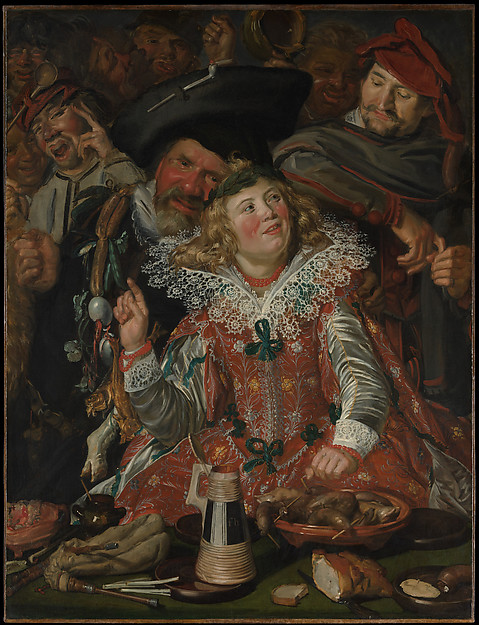
Merrymakers at Shrovetide
ca. 1616–17 Artwork
Frans Hals
Bequest of Benjamin Altman, 1913
Open at The Met -

Old Woman Cooking Eggs
1618 Artwork
Diego Velázquez
Diego Velazquez - An Old Woman Cooking Eggs - Google Art Project.jpg · Wikimedia Commons
Open at Wikidata -

Madonna and Child with Saints, Angels and Federico da Montefeltro (San Bernardino Altarpiece)
1472 Artwork
Piero della Francesca
Piero della Francesca 046.jpg · Wikimedia Commons
Open at Wikidata -

Broken Eggs
1756 Artwork
Jean-Baptiste Greuze
Petit Palais Greuze enfance IMG 8844.jpg · Wikimedia Commons
Open at Wikidata
Held since 17 Sep 2026.
GIFs
 GIPHY

Looking for GIFs…
Fetched by your browser on this visit; nothing is stored here.
Search matches, not reviewed interpretations. Hover, focus or press Play to animate.
Matches for “egg” · About these results
Artworks
Saved catalog · The Met, Wikidata
Catalog matches from The Met, Wikidata, held locally rather than searched for on this visit. None is an accepted interpretation: a contributor connects an exact meaning and reviewers decide the claim. Browse saved artworks
- Merrymakers at Shrovetide: Direct depiction of “egg as food” (Q93189) tagged “Eggs”. · not yet reviewed
- Old Woman Cooking Eggs: Direct depiction of “egg as food” (Q93189) tagged “egg as food”. · not yet reviewed
- Madonna and Child with Saints, Angels and Federico da Montefeltro (San Bernardino Altarpiece): Direct depiction of “egg as food” (Q93189) tagged “egg as food”. · not yet reviewed
- Broken Eggs: Direct depiction of “egg as food” (Q93189) tagged “egg as food”. · not yet reviewed
Subjects
2 subjects · 0 addressed
Found by name and by the sources. Not reviewed: a shared name is not a shared identity.
Subject
egg
organic vessel in which an embryo first begins to develop
Unclassified
Subject
egg as food
edible animal product
Unclassified

egg as food
edible animal product
Wikipedia Q93189 where this came from — the thing this word names — egg as food
Humans and other hominids have consumed eggs for millions of years. The most widely consumed eggs are those of fowl, especially chickens. People in Southeast Asia began harvesting chicken eggs for food around 1500 BCE. Eggs of other birds, such as ducks and ostriches, are eaten regularly but much less commonly than those of chickens. People may also eat the eggs of reptiles, amphibians, and fish.
… 519 more Fold this article
Fish eggs consumed as food are known as roe or caviar.
Hens and other egg-laying creatures are raised throughout the world, and mass production of chicken eggs is a global industry. In 2009, an estimated 62.1 million metric tons of eggs were produced worldwide from a total laying flock of approximately 6.4 billion hens. There are issues of regional variation in demand and expectation, as well as current debates concerning methods of mass production. In 2012, the European Union banned battery husbandry of chickens.
 Wikipedia (English)
read this at Wikipedia (English)
where this came from — Wikipedia (English)
a kind of food
may also refer to
- egg — organic vessel in which an embryo first begins to develop
Public linked claims
What the existing sources assert about these meanings. These are source claims, not curated endorsements.
-
The (usually) non-developing, edible egg (sense 1.1) of a domestic fowl such as a duck, goose, or, especially, chicken; (uncountable) the contents of such an egg or eggs used as food. refers to egg as food
Wiktionary (English) via Kaikki · assertion revision 3860563
Source, evidence and revision history -
egg lexeme entity candidate egg
Wikipedia (English) · assertion revision 1444039
Source, evidence and revision history
Sources
-
Samuel Johnson, A Dictionary of the English Language
Samuel Johnson
-
 The Met
-
 Wikidata
-
Wikipedia (English)
Wikipedia (English)
-
Wiktionary (English) via Kaikki
Wiktionary (English) via Kaikki
-
Open English WordNet 2025
Open English WordNet 2025
-
GIPHY
GIPHY
-
Urban Dictionary
Urban Dictionary
8 sources on this page