All materials · Bee
Search the dictionaries, texts, images and API records available for this entry. Source matches are not curated endorsements.
Return to the curated articleSource / API coverage for this entry
Counts above cover loaded, permitted materials. Unavailable or not-yet-loaded sources are not evidence of an empty catalogue. Browser-only results remain on your device.
- Bing News · not loaded for this entry
- CineGraph · not loaded for this entry
- Wikimedia Commons · not loaded for this entry
- GIPHY · browser results · inspect complete records for status
- The Guardian · not loaded for this entry
- The Met · not loaded for this entry
- Open Library · not loaded for this entry
- Openverse · not loaded for this entry
- Pexels · not loaded for this entry
- PoetryDB · not loaded for this entry
- Spotify · not loaded for this entry
- Unsplash · not loaded for this entry
- Wikiquote · not loaded for this entry
Inspect complete source records and provider status
Definitions
1 dictionary
 Wiktionary (English) via Kaikki
2026 ·
noun ·
2 senses
someone connected with Barnet Football Club, as a fan, player, coach etc.
Wiktionary (English) via Kaikki
2026 · noun · 2 senses
someone connected with Barnet Football Club, as a fan, player, coach etc.
-
1
someone connected with Barnet Football Club, as a fan, player, coach etc.
-
2
Alternative letter-case form of bee. (alt-of)variants bee
Read this at Wiktionary (English) via Kaikki where this came from — Wiktionary (English) via Kaikki
 Urban Dictionary
read this at Urban Dictionary
Asking Urban Dictionary…
Crowd-sourced and unreviewed. Fetched by your browser; nothing is stored here.
Out in the world
1 things · every match says why it is here
Artworks
1
Saved catalog
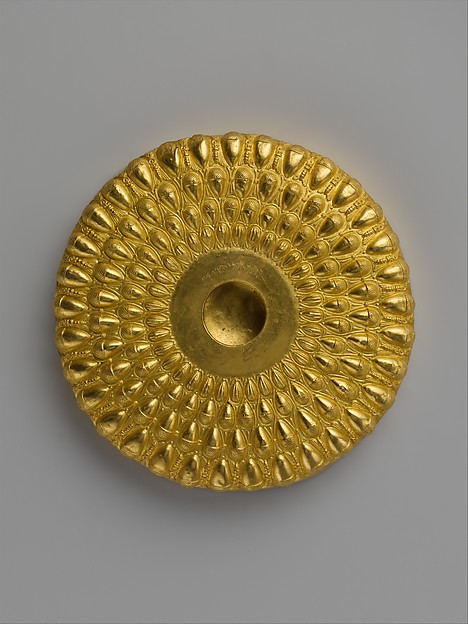
Held since 17 Sep 2026.
GIFs
 GIPHY

Looking for GIFs…
Fetched by your browser on this visit; nothing is stored here.
Search matches, not reviewed interpretations. Hover, focus or press Play to animate.
Matches for “Bee” · About these results
Artworks
Saved catalog · The Met
Catalog matches from The Met, held locally rather than searched for on this visit. None is an accepted interpretation: a contributor connects an exact meaning and reviewers decide the claim. Browse saved artworks
- Gold phiale (libation bowl): Direct depiction of “bee” (Q7391) tagged “Bees”. · not yet reviewed
Subjects
12 subjects · 0 addressed
Found by name and by the sources. Not reviewed: a shared name is not a shared identity.
Subject
bee
clade of hymenopteran insects
Unclassified
Subject
Bee
Name list
Unclassified
Subject
Bee
family name
Unclassified
Subject
Bee
Italian comune
Unclassified
Subject
Bee
Wikimedia disambiguation page
Unclassified
Subject
Bee
unincorporated community in Virginia
Unclassified
Subject
Bee
village in Seward County, Nebraska, United States
Unclassified
Subject
Bee
unincorporated community in Hart County, Kentucky
Unclassified
Subject
Bee
Australian ship
Unclassified
Subject
Bee
extended play
Unclassified
Subject
Bee
unincorporated community in Houston County, Minnesota, United States
Unclassified
Subject
Bee
Lena Meyer-Landrut single
Unclassified

bee
clade of hymenopteran insects
Anthophila
Wikipedia Q7391 where this came from — the thing this word names — bee
Bees are winged insects that form a monophyletic clade Anthophila within the superfamily Apoidea of the order Hymenoptera, with over 20,000 known species in seven recognized families. Some species – including honey bees, bumblebees, and stingless bees – are social insects living in colonies, whereas over 90% of bee species – including mason bees, carpenter bees, leafcutter bees, and sweat bees – are solitary.
… 1,983 more Fold this article
Unlike the closely related wasps and ants, who are carnivorous/omnivorous, bees are herbivores that specifically feed on nectar (nectarivory) and pollen (palynivory), the former primarily as a carbohydrate source for metabolic energy, and the latter primarily for protein and other nutrients for their larvae. They are found on every continent except Antarctica, and in every habitat on the planet that contains insect-pollinated flowering plants. The most common bees in the Northern Hemisphere are the Halictidae, or sweat bees, but they are small and often mistaken for wasps or flies. Bees range in size from tiny stingless bee species, whose workers are less than 2 millimeters (0.08 in) long, to the leafcutter bee Megachile pluto, the largest species of bee, whose females can attain a length of 39 millimeters (1.54 in). Vertebrate predators of bees include primates and birds such as bee-eaters; insect predators include beewolves and dragonflies.
Bees are best known for their ecological roles as pollinators and, in the case of the best-known species, the western honey bee, for producing honey, a regurgitated and dehydrated viscous mixture of partially digested monosaccharides kept as food storage of the bee colony. Pollination management via bees is important both ecologically and agriculturally, and the decline in wild bee populations has increased the demand and value of domesticated pollination by commercially managed hives of honey bees. Human beekeeping or apiculture (meliponiculture for stingless bees) has been practiced as a discipline of animal husbandry for millennia, since at least the times of Ancient Egypt and Ancient Greece. Bees have appeared in mythology and folklore, through all phases of art and literature from ancient times to the present day, although primarily focused in the Northern Hemisphere where beekeeping is far more common. In Mesoamerica, the Maya have practiced large-scale intensive meliponiculture since pre-Columbian times.
 Wikipedia (English)
read this at Wikipedia (English)
where this came from — Wikipedia (English)
a kind of Apoidea Aculeata apocritan order Hymenoptera Endopterygota Eumetabola Neoptera Metapterygota
may also refer to
- bee — clade of hymenopteran insects
Public linked claims
What the existing sources assert about these meanings. These are source claims, not curated endorsements.
-
Bee lexeme entity candidate bee
Wikipedia (English) · assertion revision 1481156
Source, evidence and revision history
Sources
-
 The Met
-
 Wikidata
-
Wikipedia (English)
Wikipedia (English)
-
Wiktionary (English) via Kaikki
Wiktionary (English) via Kaikki
-
GIPHY
GIPHY
-
Urban Dictionary
Urban Dictionary
6 sources on this page