All materials · ectotherm
Search the dictionaries, texts, images and API records available for this entry. Source matches are not curated endorsements.
Return to the curated articleSource / API coverage for this entry
Counts above cover loaded, permitted materials. Unavailable or not-yet-loaded sources are not evidence of an empty catalogue. Browser-only results remain on your device.
- Bing News · not loaded for this entry
- CineGraph · not loaded for this entry
- Wikimedia Commons · not loaded for this entry
- GIPHY · browser results · inspect complete records for status
- The Guardian · not loaded for this entry
- The Met · not loaded for this entry
- Open Library · not loaded for this entry
- Openverse · not loaded for this entry
- Pexels · not loaded for this entry
- PoetryDB · not loaded for this entry
- Spotify · not loaded for this entry
- Unsplash · not loaded for this entry
- Wikiquote · not loaded for this entry
Inspect complete source records and provider status
ectotherm
noun
organism where internal heating sources are small or negligible Wikidata where this came from — Wikidata
Definitions
2 dictionaries
 Open English WordNet 2025
2025 ·
noun ·
1 sense
an animal whose body temperature varies with the temperature of its surroundings; any animal except birds and mammals
Open English WordNet 2025
2025 · noun · 1 sense
an animal whose body temperature varies with the temperature of its surroundings; any animal except birds and mammals
-
●
an animal whose body temperature varies with the temperature of its surroundings; any animal except birds and mammals
broader animal organism living thing whole object physical entity entity
Read this at Open English WordNet 2025 where this came from — Open English WordNet 2025
 Wiktionary (English) via Kaikki
2026 ·
noun ·
1 sense
A cold-blooded animal: one, such as an amphibian, fish, reptile, or arthropod, which has a limited ability to regulate its body temperature and whose body temperature thus depends on the ambient temperature.
Wiktionary (English) via Kaikki
2026 · noun · 1 sense
A cold-blooded animal: one, such as an amphibian, fish, reptile, or arthropod, which has a limited ability to regulate its body temperature and whose body temperature thus depends on the ambient temperature.
-
1
A cold-blooded animal: one, such as an amphibian, fish, reptile, or arthropod, which has a limited ability to regulate its body temperature and whose body temperature thus depends on the ambient temperature.similar poikilotherm
Read this at Wiktionary (English) via Kaikki where this came from — Wiktionary (English) via Kaikki
 Urban Dictionary
read this at Urban Dictionary
Asking Urban Dictionary…
Crowd-sourced and unreviewed. Fetched by your browser; nothing is stored here.
Out in the world
every match says why it is here
GIFs
 GIPHY

Looking for GIFs…
Fetched by your browser on this visit; nothing is stored here.
Search matches, not reviewed interpretations. Hover, focus or press Play to animate.
Subjects
1 subject · 0 addressed
Found by name and by the sources. Not reviewed: a shared name is not a shared identity.
Subject
ectotherm
organism where internal heating sources are small or negligible
Unclassified
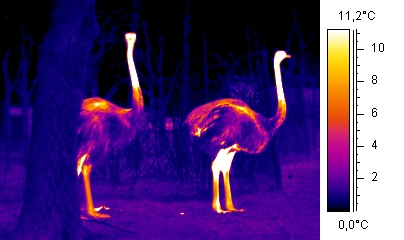
ectotherm
organism where internal heating sources are small or negligible
Wikipedia Q587698 where this came from — the thing this word names — ectotherm
An ectotherm (from Ancient Greek ἐκτός (ektós) 'outside' and θερμός (thermós) 'heat'), more commonly referred to as a "cold-blooded animal", is an animal in which internal physiological sources of heat, such as blood, are of relatively small or of quite negligible importance in controlling body temperature. Such organisms (frogs, for example) rely on environmental heat sources, which permit them to operate at very economical metabolic rates.
… 910 more Fold this article
Some of these animals live in environments where temperatures are practically constant, as is typical of regions of the abyssal ocean and hence can be regarded as homeothermic ectotherms. In contrast, in places where temperature varies so widely as to limit the physiological activities of other kinds of ectotherms, many species habitually seek out external sources of heat or shelter from heat; for example, many reptiles regulate their body temperature by basking in the sun, or seeking shade when necessary in addition to a host of other behavioral thermoregulation mechanisms.
In contrast to ectotherms, endotherms rely largely, even predominantly, on heat from internal metabolic processes, and mesotherms use an intermediate strategy.
Because there are more than two categories of temperature control utilized by animals, the terms warm-blooded and cold-blooded have been deprecated as scientific terms.
 Wikipedia (English)
read this at Wikipedia (English)
where this came from — Wikipedia (English)
a kind of animal Apoikozoa Filozoa Holozoa Opisthokonta Amorphea eukaryote Cytota
may also refer to
- ectotherm — organism where internal heating sources are small or negligible
Public linked claims
What the existing sources assert about these meanings. These are source claims, not curated endorsements.
-
ectotherm lexeme entity candidate ectotherm
Wikipedia (English) · assertion revision 1444277
Source, evidence and revision history -
A cold-blooded animal: one, such as an amphibian, fish, reptile, or arthropod, which has a limited ability to regulate its body temperature and whose body temperature thus depends on the ambient temperature. refers to ectotherm
Wikipedia (English) · assertion revision 4344375
Source, evidence and revision history
Sources
-
 Wikidata
-
Wikipedia (English)
Wikipedia (English)
-
Wiktionary (English) via Kaikki
Wiktionary (English) via Kaikki
-
Open English WordNet 2025
Open English WordNet 2025
-
GIPHY
GIPHY
-
Urban Dictionary
Urban Dictionary
6 sources on this page