All materials · fool
Search the dictionaries, texts, images and API records available for this entry. Source matches are not curated endorsements.
Return to the curated articleSource / API coverage for this entry
Counts above cover loaded, permitted materials. Unavailable or not-yet-loaded sources are not evidence of an empty catalogue. Browser-only results remain on your device.
- Bing News · not loaded for this entry
- CineGraph · not loaded for this entry
- Wikimedia Commons · not loaded for this entry
- GIPHY · browser results · inspect complete records for status
- The Guardian · not loaded for this entry
- The Met · not loaded for this entry
- Open Library · not loaded for this entry
- Openverse · not loaded for this entry
- Pexels · not loaded for this entry
- PoetryDB · not loaded for this entry
- Spotify · not loaded for this entry
- Unsplash · not loaded for this entry
- Wikiquote · not loaded for this entry
Inspect complete source records and provider status
fool
+7 variants
- /foːl/
- [fuːl] Australia, New-Zealand
- [fʊwl] British, Southern, Standard
- /fuːl/ Received-Pronunciation
- /ful/ General-American
- /fʉːl/ Australia, New-Zealand
- /fʉl/ Northern-Ireland, Scotland
- /fʉwl/ British, Southern, Standard
- recording
- recording Southern-England
noun
person of low intelligence Wikidata where this came from — Wikidata
Definitions
4 dictionaries
 Samuel Johnson
18th century ·
1755 ·
noun ·
1,783 characters
1. One whom nature has denied reason; a natural; an idiot. Do'st thou call me fool, boy? —All thy other titles thou hast given away that thou wast born with. Shakespeare's King Lear. The fool multitude, that chuse by sho
Samuel Johnson
18th century · 1755 · noun · 1,783 characters
1. One whom nature has denied reason; a natural; an idiot. Do'st thou call me fool, boy? —All thy other titles thou hast given away that thou wast born with. Shakespeare's King Lear. The fool multitude, that chuse by sho
1. One whom nature has denied reason; a natural; an idiot.
Do'st thou call me fool, boy?
—All thy other titles thou hast given away that thou wast
born with. Shakespeare's King Lear.
The fool multitude, that chuse by show,
Not learning more than the fond eye doth teach,
Which pry not to the interior. Shak. Merchant of Venice.
It may be asked, whether the eldest son, being a fool, shall
inherit paternal power before the younger, a wise man. Locke.
Read the rest of this entry · 1,317 characters Fold this entry
He thanks his stars he was not born a fool. Pope.
2. [In Scripture.] A wicked man.
The fool hath said in his heart there is no God. Ps. xiv. 1.
3. A term of indignity and reproach.
To be thought knowing, you must first put the fool upon all
mankind. Dryden's Juvenal, Preface.
4. One who counterfeits folly; a buffoon; a jester.
Where's my knave, my fool? Go you, and call my fool
hither. Shakespeare's King Lear.
I scorn, although their drudge, to be their fool or jester. Milt.
If this disguise sit not naturally on so grave a person, yet it
may become him better than that fool's coat. Denham.
5. To play the FOOL. To play pranks like a hired jester; to jest; to make sport.
I returning where I left his armour, found another instead
thereof, and armed myself therein to play the fool. Sidney.
6. To play the FOOL. To act like one void of common understanding.
Well, thus we play the fools with the time,
And the spirits of the wise sit in the clouds
And mock us. Shakespeare's Henry IV. p. ii.
Is it worth the name of freedom to be at liberty to play the
fool, and draw shame and misery upon a man's self? Locke.
7. To make a FOOL. To disappoint; to defeat.
'Twere as good a deed as to drink when a man's a-hungry,
to challenge him to the field, and then to break promise with
him, and make a fool of him. Shakes. Twelfth Night.
Read this at Samuel Johnson where this came from — Samuel Johnson, A Dictionary of the English Language
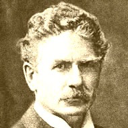 Ambrose Bierce
20th century ·
1911 ·
noun ·
1,010 characters
A person who pervades the domain of intellectual speculation and diffuses himself through the channels of moral activity. He is omnific, omniform, omnipercipient, omniscient, omnipotent. He it was who invented letters, p
Ambrose Bierce
20th century · 1911 · noun · 1,010 characters
A person who pervades the domain of intellectual speculation and diffuses himself through the channels of moral activity. He is omnific, omniform, omnipercipient, omniscient, omnipotent. He it was who invented letters, p
A person who pervades the domain of intellectual speculation and diffuses himself through the channels of moral activity. He is omnific, omniform, omnipercipient, omniscient, omnipotent. He it was who invented letters, printing, the railroad, the steamboat, the telegraph, the platitude and the circle of the sciences. He created patriotism and taught the nations war—founded theology, philosophy, law, medicine and Chicago.
Read the rest of this entry · 585 characters Fold this entry
He established monarchical and republican government. He is from everlasting to everlasting—such as creation's dawn beheld he fooleth now. In the morning of time he sang upon primitive hills, and in the noonday of existence headed the procession of being. His grandmotherly hand was warmly tucked-in the set sun of civilization, and in the twilight he prepares Man's evening meal of milk-and-morality and turns down the covers of the universal grave. And after the rest of us shall have retired for the night of eternal oblivion he will sit up to write a history of human civilization.
Read this at Ambrose Bierce where this came from — Ambrose Bierce, The Devil's Dictionary
 Open English WordNet 2025
2025 ·
noun ·
3 senses
a person who lacks good judgment
Open English WordNet 2025
2025 · noun · 3 senses
a person who lacks good judgment
-
●
a person who lacks good judgment
broader simpleton person organism living thing whole object physical entity entity
- ●
broader victim actor causal agent physical entity entity
-
●
a professional clown employed to entertain a king or nobleman in the Middle Ages
broader clown comedian performer entertainer actor causal agent physical entity entity
Read this at Open English WordNet 2025 where this came from — Open English WordNet 2025
 Wiktionary (English) via Kaikki
2026 ·
noun ·
8 senses
A type of dessert made of puréed fruit and custard or cream.
Wiktionary (English) via Kaikki
2026 · noun · 8 senses
A type of dessert made of puréed fruit and custard or cream.
-
1
A type of dessert made of puréed fruit and custard or cream.
-
“Eton is renowned for its "messes," and "strawberry mess" is Empress of them all, with raspberry mess as a very good second. It does not at all convey the joys of a "mess" to say that it consists of iced fruit and cream, and somewhat resembles a "fool." It is a thing apart, and should be approached with bated breath and unimpaired capacity.”
1913, Pearson's Magazine, volume 36, part 2, page 373
Wiktionary (English) via Kaikki
Plausible
-
“Pellaprat [...] invented the dish [of Eton mess] when a load of over-ripe strawberries needed eating up. His disguise was a fluff of whipped cream and the fool was served with sponge fingers. Somewhere along the line, someone else had the idea of stirring chunks of meringue into the fool at the last moment.”
2014, Lindsey Bareham, Just One Pot
Wiktionary (English) via Kaikki
Plausible
similar mess -
-
2
A person with poor judgment or little intelligence. (derogatory)
-
“Erasmus, [...] saide wiselie that experience is the common scholehouse of foles, and ill men: Men of witte and honestie, be otherwise instructed.”
a. 1569 (date written), Roger Ascham, edited by Margaret Ascham, The Scholemaster: Or Plaine and Perfite Way of Teaching Children, to Vnderstand, Write, and Speake, the Latin Tong, […], London: […] John Daye, […], published 1570, →OCLC
Wiktionary (English) via Kaikki
Plausible
-
“No man is always a fool, every man is sometimes.”
1748, [Samuel Richardson], “Letter LII”, in Clarissa. Or, The History of a Young Lady: […], volume IV, London: […] S[amuel] Richardson; [a]nd sold by John Osborn, […], →OCLC
Wiktionary (English) via Kaikki
Plausible
5 more quotations for this sense
-
“'If I coloured at all, Mr Edward,' said Joe, 'which I didn't know I did, it was to think I should have been such a fool as ever to have any hope of her. She’s as far out of my reach as—as Heaven is.'”
1841 February–November, Charles Dickens, “Barnaby Rudge. Chapter 13.”, in Master Humphrey’s Clock, volume III, London: Chapman & Hall, […], →OCLC
Wiktionary (English) via Kaikki
Plausible
-
“If you can bear to hear the truth you've spoken Twisted by knaves to make a trap for fools”
1895, Rudyard Kipling, If—
Wiktionary (English) via Kaikki
Plausible
-
“You're just a poor misguided fool Who thinks they know what I should do A line for me and a line for you I lose my right to a point of view.”
2001, Starsailor, “Poor Misguided Fool”
Wiktionary (English) via Kaikki
Plausible
-
“And every time I'm meant to be acting sensible You drift into my head And turn me into a crumbling fool.”
2008, Adele, Crazy for You
Wiktionary (English) via Kaikki
Plausible
-
“I like that you're broken Broken like me Maybe that makes me a fool”
2017 April 13, Mitchy Collins, Samantha Derosa, Christian Medice, “Broken”, in Finding It Hard to Smile, performed by Lovelytheband
Wiktionary (English) via Kaikki
Plausible
-
-
3
A jester; a person whose role was to entertain a sovereign and the court (or lower personages). (historical)
show 5 more
-
4
A stock character typified by unintelligence, naïveté or lucklessness, usually as a form of comic relief; often used as a source of insight or pathos for the audience, as such characters are generally less bound by social expectations.
-
5
Someone who has been made a fool of or tricked; dupe.
-
“Such clouds of nameless trouble cross All night below the darken’d eyes; With morning wakes the will, and cries, ‘Thou shalt not be the fool of loss.’”
1850, [Alfred, Lord Tennyson], “Canto IV”, in In Memoriam, London: Edward Moxon, […], →OCLC
Wiktionary (English) via Kaikki
Plausible
-
-
6
Someone who derives pleasure from something specified. (informal)
-
“Can they think me […] their fool or jester?”
1671, John Milton, “Samson Agonistes, […]”, in Paradise Regain’d. A Poem. In IV Books. To which is Added, Samson Agonistes, London: […] J[ohn] M[acock] for John Starkey […], →OCLC
Wiktionary (English) via Kaikki
Plausible
-
-
7
An informal greeting akin to buddy, dude, or man. (slang)
-
“Upon opening the door, Trech was suddenly drawn aback by the shocking presence of the armed goon standing directly in front of him. “Yo, what up fool? […]””
2010, G.C. Deuce, From the Gutter to the Grave: An American Hood Novel, Xlibris Corporation, →ISBN, page 291
Wiktionary (English) via Kaikki
Plausible
-
““What up, fool?” he finally responded. “Not too much; fell asleep watching your boys get their asses kicked,” I told him, referring to the Carolina Cougars, the last team he played for before he got sick.”
2012, Peron Long, Livin' Ain't Easy, Urban Books, →ISBN
Wiktionary (English) via Kaikki
Plausible
2 more quotations for this sense
-
“Fame leaves out the house and walks to the BP gas station on Alabama Avenue. On the way there he sees his man Mark posted up at the rec center and walks over to holla at him. “What’s up fool?” Mark says while dapping Fame up.”
2014, Hitta Lo, Bracing Season I, Kaleidoscopic Publishing, →ISBN
Wiktionary (English) via Kaikki
Plausible
-
““What up fool?” Lil Slim said noticing the seriousness in Lil Kilo’s voice. “You ain’t switched up on us have you.” Lil Fresh looked at Lil Kilo like where that come from. “Nigga I’ll neva switch up.” Lil Slim said feeling a little offended.”
2018, Keith L. Bell, Drought Season Over: The Sequel, Xlibris Corporation, →ISBN
Wiktionary (English) via Kaikki
Plausible
-
-
8
A particular card in a tarot deck, representing a jester.
Read this at Wiktionary (English) via Kaikki where this came from — Wiktionary (English) via Kaikki
 Urban Dictionary
read this at Urban Dictionary
Asking Urban Dictionary…
Crowd-sourced and unreviewed. Fetched by your browser; nothing is stored here.
Out in the world
7 things · every match says why it is here
Artworks
4
Saved catalog
-

The Triumph of Death
1560 Artwork
Pieter Brueghel the Elder
The Triumph of Death by Pieter Bruegel the Elder.jpg · Wikimedia Commons
Open at Wikidata -

The Jester Named Don John of Austria
1632 Artwork
Diego Velázquez
Velázquez - El bufón llamado Don Juan de Austria (Museo del Prado, 1632).jpg · Wikimedia Commons
Open at Wikidata -

Buffoon with books, formerly known as portrait of "el Primo"
1640 Artwork
Diego Velázquez
Velázquez - El bufón don Diego de Acedo, el Primo (Museo del Prado, c. 1644).jpg · Wikimedia Commons
Open at Wikidata -

Portrait of Sebastián de Morra
1644 Artwork
Diego Velázquez
Diego Velázquez – El bufón el Primo (Museo del Prado, 1644).jpg · Wikimedia Commons
Open at Wikidata
Held since 17 Sep 2026.
Quotes
3
 Wikiquote, public domain
👑 Public domain
-
“No creature smarts so little as a fool.”
Alexander PopeAn Essay on Man, 1733
Wikiquote, public domain
Verified
Wikiquote, CC BY-SA 4.0 held locally Evidence
-
“Few human creatures would consent to be changed into any of the lower animals for a promise of the fullest allowance of a beast’s pleasures; no intelligent human being would consent to be a fool, no instructed person would be an ignoramus, no person of feeling and conscience would be selfish and base, even though they should be persuaded that the fool, the dunce, or the rascal is better satisfied with his lot than they are with theirs.”
John Stuart MillUtilitarianism (1863), 1861
Wikiquote, public domain
Verified
Wikiquote, CC BY-SA 4.0 held locally Evidence
-
“In Paris they just simply opened their eyes and stared when we spoke to them in French! We never did succeed in making those idiots understand their own language.”
Mark TwainThe Innocents Abroad, 1869
Wikiquote, public domain
Verified
Wikiquote, CC BY-SA 4.0 held locally Evidence
Held since 24 Sep 2026.
GIFs
 GIPHY

Looking for GIFs…
Fetched by your browser on this visit; nothing is stored here.
Search matches, not reviewed interpretations. Hover, focus or press Play to animate.
Matches for “fool” · About these results
Artworks
Saved catalog · Wikidata
Catalog matches from Wikidata, held locally rather than searched for on this visit. None is an accepted interpretation: a contributor connects an exact meaning and reviewers decide the claim. Browse saved artworks
- The Triumph of Death: Direct depiction of “jester” (Q215548) tagged “jester”. · not yet reviewed
- The Jester Named Don John of Austria: Direct depiction of “jester” (Q215548) tagged “jester”. · not yet reviewed
- Buffoon with books, formerly known as portrait of "el Primo": Direct depiction of “jester” (Q215548) tagged “jester”. · not yet reviewed
- Portrait of Sebastián de Morra: Direct depiction of “jester” (Q215548) tagged “jester”. · not yet reviewed
Quotes
Wikiquote, public domain · a verified public-domain selection
Public-domain lines from Wikiquote, public domain, held locally rather than searched for on this visit. Each was found in a Project Gutenberg text its credited author wrote before 1931, so the line and the credit agree with a primary source.
- No creature smarts so little as a fool.: From Wikiquote's page “Fools”, the page of the concept this meaning refers to (Q215548).
- Few human creatures would consent to be changed into any of the lower animals for a promise of the fullest allowance of a beast’s pleasures; no intelligent human being would consent to be a fool, no instructed person would be an ignoramus, no person of feeling and conscience would be selfish and base, even though they should be persuaded that the fool, the dunce, or the rascal is better satisfied with his lot than they are with theirs.: From Wikiquote's page “Dunce”, the page of the concept this meaning refers to (Q215548). From Wikiquote's page “Dunce”, the page of the concept this meaning refers to (Q5314690).
- In Paris they just simply opened their eyes and stared when we spoke to them in French! We never did succeed in making those idiots understand their own language.: From Wikiquote's page “Idiot”, the page of the concept this meaning refers to (Q193607).
Subjects
2 subjects · 0 addressed
the sources name more than one thing
- jester — historical entertainer (Q215548 · wordnet_wikidata · 0.9)
- idiot — person of low intelligence (Q193607 · wiktionary_qid · 0.95)

idiot
person of low intelligence
Wikipedia Q193607 where this came from — the thing this word names — idiot
An idiot, in modern use, is a stupid or foolish person. Idiot was formerly a technical term in legal and psychiatric contexts for some kinds of profound intellectual disability where the mental age is two years or less, and the person cannot guard themself against common physical dangers. The term was gradually replaced by "profound mental retardation", which has since been replaced by other terms. Along with terms like moron, imbecile, retard and cretin, its use to describe people with mental disabilities is considered archaic and offensive. Moral idiocy is the inability to distinguish between right and wrong.
 Wikipedia (English)
read this at Wikipedia (English)
where this came from — Wikipedia (English)
Public linked claims
What the existing sources assert about these meanings. These are source claims, not curated endorsements.
-
A person with poor judgment or little intelligence. refers to idiot
Wiktionary (English) via Kaikki · assertion revision 3914825
Source, evidence and revision history -
a professional clown employed to entertain a king or nobleman in the Middle Ages refers to jester
Open English WordNet 2025 · assertion revision 4354439
Source, evidence and revision history -
a professional clown employed to entertain a king or nobleman in the Middle Ages refers to jester
Open English WordNet 2025 · assertion revision 4355226
Source, evidence and revision history
Sources
-
Ambrose Bierce, The Devil's Dictionary
Ambrose Bierce
-
Samuel Johnson, A Dictionary of the English Language
Samuel Johnson
-
Wikiquote, public domain
Wikiquote
-
 Wikidata
-
Wikipedia (English)
Wikipedia (English)
-
Wiktionary (English) via Kaikki
Wiktionary (English) via Kaikki
-
Open English WordNet 2025
Open English WordNet 2025
-
GIPHY
GIPHY
-
Urban Dictionary
Urban Dictionary
9 sources on this page