All materials · louse
Search the dictionaries, texts, images and API records available for this entry. Source matches are not curated endorsements.
Return to the curated articleSource / API coverage for this entry
Counts above cover loaded, permitted materials. Unavailable or not-yet-loaded sources are not evidence of an empty catalogue. Browser-only results remain on your device.
- Bing News · not loaded for this entry
- CineGraph · not loaded for this entry
- Wikimedia Commons · not loaded for this entry
- GIPHY · browser results · inspect complete records for status
- The Guardian · not loaded for this entry
- The Met · not loaded for this entry
- Open Library · not loaded for this entry
- Openverse · not loaded for this entry
- Pexels · not loaded for this entry
- PoetryDB · not loaded for this entry
- Spotify · not loaded for this entry
- Unsplash · not loaded for this entry
- Wikiquote · not loaded for this entry
Inspect complete source records and provider status
Definitions
3 dictionaries
 Samuel Johnson
18th century ·
1755 ·
noun ·
636 characters
A small animal, of which different species live on the bodies of men, beasts, and perhaps of all living creatures. There were lice upon man and beast. Exod. viii. 18. Frogs, lice, and flies, must all his palace fill With
Samuel Johnson
18th century · 1755 · noun · 636 characters
A small animal, of which different species live on the bodies of men, beasts, and perhaps of all living creatures. There were lice upon man and beast. Exod. viii. 18. Frogs, lice, and flies, must all his palace fill With
A small animal, of which different species live on the bodies of men, beasts, and perhaps of all living creatures.
There were lice upon man and beast. Exod. viii. 18.
Frogs, lice, and flies, must all his palace fill
With loath'd intrusion. Milton.
It is beyond even an atheist's credulity and impudence to
affirm, that the first men might proceed out of the tumours
of leaves of trees, as maggots and flies are supposed to do
now, or might grow upon trees; or perhaps might be the
lice of some prodigious animals, whose species is now extinct.
Bentley's Sermons.
Read the rest of this entry · 73 characters Fold this entry
Not that I value the money the fourth part of the skip of
a louse. Swift.
Read this at Samuel Johnson where this came from — Samuel Johnson, A Dictionary of the English Language
 Open English WordNet 2025
2025 ·
noun ·
4 senses
wingless usually flattened bloodsucking insect parasitic on warm-blooded animals
Open English WordNet 2025
2025 · noun · 4 senses
wingless usually flattened bloodsucking insect parasitic on warm-blooded animals
-
●
wingless usually flattened bloodsucking insect parasitic on warm-blooded animalspart of Anoplura
broader insect arthropod invertebrate animal organism living thing whole object
-
●
any of several small insects especially aphids that feed by sucking the juices from plants
broader homopterous insect insect arthropod invertebrate animal organism living thing whole
-
●
a person who has a nasty or unethical character undeserving of respect
broader unpleasant person unwelcome person actor causal agent physical entity entity
1 more from this source · 1 senses
-
●
wingless insect with mouth parts adapted for biting; mostly parasitic on birdsnarrower Menopon gallinaepart of Mallophaga
broader insect arthropod invertebrate animal organism living thing whole object
Read this at Open English WordNet 2025 where this came from — Open English WordNet 2025
 Wiktionary (English) via Kaikki
2026 ·
noun ·
4 senses
A small parasitic wingless insect of the order Psocodea.
Wiktionary (English) via Kaikki
2026 · noun · 4 senses
A small parasitic wingless insect of the order Psocodea.
-
1
A small parasitic wingless insect of the order Psocodea.
-
2
Obsolete form of loose. (alt-of, obsolete)variants loose
-
3
A contemptible person; one who is deceitful or causes harm. (colloquial, dated)
-
“He said: "Thanks, friend; but you're wasting your time. You better warn Crocker. If that louse makes a play for me, he'll get hit with Chicago lightning!"”
1946, Joseph Thompson Shaw, The hard-boiled omnibus: early stories from Black Mask, page 388
Wiktionary (English) via Kaikki
Plausible
-
“[…] as she raised her guitar for the last loud chord, an unseen louse let loose a rubber-tipped arrow that landed right on her dark-skinned forehead.”
1965 December, Phil Ochs, “That Was The Year That Weren't”, in Cavalier
Wiktionary (English) via Kaikki
Plausible
1 more quotation for this sense
-
“After you get finished betraying all your friends, how long do you think it will be before you're all alone? You will age and die all alone. You are attractive but unloving and unlovable. You're the worst louse I have met in a long time. I hope you get what you deserve.”
1983 December 17, “GDMFSOB (personal advertisement)”, in Gay Community News, volume 11, number 22, page 17
Wiktionary (English) via Kaikki
Plausible
-
show 1 more
-
4
The currency sign ¤. (slang)
Read this at Wiktionary (English) via Kaikki where this came from — Wiktionary (English) via Kaikki
 Urban Dictionary
read this at Urban Dictionary
Asking Urban Dictionary…
Crowd-sourced and unreviewed. Fetched by your browser; nothing is stored here.
Out in the world
every match says why it is here
GIFs
 GIPHY

Looking for GIFs…
Fetched by your browser on this visit; nothing is stored here.
Search matches, not reviewed interpretations. Hover, focus or press Play to animate.
Subjects
2 subjects · 0 addressed
Found by name and by the sources. Not reviewed: a shared name is not a shared identity.
Subject
bird louse
parasitic chewing louse of the order Phthiraptera
Unclassified
Subject
Phthiraptera
order of insects
Unclassified
the sources name more than one thing
- Phthiraptera — order of insects (Q6481228 · wordnet_wikidata · 0.9)
- bird louse — parasitic chewing louse of the order Phthiraptera (Q3764933 · wordnet_wikidata · 0.9)
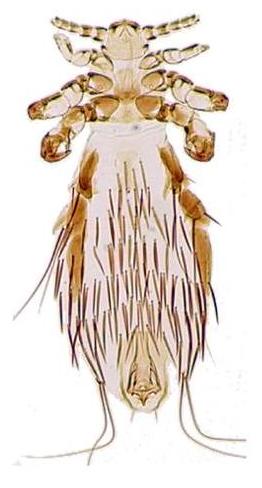
Phthiraptera
order of insects
Phthiraptera
Wikipedia Q6481228 where this came from — the thing this word names — Phthiraptera
Louse (pl.: lice) is the common name for any member of the infraorder Phthiraptera, which contains nearly 5,000 species of wingless parasitic insects. Phthiraptera was previously recognized as an order, until a 2021 genetic study determined that they are a highly modified lineage of the order Psocodea, whose members are commonly known as booklice, barklice or barkflies.
… 1,426 more Fold this article
Lice are obligate parasites, living externally on warm-blooded hosts, which include most species of bird and mammal, notably excluding monotremes, pangolins, bats, sirenians, tapirs, rhinoceroses, and members of the clade and suborder Whippomorpha (Cetaceans and Hippopotamids). Chewing lice live among the hairs or feathers of their host and feed on skin and debris, whereas sucking lice pierce the host's skin and feed on blood and other secretions. They usually spend their whole life on a single host, cementing their eggs, called nits, to hairs or feathers. The eggs hatch into nymphs, which moult three times before becoming fully grown, a process that takes about four weeks.
Humans host two species of louse—the head louse and the body louse are subspecies of Pediculus humanus; and the pubic louse, Pthirus pubis. Lice are vectors of diseases such as typhus. Lice were ubiquitous in human society until at least the Middle Ages. They appear in folktales, songs such as The Kilkenny Louse House, and novels such as James Joyce's Finnegans Wake.
The body louse has the smallest genome of any known insect; it has been used as a model organism and has been the subject of much research. They commonly feature in the psychiatric disorder delusional parasitosis. A louse was one of the early subjects of microscopy, appearing in Robert Hooke's 1667 book, Micrographia.
The oldest known fossil lice are from the Cretaceous.
 Wikipedia (English)
read this at Wikipedia (English)
where this came from — Wikipedia (English)
a kind of Troctomorpha Psocodea paraneopteran Eumetabola Neoptera Metapterygota pterygote Dicondylia
may also refer to
- Phthiraptera — order of insects
Public linked claims
What the existing sources assert about these meanings. These are source claims, not curated endorsements.
-
A small parasitic wingless insect of the order Psocodea. refers to Phthiraptera
Wiktionary (English) via Kaikki · assertion revision 3860851
Source, evidence and revision history -
louse lexeme entity candidate Phthiraptera
Wikipedia (English) · assertion revision 1450616
Source, evidence and revision history -
wingless usually flattened bloodsucking insect parasitic on warm-blooded animals refers to Phthiraptera
Open English WordNet 2025 · assertion revision 4354353
Source, evidence and revision history -
wingless insect with mouth parts adapted for biting; mostly parasitic on birds refers to bird louse
Open English WordNet 2025 · assertion revision 4354425
Source, evidence and revision history -
wingless usually flattened bloodsucking insect parasitic on warm-blooded animals refers to Phthiraptera
Open English WordNet 2025 · assertion revision 4354838
Source, evidence and revision history -
wingless insect with mouth parts adapted for biting; mostly parasitic on birds refers to bird louse
Open English WordNet 2025 · assertion revision 4355106
Source, evidence and revision history
Sources
-
Samuel Johnson, A Dictionary of the English Language
Samuel Johnson
-
 Wikidata
-
Wikipedia (English)
Wikipedia (English)
-
Wiktionary (English) via Kaikki
Wiktionary (English) via Kaikki
-
Open English WordNet 2025
Open English WordNet 2025
-
GIPHY
GIPHY
-
Urban Dictionary
Urban Dictionary
7 sources on this page